Life History of Shirdi Sai Baba
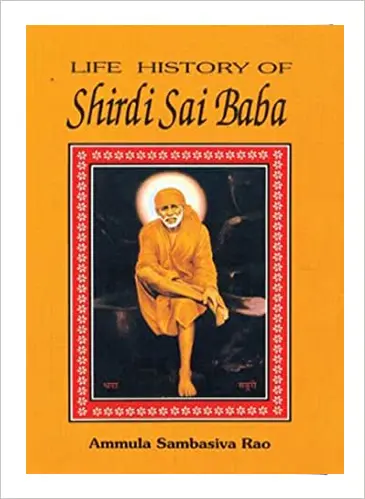
Om Sri Sai Rama Jayam
LIFE HISTORY OF SRI SHIRDI SAI BABA
By Ammula Sambasiva Rao
English Translation by Thota Bhaskara Rao
`Life History of Shirdi Sai Baba' was originally written in Telugu
by Ammula Sambasiva Rao, and translated into English by Thota
Bhaskara Rao. The book delves deep into the details of the life of
Shirdi Sai Baba right from his birth till his attainment of Samadhi.
The author has expounded Sai Thathwa or Sai Philosophy in a single
language, interspersed with engrossing anecdotes in the life of Sai
devotees.
Ammula Sambasiva Rao, an ardent Sai devotee, has done pioneering work
for the spread of Sai Philosophy and Sai awakening in the people of
Andhra Pradesh. He has undertaken the performance of a unique Yagna
called "Sri Sai Koti Nama Likitha Maha Yagna" in Sai temples in
Andhra Pradesh, and other places in India. He is the FounderPresident of the Shree Shirdi Sai Baba Seva Ashram, a registered body
with its headquarters at Hyderabad.
Sri Sambasiva Rao has written several books in Telugu on Sai
philosophy and the life history of Sai Baba.
*****
AUTHOR'S APPROVAL LETTER
Ammula Sambasiva Rao Hyderabad
December 14, 1999
Dear Sri Ravingaru,
Sairam. Thank you for your letter of 13th, which has been handed over
to me this morning. I have gone through the contents of your letter
and pleased to note the activities of Shirdi Sai Baba Web Site
Organisation (SSBWSO).
I hereby give my approval to SSBWSO for releasing the book "Life
History of Shirdi Sai Baba" in electronic format at the website
www.saibaba. org for the welfare of Sai devotees across the world.
Sairam
Ammula Sambasiva Rao
***
PUBLISHER'S APPROVAL LETTER
December 8, 1999
Shri Mukund Raj
CC: Dr. Ravin Gnanasambandam
Dear Shri Mukund Raj ji,
Greetings from Sterling!
I have received a letter from Dr. Ravin Gnanasambandam regarding the
website you had created for the spread of Sai Messages in the world.
I hope you know about our various publications on Shirdi Sai Baba.
Regarding the Life History of Shirdi Sai Baba, by Ammula Sambasiva
Rao, I have no objection of your putting it on the website. You have
our permission and I leave it to you that how much the person can
unload from the Internet.
However, if you want any number of copies, we can send you as usual. …
Looking forward to hearing from you,
With regards,
Yours sincerely,
S.K. Ghai
CMD, Sterling Publishers Pvt. Ltd.,
***
TRANSLATOR'S PREFACE
Om Sree Ganeshaya - Namaha
My salutations to the lotus feet of the Samartha Sadguru Shri Shirdi
Sai Baba.
My salutations to Pujya Sri Ammula Sambasiva Raoji, the author of the
Life History of Shri Shirdi Sai Baba in Telugu.
Strange are the ways of Sai Baba in dragging his devotees not only to
him but also to his trusted messengers who have dedicated themselves
to the spread of Sai Thathwa or Sai Philosophy all over the length
and breadth of our sacred motherland.
I have been a devotee of Sai Baba of Shirdi for three decades. While
the late Sri B.V. Narasimha Swamiji of Madras was responsible for the
spread of Sai philosophy in the South, through his great writings
about Sai Baba and establishing All India Sai Samaj, I find Pujya Sri
Ammula Sambasiva Raoji doing pioneering work for the spread of Sai
Philosophy and Sai awakening in the people of Andhra Pradesh, mainly
I say `mainly' because of late, his activities are spreading not only
to the neighboring States of Andhra Pradesh, but also to distant
places like Jaipur in Rajasthan, New Delhi and Kharagpur. Before
proceeding to give an account of his activities connected with the
propagation of Sai philosophy, I would like to tell the readers,
briefly about my acquaintance with this great person, who is
now `Guruji' to thousands and thousands of Sai devotees.
After my retirement from Government service in the year 1991, I
longed to do service to Sai Baba by associating myself with a person
doing selfless service in spreading Sai's message. At that time Pujya
Sri Ammula Sambasiva Raoji was working as an Officer in the State
Bank of India, Secunderabad. Knowing my desire, a friend of mine, Sri
G Manohar Babu who was also working in the same bank, introduced me
to Sri Sambasiva Raoji.
We were attracted to each other from the very moment of my
introductions to him. I used to attend the noon Arathis to Sai Baba
in the makeshift Sai Baba Mandir set up by Sri Sambasiva Raoji inside
the bank premises. I thanked Baba for having sent me to this great
and simple person. I used to accompany Sri Sambasiva Raoji
(hereinafter referred to as Guruji) for the conduct of Sai Poojas and
Sai Vratas (observance of fast) in the houses of Sai devotees in the
twin cities of Hyderabad and Secunderabad and sometimes in nearby
districts, during holidays and sometimes after office hours. All the
services rendered were absolutely free of cost. Till to this day,
Guruji had performed more than one thousand Sai Vratas.
Guruji had also undertaken the performance of a unique Yagna
called "Sri Sai Koti Nama Likitha Maha Yagna" in Sai Baba temple at
several places in Andhra Pradesh and also at Shirdi, Jaipur
(Rajasthan) and New Delhi. In each Yagna two crores of "Sree Sai"
names written by the Sai devotees in the books supplied to them free
of cost, are being put in specially constructed Stupas in the Sai
temples. Till date, 35 such Yagnas were conducted and the details are
furnished elsewhere in this book. His speeches about Sai Baba and the
way he expounds Baba's philosophy in the Satsang in simple words is a
rare experience for the listeners.
Guruji has since resigned his job as an officer in the State Bank of
India, so that he can be in the service of Sai Baba all the twentyfour hours and work for the establishment of `Sai Yuga'. No sacrifice
is too great in the service of Sai Baba.
Guruji has established "Shree Shirdi Sai Baba Seva Ashram" which is a
registered body. He is the Founder - President with headquarters at
Hyderabad. Units of this parent body have been constituted at six
different places in Andhra Pradesh till now. The important aims of
these units are to spread the message of Shirdi Sai Baba among the
general public in order to secure peace and harmony to mankind and to
establish ashrams at different centers to facilitate Adhyatmic
Training Classes for different age groups.
Besides the above-mentioned activities, Guruji has written several
books in Telugu and Sai philosophy and the Life History of Shirdi Sai
Baba. The circumstances under which this book was written and
published were given in Guruji's (author's) foreword. This Life
History contains certain details, which cannot be found in other
similar publications.
The need to translate this Life History of Shirdi Sai Baba into other
Indian languages was felt with the spread of Guruji's activities to
other States of India. Hence, he has taken a decision to have the
English and Hindi translations of the Life History, to start with.
Guruji had been asking me to take up the translation into English
since sometime, but I was hesitating and postponing as I doubted my
capacity to undertake such a work, that too connected with Sai Baba,
But, he finally told me in the last week of December, 1995, that I
should commence the work from 1 January 1996, under any
circumstances, and Sai Baba is there to give me necessary guidance.
Therefore with the blessings of Guruji and reposing full confidence
in Sai Baba, I commenced the translation on 1 January 1996 as per the
directions of Guruji and completed the work on 14 February 1996, the
day on which Guruji left for Kharagpur.
While I was writing the English translation of Life History, Sai Baba
showed his Leela as follows. The manuscript of the work came to
nearly 500 pages in long hand and I was searching for a person who
could type the matter correctly. I contacted several typewritingcoaching institutes, where such work was done. But they were not
prepared to undertake this work and those who were prepared, demanded
huge sums. Samartha Sadguru Sai Baba came to my rescue in the form of
Jagannadha Rao, a typist by profession, a Sai devotee, and a complete
stranger to me, who volunteered to do the typing, after knowing that
the original work in Telugu was written by Pujya Sri Ammula Sambasiva
Rao. He told me that he had heard the name and activities of Guruji
and expressed his gratefulness for being of some service to him. He
did the typing work with great devotion and promptness.
I pray to Sai Baba to shower his blessings on Sri Jagannadha Rao. If
the above incident is not Sai Leela, what else it is?
I express my deep sense of gratitude to Sai Maharaj and also to
Guruji for having given me the opportunity to be of real service to
them and also for getting myself enlightened about `Sai Avatar'.
Thota Bhaskara Rao
Jai Sai Ram
Om Sree Sainathaya Namaha!
*****
Om Sri Sai Ram
SHREE GANESH VANDANA
CHUKLAM BHARADARAM VISHNUM SHASHI VARNAM CHATURBHUJAM
PRASANNA VADANAM DHYAYETH SARVA VIGHNOPA SHANTAYE
AGAJANANA PADMARGAM GAJANANA MAHARNISAM
ANEKA DANTAM BHAKTANAM EKA DANTAM UPASMAHE
Mushikavaahana Modaka Hastha,
Chaamara Karna Vilambitha Sutra,
Vaamana Rupa Maheshwara Putra,
Vighna Vinaayaka Paada Namasthe
Sainatha Sainatha Sainatha Sadgurum
Yogiraja Yugapurusha Bhaktakoti Vanditham
Kripanidhim Tapodhanim Sainatha Pahimaam
Divyateja Bhavyamoorthi Punyacharita Poojitam
LIFE HISTORY OF SHIRDI SAI BABA
Chapter I
The earth is only a small planet in this great Universe, which is
beyond the grasp of human intelligence. On this planet earth, there
are numerous rivers, mountains, forests and oceans. Out of 84 million
kinds of insects, birds and animals and other living creatures on
this planet, great sages have concluded that the humans are the best
living forms who can lead a very high form of divine life. But they,
without realising their higher form among the living beings, fell
prey to arrogance, egoism, and Ajnana (ignorance) with the result
there is no peace for them, putting the entire creation to chaos and
confusion. What is the cause for all this? We must know the answer
for this in the first instance. Going further to know the evolution
of life forms on this earth, we came to learn that life first started
under the water. Later on, the creatures living under water learnt to
live outside the water, i.e. on the earth also. Further evolution
took place and creatures that can live on earth alone developed. Out
of these creatures and animals developed the human form and finally
man came into existence.
According to the above-mentioned theory of evolution only, the order
of Dashavatharas is determined in the Puranas. Firstly, Matsyavatara
(in the form of fish) - Fish can live under water only. Then
Kurmavatara (in the form of tortoise), which can live inside water as
well as outside water, i.e. earth. Then Varahavatara,
Narasimhavatara, Vamanavatara, etc. The Ramavatara and Krishnavatara
have shown to what divine heights man can reach.
If we examine carefully the order of Dashavatharas, you find that
there is no difference between this order , and the theory of
evolution of man. This theory of evaluation establishes that life at
first started under water, then slowly spread to the earth adopting
itself to the climatic conditions of the earth. These creatures
slowly developed into animal forms and man has also developed from
animal.
Man is superior from other forms of animals; in as much as he is
endowed with thinking power He has established a social order in the
society where everyone can live happily. Toward this end, certain
social orders and regulations have started to come into being. People
living in different parts of the earth have formulated their own set
of social orders depending on the local conditions. Over a period,
these social orders and regulations have strengthened and become
the "religion" of those people.
People started strengthening their religions. The powerful among them
became leaders and rulers. Religions started bowing before the
powerful and a situation came when the religions had to toe the line
of the powerful. Under religious banners, powerful rulers started
invading other countries as well as attacking other religions also.
This is the naked truth, which is revealed by World History.
Thus, many religions started coming into our country `Bharat'.
Several foreign countries invaded our motherland and started
spreading their religions here. Thus Christianity and Islam entered
and established themselves. Religion is meant for leading an orderly
and disciplined way of life in the society and nothing else. But
towards the end of the twentieth century in our country also, certain
religious fanatics or fundamentalists, considering today the
country's political scenario, are committing several attrocities in
the name of religion - all Sai Bhaktas should carefully note this.
Though religion is good for the spiritual advancement, only peaceful
methods should be followed as per Hindu dharma. In the present day
conditions, though it is desirable to have one religion for one
country, the `means' adopted to achieve this should be through `Love'
or prema marga only. We will try to know more about this as we
proceed further.
India has been described by our ancestors as Punya Bhoomi , Karma
Bhoomi, Dharma Bhoomi, and so on. We will now make an attempt to know
how these names were given. Our country's history of the mid-18th
century reveals how during the British rule, our ancient civilisation
gradually adopted the modern ways of British Civilisation. Under such
circumstances, the Adi Devtas (celestial beings), Ashta Dikpalakas
who guard our Punya Bhoomi, along with Bhoodevi (goddess of earth)
went to Vishnu and narrated their woes to him as follows.
"All through the ages, we have been happily discharging the duties
allotted by you in Bharata Desa. But under the changed circumstances,
the people prefer happiness to dharma, wealth to justice, strength to
love, bodily happiness to sacrifice, materialism to Godliness. Unless
these undesirable qualities are nipped in the bud, it will lead to
utter chaos in the near future. So you must take Avatar again in this
world to set things right as you have done during your Krishna Avatar
in Dwaparayuga and established peace after the Maha Kurukshetra war.
After hearing their appeal, Lord Vishnu replied as follows:
"All of you have discharged your duties properly and established
peace, prosperity and happiness in Bharata Desa all these ages. But
as soon as I finished my Krishna Avatar, Kali entered the earth. Adi
Shakti has created this Kali with a purpose and therefore it is not
proper to stop him from doing his work. The changes that you are
noticing in the people of Bharata Desa are only due to this Kali."
Then they asked Lord Vishnu as to how to save the people from the
actions of Kali and Lord Vishnu answered them as follows:
"You all know why Bharata Desa is called Punya Bhoomi. There are a
number of places on earth, with heavy snowfalls and cold waves. There
are several places where you cannot get water for drinking or proper
food. There are other places, which are very hot. But only in places
like Bharata Desa, there are different seasons. There are also a
number of lives giving rivers. Therefore, the people are able to
raise good crops and are happy. They are able to take bath regularly
and conduct divine activities. The Wind-God gives good air. Only
those who are lucky and did good in previous births are born in this
Punya Bhoomi and enjoy their natural happiness. This is briefly the
history of this Punya Bhoomi." Lord Vishnu continued. "Kali came
later to our country after showing his effects in other parts of this
planet. His effects will be intensified in the near future and then
the people of this country also will be subject to a lot of changes.
"Importance to one's duties will take a back seat while importance to
wealth will increase. Everyone desires that others should work for
him. But the fruits will be enjoyed by him only. This leads to class
conflicts. In the name of religion, caste, regions and also sex,
people will form into groups and will shed blood. Morals will
disappear. People belonging to different religions will pray to their
respective gods but none will follow the teachings of gods. Worship
will be mechanical and devotion and worship will be separated.
Opportunists will steal God's wealth also. It is difficult to save
mankind from such effects of Kali. This is Yuga Dharma. Slowly pious
and sincere actions will disappear and there will not be any
connection between thoughts and words; deeds will also be entirely
different.
"It is impossible to save such a situation completely from the
influence of Kali. But to a certain extent, it can be checked and
brought to a balance with dharma. I am the preserver of this world.
My work increases with the selfishness of man. Therefore, I advise
you to approach `Lord Shiva' and put forth your prayers. Then he will
come down to this world in the form of Datta Avatar and will
impart `Jnana' for mankind and will establish peace by his
teachings." Thereupon the Adi Devatas, Ashta Dikpalakas and Bhoodevi
approached Lord Shiva and put forth their woes. Accepting their
pleas, he promised that he would very shortly come to Bharata Desa as
Datta Avatar. But since it is Kaliyug, where people are more
materialistic, he will show more miracles after leaving the physical
body than when he is with the body. Thus assured, by Lord Shiva, they
came back to their respective places in this world and await eagerly
for the birth of Lord Shiva.
As per his promise, Lord Shiva was waiting for an opportune time for
pious parents to whom he would be borne on this planet earth.
"Jnana Swarupa Sai Saranam"
LIFE HISTORY OF SRI SHIRDI SAI BABA
By Ammula Sambasiva Rao
English Translation by Thota Bhaskara Rao
Chapter II
When our country was under foreign domination, the State of the Nizam
with Hyderabad as his capital extended upto Aurangabad, presently in
Maharashtra State.
In this State, there is a small village named Pathri, situated among
green fields, trees and other natural settings and taking the
villagers to divine heights.
The water flowing in the rivulet adjoining this village had the
effects of the water from river Ganga, curing several ailments. In
this village, there lived a pious couple named Ganga Bhavajya and
Devagiri Amma. They lead a happy and contented life. They did not
have any property worth the name.
Ganga Bhavajya used to ferry a boat in the adjoining river and lived
on this meager earnings. Though, they were poor in terms of wealth,
they were contented, tolerant, tactful and had peace. Ganga Bhavajya
used to worship Lord Shiva and Devagiri Amma used to worship Gowri
Devi. Under any circumstances, the worship of Lord Shiva and Gowri
Devi would be done before the couple attended to other items of work
for they believed that there was divine presence in their house,
protecting them every moment. But sadly they were not blessed with
children. So they used to pray to Shiva and Parvathi to bless them
with children.
One day in Kailas, Shiva told Parvathi that the time for him to take
birth on earth had come as promised to Bhoodevi. Then Parvathi
pleaded with Lord Shiva that she be allowed to take birth on earth
and assist Shiva in his Avatar. But he did not agree, that in his new
Avatar, he proposed to practice strictly what he intended to preach
and Parvathi would have no role to play in his `Fakir' life. He then
showed Parvathi, Ganga Bhavajya and Devagiri Amma on the earth,
telling her that they are the couple to whom he would be born.
Then Parvathi said that since she would not take birth on earth along
with Lord Shiva, they should visit Ganga Bhavajya and Devagiri Amma
now. He agreed and in the first instance sent Ganga Devi to fill
Pathri village and its surroundings with water. There was a heavy
downpour, inundating the village and surroundings. Fearing that the
boats would be washed away in the floods, Ganga Bhavajya proceeded to
the nearby river to take care of the boats after taking his night
meal.
At about 9.00 p.m. in the night, there was a knock at the door of
Ganga Bhavajya's house. Thinking that her husband had returned,
Devagiri Amma opened the door. But it was not her husband. An unknown
old man entered the house. In this small village Devagiri Amma knew
everyone. But this old man was unknown to her and that too coming at
such a later hour. She tried to find out who he was. The old man
pleaded with her to allow him to remain inside the house for
sometime, as it was very cold outside. Being a pious lady, Devagiri
Amma asked the old man to sleep in the verandah, while she went
inside her room, locking the door from inside. After sometime, the
old man knocked at her door. She opened the door. The old man
said, "Mother, I am hungry. Please give me some food." She felt
helpless since whatever food she had cooked had been eaten and
nothing was left. She searched in the house for some eatables but
found only a small quantity of flour. She mixed this flour with curds
and served it to the old man who gratefully ate it. She then went
into her room and prepared to go to sleep, locking the door from
inside. Again after sometime there was a knock at her door. She
opened the door only to again find the old man standing there. He
told her that his legs were paining and requested her to massage
them. She was perplexed at the way in which a complete stranger was
behaving when her husband was not in the house. She wondered whether
the old man was really a human being or whether Lord Shiva had come
to test her. Without knowing what to do under such circumstances, she
wept and prayed to Parvathi. She went out through the back door to
procure the services of two or three servants for massaging the legs
of the old man. She was willing to pay them liberally, but found
none. She returned home disappointed and wondered what to do now,
whether she ought to massage the legs of the old man or not.
Who was this old man? She prayed to Parvati wholeheartedly to show
her a way out of this predicament. The old man knocked at her door
again. Just then a woman entered through the back door and addressed
Devagiri Amma, "Mother, it seems you came to my house to engage me
for massaging the legs of an old man. But at that time I was not in
the house. Now I have come, please tell me to whom I should do the
service?"
Devagiri Amma felt very happy. She presumed that on hearing her
prayers, Parvati must have sent this woman and she expressed her
gratitude to the goddess. She sent the woman to the verandah to
massage the legs of the old man while she went to her room and shut
the door. After some time she opened the door again but she did not
find either the old man or the woman sent to massage his legs. But in
their place she saw Lord Shiva and Goddess Parvati. Her happiness
knew no bounds and she fell at their feet. Then Parvati blessed
her, "You shall have one son and one daughter." On hearing this, she
again fell at the feet of Lord Shiva who blessed her, "Mother, I am
pleased with your devotion, I will myself take birth as your third
child." By the time she got up, both Lord Shiva and Goddess Parvati
had disappeared.
She lay awake the whole night, waiting for her husband's return, to
break the happy news of the visit of Lord Shiva and Parvati to their
house. She saw only Lord Shiva and Parvati, whether she closed or
opened her eyes. At daybreak, her husband returned home and she
narrated everything to him. But he did not believe it. He told her
sarcastically that she had gone mad or was dreaming. How could the
gods come to their house? However much she tried to convince him
about their visit he did not believe her.
In due course, Devagiri Amma gave birth to a male child and a female
child a year after. As the children were born after so many years and
that too blessed by Parvati Devi, Ganga Bhavajya started believing
the visit of the gods to their house and the boons granted to his
wife. From then onwards a lot of change came over him and he decided
to do penance to have a vision and blessings of Lord Shiva and
Goddess Parvati. He began to think that family attachments were
obstacles for his penance.
While such ideas were taking concrete shape in him, the third child
started growing in the womb of Devagiri Amma. One day, Ganga Bhavajya
took firm decision and informed his wife that he was retiring to the
forests. As duty bound Devagiri Amma followed her husband. Without
any money, placing complete faith in Lord Shiva and Parvati, they
proceeded towards an unknown destination in thick forests. On one
hand Devagiri Amma felt elated that shortly Lord Shiva would be born
to her. On the other hand, she was worried and fearful of the aimless
journey through forests. With these mixed feelings, they continued
their journey.
It was the 28th day of September 1835, Ganga Bhavajya and Devagiri
Amma were continuing their journey. The sun was rising throwing light
red-coloured rays on the earth. Devagiri Amma went into labour pains.
She slowly reached a big banyan tree and lay down on its shade.
Goddess Parvati was beside her unseen, giving her courage. All other
gods were witnessing from above, this unique occasion of Lord Shiva
being born in human form on the earth. This new `Avatar' would put an
end to religious fanaticism, jealousies, hatred, arrogance, egoism
and attachments prevalent in the humans and would generate peace,
Jnana, love and equality among them. The gods showered flowers from
above, unseen, and jubilant over the occasion. Great sages all over
the world, for a moment became still and in that state witnessed the
arrival of Lord Shiva in human form as Devagiri Amma's child. Finally
Devagiri Amma delivered the child. No one knew that the new born
Avatar of Lord Shiva would one day be known as Shirdi Sai Baba and
that he would respond at once to the prayers of devotees, that he
would show the way to a number of devotees for attaining salvation by
becoming their Sadguru, and that even after his Samadhi he would
protect his devotees.
Devagiri Amma was very happy that Lord Shiva himself was born to her.
But Ganga Bhavajya was not satisfied by looking at the human child
form of Lord Shiva. He was determined to see the real Lord Shiva and
Goddess Parvati, as was seen by his wife. After sometime, he prepared
to set out on his journey. It was a testing moment for Devagiri Amma.
One one side was her husband and she was duty bound to follow him. On
another side, it is the just born child, apart from her weakness due
to delivery. Finally, she decided to follow her husband, leaving the
child in the forest. She prepared a small bed of leaves and spread a
soft cloth over it. She placed her newborn child on the bed. She
began weeping as other mothers do and the warm tears began to fall on
the child. These tears were the last attachment between mother and
child. She wept bitterly for not being in a position to provide food
and shelter for her child. Perhaps, she was not aware that Adi
Sankara, who can protect all the creations, does not require her
protection.
No such thoughts were in Ganga Bhavajya. His aim was to have vision
of Lord Shiva only. For achieving this , family bonds and attachments
would be hurdles. So he desired to be away from such attachments and
go into the forest and do penance. He started to proceed towards his
goal, his wife following him. For every step taken by her, the
motherly love towards her newborn child began to melt into tears
which flowed from her eyes continuously. She kept looking backwards
at her child though advancing. The tears blocked her vision and she
was able to see only a blurred image of her child. After proceeding
for some more distance, she lost sight of her child completely and
she followed her husband blindly. In the coming chapters, we shall
see where and how their aimless journey ended.
On the golden Kailas Mountain, Lord Shiva should have been in the
company of Parvathi and other gods. But in his new `Avatar' he was
under the banyan tree, as a newborn child, moving his legs and hands
playfully and waiting for the person who would find him and look
after him. Lord Shiva knew who that person was. That Mahatma named
Roshan Sha came in the form of fakir (mendicant). When he was walking
with his wife, he heard the cries of a small child. As they did not
have any children, he picked up the child and gave him to his wife as
a gift from `Allah'.
We find no words to praise Roshan Sha and his wife who bathed Lord
Shiva and fed him. The child grew for four years till 1839 in the
fakir's house. The actions of God cannot be gauged. How and when some
persons come together and again get separated is beyond the
understanding of common people. The fakir died one day. His wife
brought up the child affectionately as her own.
In those days there were clashes between Hindus and Muslims. Under
such conditions, the behaviour of this boy used to be peculiar. He
would suddenly enter into a temple one day and start yelling, "Rama
is God, Shiva is Allah". Both Hindus and Muslims used to admonish and
punish him. On seeing this, Roshan Sha's wife used to suffer a lot.
Finally, unable to withstand the complaints against the boy, she
decided to hand over the boy to a Sadhu by name Venkusa in a nearby
village.
"Om Shanti! Shanti! Shantihi"
Chapter III
There was a village named Jambavavi, now in the State of Maharashtra,
under the rule of a Nizam in those days. In this village, there was a
pious Brahmin named Keshava Rao and his wife. Both were devotees of
Venkateswara Lord at Tirupathi. As they had no children, they always
used to pray to the Lord to bless them with a child. One night, the
Lord appeared to Keshava Rao in a dream and told him that one
Ramanand Yogi of Kashi would be born as their son shortly. After this
Keshava Rao's wife became pregnant. He used to read the Holy
Scriptures to his wife and explain them in detail. This was an
exercise undertaken by him to impart Jnana to the child who was in
the womb of his wife. His wife gave birth to a male child on an
auspicious day. The parents named him Gopal Rao, and imparted several
types of education. When the boy reached marriageable age, they
performed his marriage with a suitable girl.
Gopal Rao was a person of tact, strength, patience and knowledge.
Above all this, he was a person with a helping nature and service.
Pleased with his strength and courage, the Peshwas gave a paragana
named Jintur as jagir to Gopal Rao to rule over this place. Gopal Rao
loved the inhabitants of this place as his own children and ruled
over them. He shifted his place of residence to the centrally located
village Selu and developed it a lot. He inherited from his father,
abundant devotion to Lord Venkateswara. Now and then, the Lord would
appear in his dreams. He established an ashram in his fort and gave
opportunity to several people to lead saintly lives.
One Evening, when he was taking a stroll in the fort, he found a
young lady undressing for taking bath and Gopal Rao's mind had evil
thoughts for a moment on seeing her naked form. Immediately
regretting his perverted thoughts, he pierced both his eyes with a
needle and lost his sight. Because of this, he could not discharge
his duties as jagirdar properly. On the advise of his friends, he
performed special Puja to Lord Venkateswara and regained his lost
eyesight with the blessings of the Lord. From that day, he came to be
known as Venkudas (Lord Venkateswara' s Slave).
Roshan Sha's wife wanted to hand over the four-year-old boy to the
care of Venkusa. But Venkusa was on a pilgrimage. He did not practice
discrimination on account of religion, caste or creed. All were equal
to him. He used to visit not only temples but also the dargahs and
gurudwaras while on pilgrimage.
Once, when he visited the Sawaghahi Dargah in Ahmedabad, he heard the
following words coming from there: "Salaam alekum Maharaj! You are
born with a purpose. A hundred miles from Selu Village, there is
another village by name Manwat. There Allah, who is born for setting
this world right, is being brought up in a fakir's house. After you
go back to Selu from your pilgrimage, the boy will be brought to you.
You must accept this boy as your pupil and teach him. This is God's
work. The boy will grown up in your care and will become `Guru' for
the entire world."
Venkusa returned to Selu after the pilgrimage. Roshan Sha's wife
brought the boy and handed him over to Venkusa. Thus the boy (Baba)
came under the care of Venkusa in his fifth year. Roshan Sha named
the boy Majida and there are proofs that the boy grew under Venkusa
with the name Majida.
Venkusa taught the boy all kinds of Shastras. The boy who was born
with natural Godliness learnt all of them in his early age. Venkusa
took the boy along with him to other villages. In the year 1842,
during summer, they both came to Shirdi village and they stayed there
for 7 days. They took their food in the house of Bayija Bai and slept
in the small temples of the village. This means Baba came to Shirdi
first in the year 1842. Perhaps because of the food provided to him
by Baija Bai, Baba used to call her Sister. Similarly, Baba in his
young age came into contact with Nanavali.
Nanavali was younger than Baba. He used to do service at the Samadhi
of a great person by name Nanavali, near Aurangabad. Hence, he got
the name of Nanavali and was known only by this name. During the
tours of Venkusa along with Baba, they met Nanavali for the first
time in 1849. Nanavali used to address Baba as Uncle. Having been
brought up by Roshan Sha who was a Sufi saint, and later by Venkusa
who was a devotee of Lord Venkateswara, Baba understood the important
aspects of Islam and Hinduism and also the blind customs in both.
Though Venkusa was a Hindu, he used to take Baba to the Samadhis of
great persons of both the religions and explain their teachings and
theories in detail.
Years rolled by. The boy, who was born with a purpose, the
incarnation of Lord Shiva, learnt everything related with physical,
philosophical and other fields. He also learnt about "Pancha Bhuthas"
and the importance of the eight directions. He was able to feel the
divine power, which created this universe, and notice the unstable
condition of life, soul, mind and arrogance. He also learnt the
connection between these and the sensory organs and how to control
desires and command the divine power in the body. A divine light in
his eyes, sensibility in talk, calmness in his actions and mature
thinking were found in him.
For Venkusa, his joy knew no bounds, for the boy whom he brought up
acquired so many divine powers. He used to stare at the boy
motionless, and tears would roll down from his eyes. Night and day he
would keep the boy with him. He used to bathe him, dress him, feed
him and put him to sleep. If sometimes he could not attend on the boy
personally, he would suffer mentally. Whether it was natural love for
the boy or whether it was the effect of the incarnation of Lord Shiva
in the form of this boy, we do not know. Whatever it was, Venkusa's
life was blessed he acted as Baba's guru, protector, friend, mother
and father. Though we do not know what Venkusa looked like, let us
imagine and prostrate at his feet for having brought up our Sai, for
having moulded him and presented him to crores of devotees throughout
the world, let us prostrate at his feet for the second time. Sai is
not merely a Guru. He is Samartha Sadguru. For having acted as Guru
for such a Samartha Sadguru, let us prostrate at the feet of Venkusa
for the third time.
Since Venkusa was teaching the boy the secrets in Shastras, the other
ashramites posed unnecessary and irrelevant questions, which diverted
the attention of Guru Venkusa. As he was not able to pay proper
attention under such disturbed conditions, he took the boy into the
forest and taught him in the different fields of education. The
ashramites discovered the place where Venkusa was and sent a few
disciples to bring him back to Selu. Suspecting that they were
jealous of the boy and hated him, probably might harm him, without
loss of time he inducted into the boy some of his powers on Suddha
Dashami Day of the month of Asweeyuja. The boy who was just
completing 16 years of age appeared fully mature, with divine powers.
Venkusa told the boy that he had done his duty as per God's decision
and the day was not far off when they would be separated. He also
told him that having achieved his goal, he would go into Samadhi. As
per the Shastras, a disciple should not witness his guru attaining
Samadhi, but if he went back to Selu or the neighboring villages, the
people there might harm him. If they continued to be together then
also the people who were jealous of them would be haunting them.
Therefore, it was necessary that they be separated. On a full-moon
day, Venkusa inducted into the boy all his remaining powers. It was
decided that Venkusa would return to Selu and the boy would proceed
along the shores of Godavari River. The plan was found out by some
spies from Selu and the news was carried over to Selu. From Selu,
Venkusa's successors secretly came to the forest and watched their
movements.
The people of Selu, thinking that Venkusa had left his family, ashram
and properties for the sake of this boy, planned to kidnap the boy so
that Venkusa would return to Selu. Sensing such a move, Venkusa
protected the boy by staying with him every moment. Since the village
people found that it was very difficult to kidnap the boy, they
decided to kill him. That night was Chaturdashi, a day prior to full
moon. The conspirators were discussing the methods of killing the
boy. They had not brought knives or sticks with them. There were no
big stones nearby. While this was the situation, Venkusa and the boy
prepared to go to sleep.
The boy had peaceful sleep, whereas Venkusa could not sleep as he was
preoccupied with thoughts of the boy. One of the conspirators, with a
view not to delay their plan further, took a brick, which was lying
nearby, and wanting to kill the boy at one stroke, proceeded towards
him. Venkusa, who was half asleep, suddenly opened his eyes and found
the brick coming towards the boy's head. He at once put his own head
in the path of the brick, which hit his forehead and caused bleeding.
With blazing eyes, Venkusa cursed him, who fell dead the next moment.
Hearing the commotion the boy woke up from his sleep and observed
everything. The other two conspirators who were at a distance ran
away, lest they also die by the curse of Venkusa.
The boy tore off a piece of cloth from his dress and cleaned the
injury suffered by Venkusa. They were staring at each other with
different thoughts in their minds. While Venkusa was thinking that
even at the risk of losing his life, he would hand over the boy as
Guru to posterity, the boy was thinking how to repay the debt to his
Guru for having protected him. Thus the hearts of Guru and disciple
became one, ideas became one, with love and affection in harmony.
Such should be the binding force between Guru and disciple.
The sun began to rise in the east with the red rays spreading over
the sky. Venkusa and the boy both took their bath in the river.
Venkusa milked a nearby cow and purring the milk into the hands of
the boy, imparted all the remaining powers he had and commanded the
boy to bring to life one of the conspirators who lay dead due to the
curse given by Venkusa. The boy washed the toe of the right foot of
the Guru and sprinkled this water on the dead person who came alive,
saying he regretted his attempt to kill the boy and sought his
pardon.
Venkusa wanted to give the boy all the valuable ornaments he was
wearing but the boy declined to have them. Instead he requested
Venkusa to give him the brick, which had hit him on his forehead
while saving him (boy) from the murderous attack. Overwhelmed by his
request and with tears rolling down from his eyes, Venkusa gave him
the brick with his blessings. He wished that the brick always be the
boy's companion and life partner. The boy also requested Guru Venkusa
to give him the piece of cloth drenched with blood while cleaning his
injury. Moved emotionally by such a request Venkusa tied the cloth
piece around the forehead of the boy and declared that it would
protect the boy at all times. He told him to proceed along the banks
of river Godavari and the place where he found complete peace would
be abode. He also advised him to keep away from women and wealth.
Afterwards Venkusa proceeded to Selu along with the revived person.
After walking for three days along the banks of River Godavari, the
boy reached a place called Kopergaon in the year 1854, Margashira
month on the third day after full moon. After taking rest for a day,
he again proceeded and reached the village of Shirdi by evening. Not
willing to approach anyone for shelter, he began to live under the
shade of a big Neem tree.
"Om Shanti! Shanti! Shantihi"
Chapter IV
After giving birth to the child Avatar on 28 September 1835, Devagiri
Amma and Ganga Bhavajya continued their journey aimlessly in the
forests. Though he went with detachment, he observed the physical
weakness and helplessness in his wife Devagiri Amma. Sympathy evoked
in him, but he thought that he should not succumb to such weakness,
and so started proceeding further. But Devagiri Amma was too weak to
walk straight and her sight was getting blurred, her tongue drying up
with thirst. She had no physical strength at all. But as a devout
woman, she followed her husband slowly. With great difficulty, they
moved ahead. Ganga Bhavajya stopped near a freshwater tank. He could
not proceed further after seeing the condition of his wife. He tried
to suppress his feelings unsuccessfully. All his feelings and
sympathies for his wife gushed out and he thought Lord Shiva would
not give him Darshan if he left his wife alone and proceeded. He went
to her and started attending on her. After quenching her thirst, she
went into deep sleep, fully exhausted. In the meantime, a banjara (a
nomad) who was passing by saw them and told them that if they did not
leave that place before dusk, there was danger from wild animals. So
saying, he took them along with him for some distance and showed them
a hut. He told them that this hut belonged to him and they could rest
in it. After sometime, the banjara's wife brought food for them and
after serving them they all sat together. The banjara couple heard
the story of their guests attentively. Then they addressed the
guests.
"The norms for leading an ordinary type of life are prescribed in the
Vedas. They are of four kinds, viz. Dharma, Artha, Kama and Moksha.
Every man should follow these four during his lifetime. The woman,
while being the life companion, should assist the man in attaining
them. This is the specialty in Hindu culture. But having brought
forth three children, you left them mercilessly and took to the
forests. Your action goes against the dharma. It is good to desire a
vision of Lord Shiva. If that is life's aim, one should be a sanyasi
and not Grahastha (family man). But being Grahastha, forgetting one's
duties towards family, one should not seek God, for this is not
correct.
After performing all your duties only you should take to Vanaprastha
(retiring to the forests) and then seek God. This is Dharma Marga. As
you have already abandoned your three children you should now
proceed. Though you are wife and husband, in future you should not
have any bodily attachments, but concentrate on doing penance for
Atma Sakshathkaram and then for the Sakshathkaram of Lord Shiva.
There is a village named Nivasa about 150 miles from here and from
there you proceed another 20 miles and do your penance."
The words of the banjara were like the chanting of the Vedas and
Bhavajya decided to do penance with his wife for the Sakshathkaram of
Lord Shiva. In the meantime, the banjara gave them two wild fruits
from the forest and made them eat, by which they got rid of all
bodily ailments, attaining divine powers necessary for doing penance.
Late in the night they slept. When Ganga Bhavajya woke up in the
morning, he found neither the banjara couple nor the hut. All that
had taken place the previous night appeared to them as a dream.
Devagiri Amma regained her physical health and was happy. After
traveling for eleven days, they reached the place on the banks of
Godavari River, as indicated by the banjara and started their penance
for years. Many used to visit them and learn spiritual matters from
them. The devotees named Devagiri Amma as Dwarakamayi. Devagiri means
Govardhanagiri, the mountain lifted by Lord Krishna and the place
surrounding it is Dwaraka, and Mayi means mother. Similarly, Ganga
Bhavajya was named Gurudhan because he was imparting Jnana to the
seekers. So, the names acquired by the parents of Baba, in the Jnana
Marga, were Gurudhan and Dwarakamayi. As many people started visiting
them, it caused disturbance for their penance, and so they shifted
into the interior forest. Both used to be in a state of Samadhi for
days together.
After reaching Shirdi, Baba lived for sometime under a Neem tree on
the outskirts of the village. Some villagers with their unnecessary
talk, were disturbing Baba's meditation. For a long time, he used to
go into the nearby forest and remain there all the day, eating fruits
and other things available in the forest. After a certain period,
some of the villagers noticed this boy who used to sit under the Neem
tree under all extreme climatic conditions, and always meditating.
Some of them asked the same question direct to the boy, thereby
disturbing his meditation. While this was so, some people who were
carefully observing him recognised him as a boy with unusual divine
powers . But many used to talk about him critically and used to poke
fun at him.
One day a blind person came and sat in the shade of the Neem tree.
Some rowdies abused him and threw him aside and went away. This
commotion disturbed the meditation of the boy. He found out the
reason for the commotion. Feeling pity for the blind person, the boy
with his divine hands cleaned both the eyes and catching the eyelids
firmly with his hands passed his divine rays from his eyes into those
of the blind man. Unable to bear the agony of burning eyes, the blind
man cried aloud and fainted. The rowdies who had ill-treated the
blind man earlier assembled there with some others. After a short
time, the blind man regained his consciousness and found that he was
no longer blind. Seeing this, the people assembled there were
wonderstruck. From then onwards not only the villagers of Shirdi but
also those from neighboring villagers started coming to the boy for
getting their ailments cured. Thus, a year passed.
Sometimes, the boy used to take the juice of any leaf found nearby
and gave it as medicine. Whatever seed he found he used to ask the
patient to make a paste of it and use it as medicine. If he touched
the ailing limb of the body, the ailment would disappear. Slowly,
people recognised him as a great physician. The entire daytime he
used to treat the patients. In the nights some persons used to come
and disturb him with unnecessary questions. As he was not able to
meditate properly due to the conditions prevailing, one night he left
Shirdi and proceeded eastwards along the bank of River Godavari. He
reached Tryambakeshwar and finding the high mountains suitable for
his meditation, he started doing penance.
The brick given to him by Guru Venkusa was his only companion, and
the piece of cloth soaked with the blood of his Guru was his
protector. He did penance for a year. Afterwards, he returned by the
same route along the banks of River Godavari via Kopergaon and
reached the place where he and his Guru Venkusa has parted on exactly
on the same day of the same month. As two years had lapsed since
then, he found that many trees had come up around the place like a
thick forest. He found it difficult to exactly pinpoint the place.
Then he took out the brick and tied it in the blood-soaked piece of
cloth and prayed to his Guru. Immediately, the entire area became, as
it was two years back. Instantly, he recognised the spot where his
Guru had saved him from an attack to kill him. He prayed: `Oh Guruji!
You shed your blood to save me ! I want to have your Darshan. But my
power will always be protecting you." Then the boy said, "I do not
have parents, brothers and other relatives. You are the only person
for me. I must have your Darshan today as you have saved my life.
Otherwise, I do not want to live further. I will take out my life by
hitting myself with the same brick from which you saved me two years
back." So saying he hit his forehead with the brick. Suddenly, the
hand of his Guru Venkusa appeared in between the brick and his
forehead. Venkusa stood next to him and blessed him. He told the
boy : "Because of your faith and gratitude towards me I had to get up
from my Samadhi and come to you. I appreciate your devotion for your
Guru. You will become Guru for the entire world. Like me you will
also bless your devotees from your Samadhi. I am giving this boon to
you . You have descended from Lord Shiva. The boon I give you now is
only symbolic. Even after you attain Samadhi you will be saving your
devotees from the Maya of Kali. This is possible only for Lord Shiva
who drank poison and kept it in his throat. As I have come out of
Samadhi, I will be with you for two years in an invisible form.
Continue your penance." So saying Guru Venkusa disappeared. The boy
remained in the same place for two years doing penance. Whenever
necessary, Guru Venkusa used to advise him in the invisible form. In
the year 1858, again on a full-moon day in the month of Margashira,
he gave him Darshan and told him to go back to Shirdi. He further
told him that he would also be there in the form of a Jyothi (burning
light) near the Neem tree in an underground structure.
The penance undertaken by Gurudhan (Ganga Bhavajya) and Dwarakamayi
(Devagiri Amma) reached the climax stage. Pleased with their penance
Shiva and Parvati appeared before them. Overjoyed at the
Sakshathkaram, they pleaded with Lord Shiva and Goddess Parvati to
give them Moksha (salvation). Agreeing to this, Lord Shiva told
them, "You will get Moksha as desired by you. But you two, in the
form of Jyotis (burning lights) will remain permanently in the
underground structure near the Neem tree at Shirdi. Another Mahatma
by name Venkusa will also be there with you as Jyothi. Gurudhan will
remain there permanently. In the coming days, I will keep Dwarakamayi
in a nearby place in the form of Dhuni. Similarly, I shall arrange a
suitable place for Venkusa. After my present `Avatar' comes to an
end, I will get the physical remains of my body placed in between you
two. In this way, Shirdi will be the abode of four divine powers, and
for the coming 500 years it will grow day by day and will be Kailas
for the devotees." So saying Lord Shiva put his hand (Abahaya Hastha)
towards them. Immediately, two dazzling light rays emerged from the
hand and entered the bodies of Gurudhan and Dwarakamayi, bringing out
their inner life (prana shakti) in the form of jyotis and coming out
from their upper skull. In an invisible form these jyotis reached
Shirdi village and under the Neem tree in an underground structure
remained there doing penance. Similarly Venkusa came out from his
Samadhi at Selu and came to Shirdi in the form of Jyothi and joined
the other two in the underground structure near the Neem tree.
There the boy (Baba), after having Darshan of Venkusa, proceeded till
he reached a village called Dhoop near Aurangabad by sunset and took
rest near a big boulder. At the same time, the Patel (Munsiff) of
Dhoop village, Chand Bai, having lost his horse, started searching
for it with the saddle on his shoulder. Having roamed for the horse,
he became tired and wanted to relax and so came to the place where
the boy (Baba) was taking rest.
Noticing Chand Bai, Baba questioned him, "What Chand Bhai! You seem
to be tired after searching for your horse." Chand Bai was surprised
at how this stranger knew his name and about the missing horse. The
boy replied that he knew everything and there was nothing he did not
know. Then Chand Bai asked the boy to tell him where to find his lost
horse named Bijli. The boy asked Chand Bai to proceed on the right
side for some distance and there would be a small pond where he could
find his horse Bijli gazing. Chand Bhai said that he had come from
that side and had not found his horse there and there was no use
going there again. To this the boy replied that his words would not
go in vain and one should have complete faith to have result. No one
can get the result with a doubtful mind. He asked him to go and get
the horse. But this appeared unbelievable truth for Chand Bai. While
they were discussing thus, the boy took out a smoking pipe and
tobacco from his bag. To use the pipe for smoking, water was required
and to light the tobacco, fire was required. The boy, with his metal
rod-like instrument (sataka) struck the ground before him.
Immediately water came out in the form of a jet. After preparing the
pipe by filling it with tobacco, he struck for the second time at the
same place on the ground with his sataka and fire came out this time.
The boy then lighted the tobacco with this fire. He smoked from the
pipe and passed it to Chand Bai for smoking. Dumbstruck by these acts
of the boy, Chand Bai wondered whether what he was seeing was real or
only a dream. After realising that this was not a dream, hand Bai ran
towards the direction given by the boy earlier and found his
horse `Bijli' grazing near the pond. He came back with the horse and
prostrated before the boy. He invited him to come along with him to
his house. With great devotion he made the boy sit on the horse and
he walked along beside the horse.
If the boy with such divine powers steps into his house, all the
evils haunting would go away and peace and happiness would come to
the place. So thought Chand Bai. The boy remained as guest of Chand
Bai for 35 days, blessing the people of Dhoop Village. Afterwards, on
a request from Chand Bai, the boy accompanied the marriage party of
Chand Bai's brother-in-law and came in a bullock cart to Shirdi,
which was the bride's place. Chand Bai thought that if they took this
boy with the divine powers along with them there would not be any
obstacles and the marriage celebrations would go on peacefully.
The bullock carts of the marriage party were proceeding towards
Shirdi. In the evening cool winds started blowing and the bells tied
round the necks of the bullocks were giving rhythmic sounds mingled
with the singing of the birds. At dusk, the red rays from the setting
sun from the west began to fall on the white clouds in the east and
the scene was pleasing to the eyes. As if welcoming the Mahatma
(Baba) sitting in front in the bullock cart, the birds started
chirping and flying before the cart. From a distance the koel
(nightingale) was singing as if saying: "God is coming to Shirdi
personally to settle down there. Do not think under the influence of
Maya that he is only an ordinary person. So you all please recognise
him as God." The moon appeared on the east as if to give light to the
Mahatma. The entire marriage party was full of joy and enjoying peace
every moment. Thus the marriage party proceeded towards Shirdi.
The entire nature was blooming to welcome this God incarnation from
Kailas. Those of the marriage party who witnessed this were really
lucky. Similarly, with a prayer that we should also get an
opportunity to be with Baba at least for a few months either in this
birth or in future births, we end this chapter.
"Om Shanti! Shanti! Shantihi"
LIFE HISTORY OF SRI SHIRDI SAI BABA
By Ammula Sambasiva Rao
English Translation by Thota Bhaskara Rao
Chapter V
Without experiencing any kind of difficulties, the marriage party
reached Shirdi safely. None of them felt tired or exhausted. Chand
Bai Patil believed that because they had the fakir in the first cart,
their journey was without any obstacles and ended happily. The
bullock carts stopped by a big banyan grove by the side of Khandoba
temple. The members of the marriage party alighted there and went to
the houses provided for them by the bride's parents. But the young
fakir got down slowly from the cart after all others left and started
walking with divine light. On seeing the young fakir, Mahalasapati
recognised him as God incarnation. He used to mostly read the poems
(dohe) of Kabir. In his poems Kabir used to address God as `Sai'.
Mahalasapati, who was the `Pujari' of `Khandoba' temple, on seeing
the young fakir, came out of the temple and with folded hands
addressed him as `Welcome Sai'. In this way, the fakir got the name
as `Sai' from Mahalasapati. Afterwards he became famous as `Sai
Baba'. Baba means father.
Baba went to the Neem tree where he used to sit and meditate on
previous occasions. The divine powers of Gurudhan, Dwarakamayi and
Venkusa, which were in the underground structure in the form of
Jyothis conversed with him. Ordinary persons would not see or hear
them. In this way Sai Baba reached Shirdi for the second time, in the
year 1858. For nearly two years, he used to beg for food from five
houses daily and he lived under the Neem tree. During daytime he used
to go to the nearby forest and remain alone. Sometimes, he used to
remain in the forest for four or five days without food or water.
There were two other saintly persons at Shirdi, named Devidas and
Jankidas. They recognised Baba as a person with extraordinary divine
powers and used to converse with him frequently. Mahalasapati also
used to visit Baba under the Neem tree, now and then. Some people of
Shirdi recognised Baba as the same person who had sat under this Neem
tree a few years back, and cured the villagers of their ailments. So
they started visiting Baba again for getting their ailments cured.
Baba soon got the name of a doctor or Vaidya, with extraordinary
divine powers. They shifted the residence of Baba from the Neem tree
to a dilapidated mosque nearby, which they repaired making it fit for
residence. Sometimes in the year 1860, Baba used to visit the
following five houses daily, begging for food (1) Ganapathi Rao's son
Tatya Patil (2) Vaman Sakharam (3) Nandu Savai Rama Vani (4) Madhava
Rao Deshpande (Shama) and (5) Appaji Patil.
There was an elementary school adjoining the mosque. Shama was
working there as teacher. He used to be nearer to Sai Baba.
Mahalasapati also used to visit Sai frequently and used to spend time
with him till late in the nights, discussing several matters. Shama
also used to join their discussions. Ganapathi Rao's wife Baija Bai
and his son Tatya developed immense love and respect for Sai Baba.
They used to take their food only after Sai had visited their house
and taken alms. But the village Munsiff "Bhate" had a different
opinion about Sai. He used to talk evil of Sai, saying that he was a
cheat and wasting others' time by his lectures.
In the year 1861, during the rainy season, there was a severe
cyclone. The small hut in which a leper named Bhagoji Shinde lived
was swept away by the cyclone. A shivering Bhagoji approached some
unknown persons for shelter, but none gave him shelter in their house
fearing that they may contact leprosy. Not knowing what to do, he
proceeded towards the mosque where Sai was, with the hope that Sai
would come to his rescue. But on the way , due to severe cold and
rain he fell down crying "Sai". Sai immediately ran towards him,
lifted him and carried him on his shoulders to the mosque. A fire was
required immediately to keep Bhagoji warm. But no fire could be lit
in that severe cyclone. So Baba called Mother Dwarakamayi who was in
the underground structure near the Neem tree, in the form of a
Jyothi. Immediately Dwarakamayi an invisible form came and lighted
the firewood in the mosque. Bhagoji regained consciousness after
getting warmth from the fire in the mosque.
Bhagoji's leprosy disappeared completely after Sai Baba touched his
body, followed by the warmth given by Dwarakamayi. Within minutes the
news about Bhagoji's cure of his leprosy spread in the village. The
villagers of Shirdi who recognised `Sai' till then as a doctor and a
great person, started to worship him as God. From that day Baba named
the mosque as Dwarakamayi. Gurudhan and Venkusa were there in the
underground structure near the Neem tree in the form of Jyothis.
Hence, Sai Baba named that place as Gurusthan. From that day, the
fire which was started in Dwarakamayi (mosque) continues to burn and
is called Dhuni. The ash (vibuthi or udi) from the Dhuni had the
power to cure ailments and Sai Baba used to give it to the patients
instead of medicines. One day, Nanavalli came to Shirdi, and because
of his old acquaintance with Baba, addressed him as Uncle, (Mama,
Kaka) . Baba asked him to keep quiet, saying there was no place for
old acquaintances or connections, the only connection being
spiritual. Nanavalli understood Baba's advice well and lived
separately in Shirdi. He used to love Baba more than his life, and if
anyone talked ill of Baba, he used to condemn them. Though he was
younger in age to Baba, he was an Avadhootha. Slowly all the
villagers of Shirdi started coming closer to Baba. They used to start
any work only after informing Baba. Though Baba was an adult, he used
to play with the children sometimes. Sometimes, he used to roam about
in the forest. Baija Bai used to bring food for Baba daily and only
after Baba ate, she took her food. Sometimes, when Baba went into the
forest, she used to go in search of him and only after giving him
food, would she return to her house and take her food. Her son Tatya
used to accompany her. He used to play on the shoulders of Baba,
calling him Uncle.
Shirdi village became famous because of Sai Baba. He was highly
intellectual and good-natured. He had no love for material things,
but was always thinking of Atma. His heart was as clear as a mirror.
He never bowed to desires. He never differentiated between the rich
and the poor. Though he was living at Shirdi, he knew what was
happening at distant places. Though he had all the powers (Siddhis)
at his feet, he never used them.
The mere touch of Sai's feet will detach us from worldly attachments
and help us in getting Atma Sakshathkaram (self-realisation). His
Pada Tirth (water with which his feet are washed) has the power of
destroying the evil forces. His udi (vibuthi) will cure all types of
ailments. His order or command is like one from the Vedas. He never
appeared tired. He never exhibited displeasure or over joy. He was
always in a happy mood. Everyone realised this true state of Sai Baba
soon.
In the earlier days, Gowli Buva, who was a staunch devotee of Vittal,
had expressed about Sai Baba as follows: "Baba has come into this
world for the sake of orphans and the downtrodden." At one time Baba
had a bout of wrestling with Mohiuddin Tamboli and pretended to lose.
But from that day the egoism in Mohiuddin was removed and he stopped
wrestling bouts, slowly working towards self-realisation (Atma
Sakshathkaram) . A false Guru named Jowahar Ali from Ahmednagar came
to Shirdi and told everyone that Sai Baba was his pupil (shishya) and
took him along with him to Rahata, a nearby village. Without any
protest, Baba followed Jowahar Ali and served him as his pupil for
about six months. Even though several defects were found in the false
Guru, Baba, without complaining served him sincerely, thus showing to
the world how a pupil should behave towards his Guru. Afterwards, the
villagers of Shirdi exposed the false Guru and brought Baba back to
Shirdi.
After experiencing Baba's love towards them while he was at Shirdi,
and missing it while he was away at Rahata, the villagers realised
the greatness of him. They realised that Sai Baba was just like a
mother to them and his words were full of nectar. Some devotees shed
tears out of joy at Baba's return to Shirdi from Rahata. Sai Baba
gave them the following message.
"You should never think I am nearer to you or at a distant place. I
will be knowing from any distance your actions. I am the ruler of
your hearts. I am in every atom of all matter and living beings in
this world. I am the Creator, Preserver and Destroyer of this world.
Whoever concentrates his thought on me will have nothing to fear. But
Maya will punish those who forget me.
On hearing authentically about Sai Baba's true state and his words,
which were like nectar, the devotees prostrated before him.
Irrespective of age and sex, they started visiting him before
attending to their works. Baba gave udi as prasad to all the devotees
who visited him. Baba, with his huge personality used to wear a long
shirt (Kafni) from top to bottom and tie the piece of cloth given to
him by his Guru Venkusa, around his head. He used to carry a big bag
(jholi) on his left shoulder. He rarely changed is clothes. Sometimes
he used to give the clothes for washing, whenever his devotees
insisted. He used to give some of the food he got from the five
houses, to the domestic animals and birds, some he used to put in the
Dhuni for his mother and used to eat only the remaining. Sometimes,
the animals and birds used to put their mouths and beaks inside the
pot in which the food was put, but Baba never objected.
Sometimes Baba used to tie small bells around his legs and sing
divine songs and dance near a placed called Takia. His voice was very
pleasing. Sometimes when he sang with full fervor, not only the
devotees, but also the animals used to watch him and enjoy his music.
In those days there used to be Hindu-Muslim religious differences in
most parts of the country. The English who ruled the country,
wantonly used to create such differences. In view of the then
prevailing conditions, Baba never disclosed anything about his
parents or the details of his birth. He dressed like a Muslim fakir
He used to have firewood continuously burning in the Dhuni (a Hindu
custom) in the mosque. He grew a Tulsi (basil) plant in the left
front side of the mosque. In this way, he used to follow both Hindu
and Muslim customs. He thus drew devotees from both the religions and
used to teach them religious tolerance and co-existence.
In due course Sai Baba's name reached far-off places like Bombay.
Ailments, which could not be cured with medicines, got cured with the
udi given by Sai Baba. His pada Tirth acted like Sanjeevini (the herb
that cured Lakshmana in the war with Ravana). Problems, which could
not be solved earlier, got solved, before the devotees reached their
respective places after praying to Baba personally. Hindus and
Muslims but also Sikhs, Parsis and Christians came to Sai.
Mahalasapati used to perform Puja to Baba personally every day. Shama
used to look after the needs of devotees. Baba used to ask some
devotees for Dakshina (alms). He declined it from some devotees who
voluntarily offered. He used to distribute the amount collected by
way of Dakshina to poor people who depended on him.
The village Munsiff Bhate did not like what Baba was doing, thinking
that he was practicing black magic and mesmerism. Bhate tried to find
some drawbacks or defects in Baba so that he could be proved to be a
cheat in the eyes of his devotees.
Sai Baba liked lighting the lamps very much. He used to request the
village oil merchants to donate oil with which he used to light the
lamps in the mosque. Bhate persuaded the oil merchants not to donate
oil to Baba, for then Baba would not be able to light the lamps in
the mosque and everyone would come to know of his incapacity.
Sai Baba, without worrying over it, asked Bhagoji to bring some
water. He drank the water and later vomited it in a vessel. This
water turned into oil with which Bhagoji lighted the lamps and they
burned the whole night. The oil merchants, who had declined to donate
oil, and were watching this, seeing the lights burning with water,
ran up to Baba and fell at his feet, pleading for forgiveness.
Devotees out of love for Baba used to do pada Puja (offer prayers at
his feet) daily. They also put sandal paste on the hands and gave
arathi and camphor. Though Baba had no desire for all this, he never
objected to their actions. A Muslim devotee of Baba, Rohilla, out of
religious fanaticism, wanted to kill Baba, because he was allowing
ringing of bells, giving arathi, etc. in the mosque, which went
against Islamic doctrine. So, one night he waited for an opportune
time to hit Baba with a big stick. When Baba came out of the mosque
for a stroll, Rohilla tried to hit him. Immediately Baba turned
around and with his eyes wide open focused them on Rohilla. Two light
rays came out of Baba's eyes and fell on the hands of Rohilla.
Immediately, the stick dropped to the ground from his hands. Baba
lifted his own hands and showed Rohilla his palms. Rohilla saw Mecca
Medina and the sacred Quran in the palms of Sai Baba. Saying "Ya
Allah", he fell at the feet of Baba.
Sai Baba tried his best to establish friendship between the Hindus
and the Muslims. The gist of Baba's teachings is as follows: "Rama
who is worshipped by the Hindus and Rahim by the Muslims, are one and
the same. There is no difference between them. When it is so, why do
the respective devotees quarrel among themselves? All religions and
communities should become united as brothers and work towards
national integration. No benefits come from disputes, clashes etc. Do
not compete with others. You take care of your own advancement. Yoga,
Thyaga, Tapas and Jnana are the four ways for attaining Moksha. One
can choose one out of the four to attain Moksha. Do not harm anyone
because he has harmed you. Whatever good is possible, you go on doing
for others."
Sai Baba never exhibited his superiority. He did not have any
attachment for his body. He had endless love for his devotees. He
used to tell the past, present, and future of his devotees! Friends
and foes were equal for him. Though the villagers of Shirdi did not
have the required Jnana, they had endless love and devotion for him.
Baba had all the six natural qualities found in God. They are fame,
wealth, detachment, Jnana, super power and magnanimity.
The assurances given by Baba to the devotees are as follows: "I am
slave among slaves. I am indebted to you. I am contented with your
Darshan. I am gratified with your pada Darshan. I am like a worm in
your excretion." From these words of Baba one can decide how much
love and affection he had for his devotees.
Though he appeared in the human form, he is God Incarnation. He
resides in the hearts of all. He never had any attachment for
anything or anyone in his heart. But outwardly, he appeared like a
man of many desires. He was always peaceful. But sometimes, he used
to abuse and talk aloud like a mentally deranged person. Always he
used to think about Atma. He used to say "Allah Malik". He used to
lean about the wall of the mosque and distribute udi as prasad to
devotees.
In the beginning, Mahalasapati also thought that Baba was a Muslim
fakir. But as the acquaintance with him grew, and when Baba lighted
the lamps with water, then he believed that he was God incarnated and
worshipped him in the same manner as he worshipped God. He used to
give arathi. Immersed in devotion, he used to sing devotional songs.
This was the daily routine of Mahalasapati. Muslim devotees like
Rohilla and Rangari adjusted themselves to the way Baba was
worshipped by the Hindus. But some Muslim fanatics, acting on the
advice of their religious leader Sangammer, gather about ten strong
men with sticks and surrounded Baba's mosque. They warned that anyone
who tried to enter the mosque to worship Baba in the Hindu way, would
be beaten to death. Mahalasapati, who was very timid by nature,
worshipped Baba from a distance.
Having noticed the situation, Baba called Mahalasapati and asked him
to come inside the mosque and do Puja as usual: "I will see who will
harm you," So saying Baba struck the floor with his sataka. On
hearing Baba's roaring voice, all the Muslims who were near the
mosque carrying sticks, ran away in fear. But Mahalasapati could not
get over the fear that gripped him. He began to fear that they might
harm him on his way home and told Baba about his fear. Then Baba,
pitying him, gave him the following assurance. "Either these persons
or any other person, here or elsewhere, either in your present birth
or future births, cannot do any harm to you. I will be guarding you
with a thousand eyes. I will continue to protect you. You can go home
without any fear." Such assurances have not been given by any other
god till now.
May the assurance given to Mahalasapati by Baba apply even now to
those devotees who read this Life History of Sai Baba. Let foes
become friends. Let the devotees have peace and happiness in the name
of Sai.
"Om Shanti! Shanti! Shantihi"
Chapter VI
After starting Dhuni in Dwarakamayi, Baba used to sit leaning on the
wall opposite to Dhuni, most of the day. Thus sitting in front of his
mother who gave him this physical body, he would tell about his
feelings to her. He frequently used to say "Masjid Mai" which meant
mosque mother. Now and then he used to convey his feelings to the
mother.
As long as the physical body is there, attachments will be there.
Once the life leaves the body, then there are no such attachments.
For sages, saints and those who want to free themselves from this
lifecycle, this state gives them peace and happiness to their soul.
But ordinary people after their death, seek rebirth as they are not
able to come out of their worldly desires. If you do not have such
desires, then there will not be a rebirth or punar janma. This is
Moksha or Mukthi or salvation.
With great detachment, having got Moksha, Gurudhan, Dwarakamayi and
Venkusa in the form of Jyothi were in Shirdi only for the welfare and
prosperity of the masses and not for the sake of themselves. Under
such a state, there would not be any relationship as mother and son.
All were equal and in such a state only, all were at Shirdi. Sai was
visible in the human form whereas the other three were not - this was
the only difference.
After devotees like Mahalasapati and others worshipped Baba in the
morning, he used to sit opposite the Dhuni and do some soulsearching . At about noon, he went into the village for alms. He put
solid foods like roti in his bag and the liquid in a small vessel. If
his visit was not noticed by someone, he would softly call out "Fakir
has come mother" . If some looked into his eyes at the time of giving
alms, they used to get full happiness and they desired to have any
number of re-births just to look at the eyes of Baba. Only devotees
who realised Sai's divinity experienced such things. Persons like
Bhate, the village Munsiff, who never came near Sai or spoke to him
used to criticise and abuse him. But Baba, for whom bouquets and
brickbats were the same, ignored such things.
He used to take rest in the afternoons. In the evenings, he grew
flower plants in the backyard of the mosque and also in the vacant
land called Lendi Bagh on the west side of Gurusthan. Tatya, who was
a small boy when Baba came to Shirdi, who used to sit on the lap of
Baba and played, had now grown up and spent most of his time with
Baba. Baba was more precious to him than his own life. They should
have been together in the previous birth also. Tatya attended to all
the needs of Baba. He kept the mosque clean and attended to all the
needs of Baba. He kept the mosque clean and attended to its repairs,
bringing firewood for the Dhuni, changing the dress of Baba and
watering the flower plants in Lendi Bagh. Mahalasapati similarly had
come close to Baba.
Now and then Baba used to feed the poor with the amount that he
received by way of Dakshina. On such occasions he went personally to
the market and purchased all the required material. Tatya would
assist Baba in bringing them to the mosque, in cooking and serving
the food. Baba used to personally check to see whether the salt etc.
were put in the correct proportions in the food. Sometimes Baba
cooked and served non-vegetarian food. He put his hand in the vessel
to stir the boiling food. But nothing happened to his hand even then.
One day Baba personally cooked food and fed the poor. The food had to
be cooked two to three times as hundreds of poor people attended and
this went on till sunset. That day for some reason or the other,
Tatya did not come to the mosque in the daytime. Baba had to attend
to the entire work all alone. Tatya came in the evening and learnt
about the feeding of the poor and how Baba had to attend to the work
all alone. He regretted very much for not having assisted Baba. He
found Baba completely exhausted which worried him. Meanwhile,
Mahalasapati came there. Tatya told him about the condition of Baba
and sought his advice as to how to make Baba rest. In spite of
tiredness Baba went near the Dhuni and sat there. Mahalasapati told
Tatya that if they could bring a nice big stone and put it outside
the mosque, then Baba could take complete rest sitting on the stone
in the moonlight and enjoy the cool breeze.
All of them finished taking their night meal and everything was
silent. Late in the night, Tatya told Mahalasapati that he would go
to the nearby mountainside and bring a big stone for Baba. But Baba
who was hearing their conversation, asked Tatya not to go during the
night, but he was stubborn.
Baba told Tatya that a big stone for him to sit in the open yard
would come and he need not go to bring it. But Tatya insisted on
getting it immediately, saying that he would not have satisfaction if
somebody else brought the stone and hence, he himself would bring it.
So saying he went out of the mosque. As Baba did not want to give
trouble at such an odd hour in the night, he lifted his two hands and
made some gestures and talked something to himself. Suddenly, there
was a big lightning. Tatya and Mahalasapati, unable to withstand the
lightning, closed their eyes. On opening their eyes, they found a big
flat stone with red and white colours in front of the mosque. Both
were surprised at this. Baba in the moonlight sat on the stone with
one leg over the other. Lifting his right hand, he showed them his
Abhaya Hastha. Mahalasapati saw Lord Shiva in Baba, While Tatya saw
Maruthi in Baba. Thus Baba appeared to them in two forms
simultaneously. Out of joy, Mahalasapati's eyes brimmed with tears
and he recited some slokas on Shiva. When they came back to their
original state, Baba made them sit down and personally served them
meals.
He cautioned them not to reveal to anyone what they had seen of the
Leelas of Baba. He always concentrated on his Guru and got maximum
satisfaction loving him. Thus he had the complete blessings of his
Guru. He merged himself with him. When one gets into such a state,
one can see in one's Guru, Guru Brahma, Guru Vishnu, Gurudevo
Maheshwara, Guru Sakshat Parabrahmah. But if one simply
utters "Guruji" without following his teachings, then the word `Guru'
will remain only a word used to give respect to the Guru. But such a
pupil cannot obtain any benefit from his Guru.
Because of Baba's state of concentration, all Siddhis and Aiswaryas
(prosperities) came to his feet. These Siddhis were capable of
misguiding even yogis and destroying them. Hence, Baba discouraged
them. He did not even look at them. All those powerful Siddhis were
lying at Baba's feet for nearly 30 years. He did not exhibit his
extraordinary powers till 1886.
I pray that readers be blessed with devotion, Jnana and detachment
and that those who read this chapter with devotion be endowed with
concentration of their minds.
"Om Shanti! Shanti! Shantihi"
Chapter VII
The time-wheel was moving fast. Along with it Sai Baba's name had
spread to all places in Maharashtra. Devotees from different places
visited Sai Baba and got solutions to their problems.
In the nights, Mahalasapati and Tatya slept with Baba in the mosque.
They slept in such a way that all their heads were in the centre and
their legs stretched in different directions. They discussed several
matters. Mostly Baba answered their questions. Sometimes, Baba used
to teach them about matters connected with Atma. Now and then Shama
also joined them. Sometimes, Baba used to keep Mahalasapati's hand on
his chest and ask him to put his ear close to the hand and hear the
sounds that came from Baba's heart. Mahalasapati used to hear
God's "Nama Japa" from Baba's heart. When he slept keeping his hand
on Baba's chest, he woke him up by calling him "Arre Bhagath" and
asked him to sleep properly. At any time of the night, if anyone woke
up, Baba used to call him by his name. From this it is clear that
Baba never slept. Though his eyes were found closed he was having
only "Yoga Sleep" as told by Mahalasapati.
That was in the year 1886 ( full-moon night ) in the month of
Margashira. At about ten in the night, Baba and Mahalasapati were
discussing something. Baba was suffering from asthma and he told
Mahalasapati. "Now I will be leaving my physical body and going up.
After three days I will re-enter this body. You should take good care
of my body for these three days. In case I do not come back after
three days, bury my body opposite to the mosque and put two flags on
top." So saying Baba put his head on the thigh of Mahalasapati and
left his physical body. Tatya who came just then saw the happening
and was surprised. News spread through Shirdi village that Baba died.
Many gathered near the mosque. Only Tatya and Shama believed the
words of Mahalasapati who narrated what Baba had told him. Others
disbelieved and thought that Baba had really died. Taking this as a
good opportunity, the village Munsiff Bhate began criticising that
for a person with so many divine powers, where was the need to die?
By daybreak all the villagers of Shirdi gathered before the mosque.
Bhate with his followers tried to move the physical body of Baba from
its place. Mahalasapati opposed the move. Since Baba had promised to
come back to his body after three days, the body should not be moved
till then. Some villagers agreed with Mahalasapati and therefore
Bhate could not do anything. But he still insisted that a dead person
can never come back alive, and that Mahalasapati, out of his blind
faith in Baba, believed this and it was better to get a doctor and
get the body examined. He sent for a doctor from Ahmednagar. The
doctor came to Shirdi on the morning of the third day. He examined
the body carefully and declared that the dead body was three days
old. But there were no such symptoms of a dead body. He cautioned
that as there was a plague prevalent in nearby places, it was not
advisable to keep the dead body thus. The villagers came to a
decision that if life did not return to the body after completion of
three days, then the last rites would be performed. But in the early
hours of the fourth day, the body started breathing. There was
movement of the limbs. In a few minutes Baba sat up. Mahalasapati,
overjoyed, said loudly, "Sri Sainath Maharaj ki Jai"! Tatya and Shama
also repeated this. Hearing all this, the villagers came to
Dwarakamayi and prostrated before Sai Baba.
Seeing Baba moving about, Bhate, who thought Baba to be dead, duly
certified by the doctor, was so wonderstruck that he now started
fully believing in Baba as the incarnation of God. From that day, he
became the greatest devotee of Baba and brought several people to
Baba with a request to get salvation.
After this incident in 1886, Baba showed several miracles and drew
several persons from far and near to Shirdi. He brought about several
changes in his devotees. We shall know more about such Leelas as we
proceed further.
In fact, the miracles and Leelas shown by Sai Baba were more from
this time onwards. The life history of Sai Baba from the year 1890 to
1918, for a period of 28 years, is very important for us. All of
Baba's teachings, miracles and Leelas occurred only during this
period. We pray to Sai to make us continue the Parayana of the
remaining life history with great devotion and understanding, in
correct perspective.
"Om Shanti! Shanti! Shantihi"
LIFE HISTORY OF SRI SHIRDI SAI BABA
By Ammula Sambasiva Rao
English Translation by Thota Bhaskara Rao
Chapter VIII
Apart from the villagers of Shirdi, people residing in distant places
also began to consider Baba as God-Incarnation. After seeing Baba in
the state of Samadhi for three days, those who used to criticize him
became great devotees and those saw him as a mad fakir and threw
stones at him in the beginning, started coming with garlands in their
hands to worship him. They chanted emotionally "Sri Satchidananda
Sainath Maharaj Ki Jai!" Mahalasapati acted as the main Pujari for
Baba. Shama also did different kinds of service to him. Bhagoji
Shinde who was cured of leprosy by him, served all through Baba's
life, and he was the only person who was with him at all times. He
did not get into family bonds and dedicated himself to Baba's
service.
Practice of `Yogas' by Baba
There was big banyan tree, far from the mosque, towards the north.
There was a well near the tree. Once in two or three days Baba went
there to take his bath. One day Baba brought out his lungs from his
inside by vomiting, cleared them with water and dried them in
sunlight; this was actually seen by some villagers of Shirdi. He also
used to practice dhouti, which means cleansing the intestines. He
used to swallow a piece of cloth measuring 3 inches in width and 221/2 inches in length, keeping it inside the stomach for half an hour.
Then the cloth would stretch fully into the intestines. Afterwards,
he would slowly pull out the cloth, thus cleaning the inside of the
intestines.
Similarly, Sai Baba used to separate all the limbs from his body and
put them in different places in the mosque. One night, a devotee saw
this and feared that someone might have killed Baba. He wanted to
report this matter to the village Munsiff, but later he kept quiet
fearing that as he would be the first to complain, the authorities
would think that he had something to do with it. Unable to suppress
his curiosity, he went to the mosque early in the morning and to his
astonishment found Baba sitting as usual there. Then he prostrated
before him. The act of separation of all the limbs of the body is
called "Kanda Yoga". Similarly, he once treated some nervous ailment
in the right leg, by removing the flesh over that part, rectified the
affected nerves and again put back the flesh, which he had cut.
Perhaps, Sai Baba used to wear the long shirt covering his entire
body, with a view not to exhibit such things on his body.
He used to practice all kinds of `Yogas' from his younger days. But
he had never exhibited them before anyone publicly. Now and then
piercing light rays used to emanate from his eyes and hand (Abhaya
Hastha) . These light rays were very powerful and capable of curing
all ailments.
In the 14 years between 1886 and 1900, Baba dragged several persons
to Shirdi just like tying a thread to a sparrow and dragging it. He
taught them Bhakti, Jnana and Vairagya. The Tahsildar of Kopergaon
named Bharva, used to visit Baba frequently and got relief for
several of his ailments. In this way, several persons, from high
officials to ordinary people from all religions and nationalities
used to come to Baba, and Shirdi became a holy place of pilgrimage.
For some devotees, the moment they thought of visiting Shirdi, their
problems got solved. In those days, there were no proper facilities
for the devotees at Shirdi. For those who wanted to stay for a couple
of days at there, the only place for their stay was the open place in
front of Dwarakamayi and under the Neem tree in Gurusthan.
Construction of Sathe Wada
It was in the year 1904; Hari Vinayak Sathe was the Deputy Collector
of Ahmednagar. Once he came on an official work to Kopergaon. He had
heard about Sai Baba's greatness and so he went to Shirdi, as he was
attracted to Baba. He purchased a piece of land near Gurusthan in the
year 1906 and constructed a Wada (resting place) for the devotees,
naming it Sathe Wada, which still remains with some changes.
From the year 1904, devotees had started giving arathis three times a
day in Dwarakamayi. Nana Chandorkar, a great devotee of Baba, had
finalised the procedure and the songs to be sung during the arathis.
For the afternoon Aarti all the villagers assembled near the mosque
and sometimes the mosque overflowed with the devotees. Even though
thousands flocked there, Baba blessed them. No true devotee ever left
Shirdi empty-handed. Some devotees thought that since Baba had not
seen them nor heard their problems, how could they get relief? Baba
knew their doubts and announced publicly, "Oh my devotees! You will
get rewarded for the devotion and confidence you reposed in me. The
moment you enter Shirdi village all your worries and difficulties
will be over. Those who step into Dwarakamayi, irrespective of their
status, will get happiness. This `mother' is very benevolent."
Rescue of Shama from Snakebite
Once when Shama was walking on the outskirts of Shirdi village, a
poisonous snake bit his little toe. Poison started to spread in his
body. He was very much afraid. His friend Bala Saheb and others
wanted to take him to the temple of Vithoba, where snakebites got
cured. But Shama, for whom Baba was everything, wanted them to take
him to Baba. On seeing Shama, Baba became furious and uttered, "Do
not go up. If you do so, see what I will do!" and again said, "Get
out, climb down and get out!" Shama, hearing these words, thought
that Baba asked him not to go up the stairs of Dwarakamayi, but to
get out. He was disappointed very much, since Baba who was everything
to him had uttered these words. But the truth was that these words of
Baba were meant for the poison inside Shama's body and not to Shama.
Even before Shama was taken inside the mosque, and Baba told about
the snakebite, Baba knew everything and ordered the poison to get out
of Shama's body. Afterwards he went and sat near Shama and told
him, "Do not fear. This fakir will definitely save you. Do not go
here and there but go home and take rest. But do not sleep." Within a
few minutes Shama got cured. The important thing we have to learn
from the above incident is that Baba's words are more powerful than
mantras. His word itself is a Mahamantra. So, Sai devotees who prefer
to cure by mantras need not run after any astrologers. The
astrologers can only indicate the coming difficulties, but Sai Baba,
through his blessings, can get rid of those difficulties and bring
happiness.
Cholera in Shirdi
In the year 1905 cholera spread to Shirdi village. Visits to and from
other villages had dwindled. To eradicate cholera, the village elders
had put two stipulations (1) Carts carrying firewood should not enter
the village, and (2) No one should kill a got in the village. Baba
knew that these two were useless stipulations. One day, a cart
carrying firewood was entering the village. The villagers tried to
stop it. Knowing this, Baba came to the place, and instructed the
cart man to take the cart to the mosque. No one had the courage to go
against Baba's instructions.
Testing the Devotion towards Guru
Baba broke the second stipulation of the village elders- that no one
shall kill a goat in the village. Someone brought an aged goat to the
mosque. Bade Baba was at that time present there. Sai Baba who had
special regard for Bade Baba ordered him to kill the goat with one
stroke of the knife. Baba gave him a daily portion of the amount he
received by way of Dakshina from his devotees. He used to make him
sit by his side at the time of smoking the pipe or taking food.
Whenever Bade Baba went to other places, Baba used to accompany him
up to 100 footsteps and then return to the mosque. The real name of
Bade Baba was Mohammed. Such a close associate of Baba declined to
kill the goat when asked by Baba. The Baba called Shama and told him
to kill the goat. Shama went to the Wada to bring a knife, but
delayed much in coming back. Thereupon, Baba ordered Kaka Saheb Dixit
to kill the goat. Dixit was an orthodox Brahmin. In spite of this he
took a knife, lifted and got ready to kill the goat. Immediately Baba
asked him to stop and told him, "What a merciless Brahmin you are!
You are getting ready to kill the goat!" Hearing this Dixit kept
aside the knife and told Baba, "Your nectar-like words are like law
to us. Those words are treated as the orders of God. We always
remember you. We always pray to your form. Day and night we obey your
orders. We do not go into its merits when once you give an order. It
is our duty to follow your orders to the last word. This is our
Dharma. For your sake, we are prepared to sacrifice everything,
including this body and wealth."
Baba had done all this just to test the devotion of his pupil's
towards their Guru. He also showed how many kinds of pupil were
there.
There are three kinds of Sishyas or disciples. The best kind of
disciples are those who guess what their Guru wants and immediately
carry it out and serve, without waiting for an order from him. The
average disciples are those who carry out the orders of the Guru to
the letter. The third kind of disciples are those who go on
postponing carrying out the orders of their Guru and make mistakes at
every step. The first two categories of disciples only can get
benefits from their Guru. Nowadays there are a number of persons who
feel that they are the disciples of so and so God. But they belong to
the last category. Once we go to Baba, we must surrender ourselves
completely and offer everything we have. Then only will we come to
know the real powers of Sai Baba who has come down from Kailas.
Sometimes, the firm confidence we have in Baba may become shaky. That
is why we should also exercise Saburi (waiting with utmost patience).
This is also necessary for the devotee. Prayer without faith and
devotion without patience are not at all useful and nobody can
benefit by such type of devotion.
May Sai Baba remain in the hearts of our readers permanently! Let Sai
Baba be one of their family members. Let the Sai Devotees have
shraddha (respect) and saburi (patience). Let Sai's protection be for
the entire world. In those who read this chapter with devotion, let
the tree called Sai Bhakti grow in their hearts into a big banyan
tree which gives shade to all who come to it, without differentiation
between caste and creed, rich and poor.
"Om Shanti! Shanti! Shantihi"
Chapter IX
It was the year 1903. A person was charged with theft of some
articles, and brought to the court of the magistrate, Dhulia. The
accused told the court that Sai Baba had given him those articles.
Therefore, the Magistrate, to appear in the court to give evidence,
issued summons to Sai Baba. On a suggestion from Nana Chandorkar, all
the devotees prepared an appeal to the magistrate, stating that Sai
Baba was a great divine personality and all of them regarding him as
God and it was not proper to ask such a `Mahatma' to appear in the
court. In case the court felt that the evidence of Sai Baba was very
essential, then it could send a Commissioner to Shirdi to record the
evidence of Sai Baba. The court accepted the plea of the devotees and
sent Nana Joshi, who was the Assistant Collector and First Class
Magistrate to Shirdi to record the evidence of Sai Baba. In Shirdi no
one knew that Nana Joshi was coming.
But Baba knew about this and made arrangements before Dwarakamayi, by
arranging tables and chairs, making it appear like a courtroom. From
the questions put by the Court Commissioner and the answers given by
Baba, we glean some facts about Baba. The questions and answers were
as follows:
Commissioner: Your Name
Sai Baba: All call me by the name of Sai Baba
Commissioner: Your father's name?
Sai Baba: His name was also Sai Baba
Commissioner: Your Guru's name?
Sai Baba: Venkusa
Commissioner: Your religion?
Sai Baba: The religion of Kabir
Commissioner: Your age?
Sai Baba: Millions of years
Commissioner: You take oath that you will tell the truth only
Sai Baba: I Never told any lies before and I shall never tell lies in
future also
Commissioner: Do you know the accused?
Sai Baba: There are none whom I do not know
Commissioner: The accused says that he is your devotee and he knows
you.
Sai Baba: I am with all and all are mine.
Commissioner: Did you give those articles to the accused?
Sai Baba: In this world, whoever wants anything, I give them
Commissioner: What kind of right do you have over the articles given
to him?
Sai Baba: Everything in this world is mine. There is nothing, which
does not belong to me.
Commissioner: This is a matter of serious nature involving theft. The
accused says that you have given him these articles
Sai Baba: What is all this fuss? I have no connection with this affair
The Commissioner was surprised at the answers given by Baba to all
the earlier questions. But he was confused at the answer given to the
last question and did not know how to decide the case. But after
thinking over it for sometime he sent for the village diary and found
that the accused had never visited the village and also that Sai Baba
had gone out of the village. Therefore, the statement of the accused
that Baba gave him the articles was false. The accused was punished.
From the answers given by Baba to the questions of the Commissioner
it was evident that there was no living being or articles unknown to
Baba in this world and he had control over everything. We also learn
that he never told lies under any circumstances. This is an important
aspect we have to learn from him. Truth is God. In Ramayana, Rama was
looked upon as God only because of this quality. This is how the
divine words, "Satyam Vadha - Dharmam Chara" originated.
Nanda Deep
Towards the northeast of Lendi Bagh, Baba used to keep a lighted
lamp. This was started by him in the year 1890. He dug a small pit in
the ground and kept the lamp inside and covered the pit with basket.
As time passed by, the lamp continued to burn and two trees, one Neem
and another banyan, were planted on each side. Even now devotees go
round the trees and the lighted lamp (Nanda Deep). Most of the
devotees believe that by going round the Nanda Deep, there will not
be any quarrels among wife and husband and they would lead a happy
life with the blessings of Baba.
Nana Chandorkar's Arrival in Shirdi
It was the year 1892. Before leaving the village, the devotees would
come to Baba, touch his feet and take his permission to leave the
village. One day, the village Munsiff Appa went to Baba and sought
his permission to go to, Kopergaon to meet the Deputy Collector who
was camping there. Baba told Appa to inform the Deputy Collector,
Nana Chandorkar, that Baba wanted him to come to Shirdi. Appa was
surprised at this because Baba was a fakir in a small village, asking
the Deputy Collector to come to him.
With great hesitation Appa informed Nana Chandorkar about Baba's
message. But Nana Chandorkar ignored this twice or thrice. But after
some days, he came to Shirdi. At the very first meeting with Baba, he
felt that both of them knew each other from several births and felt
very happy. The acquaintance with Baba slowly grew and Nana
Chandorkar became a staunch devotee of Baba. After personally
experiencing several Leelas of Sai Baba, Nana Chandorkar concluded
that Baba was the incarnation of God.
Nana Chandorkar had one sentry named Ganapathi Rai Sahasra Budhe.
Against his wish, he was bought to Shirdi in the year 1893 by Nana
Chandorkar and made to visit Baba. In this way Ganapathi Rao visited
Baba several times, understood Baba's supernatural powers, and saw
his miracles. He later became famous as Das Ganu.
There is no written record of Baba's Leelas prior to the visit of
Nana Chandorkar. Having noticed this, Nana Chandorkar gave diaries to
all the close devotees of Baba with a request to record whenever and
whatever they noticed about his greatness, his Leelas and miracles.
The life history of Baba became possible to compile only because of
the foresight of Nana Chandorkar. Nana Chandorkar also regulated the
various procedures for conducting Poojas, giving Aarti, etc.. He gave
lectures about Baba and made known etc. were also regulated by Nana
Chandorkar. He gave lectures about Baba and made known Baba's Leelas
to the people.
Ganapathi Rao Sahasra Bude alias Das Ganu was a talented singer and
actor. Throughout Maharashtra he spread Baba's stories through Hari
Kathas. The changes brought in the life of Das Ganu by Sai Baba will
be narrated in the coming chapters.
Let us pray to Sai Baba to remove our difficulties and delusions, so
that we will dedicate our life towards the spreading of Sai's message
(Sai Tatva) as was done by Das Ganu.
"Om Shanti! Shanti! Shantihi"
Chapter X
In the year 1898, Das Ganu (Ganapathi Rao), who was a police
constable, was entrusted by the Government to catch the notorious
dacoit Khana Bhill. Once or twice Khana Bhill's associates caught
hold of Das Ganu but left him with pity. Das Ganu was contemplating
to leave his police job and dedicate himself in the service of Sai
Baba as willed by Baba. But Das Ganu thought that if he could catch
the notorious dacoit, the Government would be pleased and give him
promotion, which after enjoying for some time, he would leave the job
and serve Baba. Khana Bhill's associates got hold of Das Ganu for the
third time and they wanted to kill him. Das Ganu prayed to Baba. He
took a vow that if he was saved by Baba this time, he would leave his
job and dedicate himself to Baba. In an unexpected way, Khana Bhill
let go Das Ganu. Afterwards Das Ganu continued in the service for
some time and finally left his job in the year 1903.
The devotion to Baba started in Das Ganu in the year 1893, slowly
fortified in the year 1903 when he left his job. These 10 years he
used to visit Baba now and then. Baba brought about several changes
in Das Ganu. He used to declare that even if his devotee was beyond
the seven seas he would drag him to Shirdi in the same manner as
tying a thread to the leg of sparrow and dragging it. This had come
true in the case of Das Ganu. After 1903, Das Ganu spread the message
of Baba throughout Maharashtra by means of Hari Katha. He also used
to keep a big photo of Baba on the stage whenever he gave programmes.
This Hari Katha programme used to last for four or five hours and
thousands of people would attend. Similarly, Nana Chandorkar spread
Baba's message through his lectures.
The Story of Maina Thai
In 1904, Nana Chandorkar was working at a place called Jamner, which
was about 100 miles from Shirdi. His daughter Maina Thai was in
labour pains since two days and was suffering a lot . Eminent doctors
came to his house and gave medical aid, but delivery did not take
place and she continued to suffer unbearable pains. Then Nana
Chandorkar prayed to Baba and sought his help. At the same time in
Shirdi, a sanyasi named Ramgiri Buva sought permission of Baba to go
home. Baba gave him permission and his blessings and asked him to
visit Jamner on the way and hand over the udi and Aarti hymn to Nana
Chandorkar. But Ramgiri Buva hesitated because he had no money to go
to Jamner. Baba told him not to worry and that all arrangements for
his journey to Jamner would be made and asked him to proceed
immediately. He used to call him Bapugiri Buva.
Having complete faith in Baba, he started for Jamner. He alighted at
Jalgaon station at night at about one o' clock. The money he had with
him was sufficient for the journey upto Jalgaon only. To go to Jamner
he had to go by a Tonga (horse-drawn carriage) for 30 miles. Not
knowing what to do he sat down and prayed to Baba. At the same time,
a well-built person was calling out "Who is Bapugiri Buva? Who has
come from Shirdi?" On hearing this Bapugiri Buva met him and the
person informed him that Nana Chandorkar had sent the Tonga.
Thereupon, they proceeded in the Tonga, which traveled very fast. The
Tonga driver stopped near a rivulet and offered some eatables saying
that Nana Chandorkar sent them. After eating them and drinking fresh
water from the rivulet, they proceeded again. In the early hours
before daybreak, the Tonga reached the outskirts of Jamner. Babugiri
Buva got out of the Tonga and went to answer nature's call. When he
returned, he did not find the Tonga or the driver. He wondered what
had happened to them. He went into the village and after making
enquiries reached Nana Chandorkar's house. He handed over the udi and
the Aarti hymn. Everybody was happy to receive the udi sent by Baba.
Immediately they mixed it with water and made Maina Thai drink it.
While they began singing the Aarti song, Maina Thai delivered a male
child.
All those present there who saw this miracle praised Baba by saying
aloud "Bhagawan Shree Sainath Ki Jai!" When Bapugiri Buva thanked
Nana Chandorkar for sending the Tonga, Nana Chandorkar was
wonderstruck and told Bapugiri Buva that he had no Tonga and he had
not sent anyone to the station. Bapugiri Buva concluded that it was
all Baba's Leela; it was Baba who called him by name at the Jalgaon
station. Baba in the forms of horse, Tonga and Tonga driver
simultaneously had driven him to Jamner. He experienced supreme bliss
at Baba's love. So did Nana Chandorkar knowing how Baba saved his
daughter. On seeing this miracle, the members of Nana Chandorkar's
family and people from nearby became great devotees of Baba.
"I am spread all over this world. I do not require a Tonga or cart or
any other mode of travel, to come to you. If my devotee prays to me,
then I shall be by his side." This charter of Baba came true in the
case of Nana Chandorkar.
Baba was Akkalkot Maharaj
In the year 1876 Sarardha Akkalkot Maharaj attained Samadhi in the
village of Akkalkot. A devotee of his was preparing to go to Akkalkot
in 1904. But Akkalkot Maharaj appeared in his dream and told him that
there was no need to come to Akkalkot as he was at Shirdi in the
Avatar of Sai Baba. When the devotee visited Baba, the latter blessed
him and told him that Akkalkot Maharaj and he are the same.
Sai Baba is not merely Akkalkot Maharaj; he is also the incarnation
of all gods. He appeared as Rama, Krishna, Maruti, Datta and also as
Ganesh to several devotees.
Before closing this chapter, let us pray at the feet of Sai Baba who
is the incarnation of all gods and protector of all, to show mercy on
us, and increase our devotion towards Him.
LIFE HISTORY OF SRI SHIRDI SAI BABA
By Ammula Sambasiva Rao
English Translation by Thota Bhaskara Rao
Chapter - XI
In the year 1896, Gopal Rao Gundu was the Revenue Inspector of
Kopergaon circle. In spite of having three wives, he had no children.
With the blessings of Sai Baba, children were born to him. Out of
gratitude to him he thought of celebrating Urs festival every year.
Baba agreed to do this. It was decided to celebrate the festival on
Shree Ramnavami day.
Urs-Shree Ramnavami Festivals
In the year 1897, the Urs celebration was started in Shirdi for the
first time on Ramnavami Day. Simultaneously the Muslim devotees
started the Sandal Utsav. A devotee, Amir Shakkar, belonging to the
village Korah, got the Sandal Utsav performed at Shirdi. They put
sandal paste in the big plate and took it in a procession and with
drums and cymbals to Dwarakamayi. They smeared the walls of
Dwarakamayi with sandal paste.
During Sandal Utsav and Ramnavami Utsav, they got two flags prepared
with silk cloth and zari borders; they brought them in a procession
and planted them on either side of the mosque. The festival, thus
started, had become a full-fledged Ramnavami festival from the year
1912 at the instance of Sri Krishna Rao Jageshwar Bhishma. The
celebrations included Hari Kathas, cradle function and spraying
coloured powder called Gulal on one another. Next day, they hung a
pot from a considerable height. This pot contained curds, rice
flakes, etc. Whoever tried to catch it was sprayed with water jets.
Baba moved among all the devotees, blessing them. People thought that
Lord Rama had come in the form of Sai Baba. Baba used to cry aloud
with anger whenever the Gulal powder fell in his eyes. Actually those
cries were directed against the evil spirits moving around there.
After the festivities were over, Gopal Rao Gundu wanted to get the
mosque repaired and put stone slabs for the flooring of Dwarakamayi.
But Baba gave away the stone slabs to the temple in the village for
undertaking repairs.
Vasu Devananda Saraswathi
In a `Tapovan' near Rajahmundry in Andhra Pradesh, there was a great
saint with divine and supernatural powers. He was Vasu Devananda
Saraswathi. Thousands of devotees visited him. Das Ganu, a native of
Nanded, along with four others went to visit this Yogi. After hearing
about Shirdi and the name of Sai Baba from Das Ganu, Vasu Devananda
was overwhelmed with joy and told them "Children! My elder brother is
there in Shirdi. Why did you come here instead of visiting him?
People are under the impression that Sai Baba is a Muslim fakir . But
he is my elder brother. Please give this coconut to him with my
salutations. " So saying he gave a coconut to Das Ganu. They returned
with Das Ganu to Nanded and after fifteen days started for Shirdi via
Manmad and Kopergaon. After reaching Manmad they learnt that the
train to Kopergaon was running late. So they sat near the rivulet
nearby, to eat the fried rice flakes brought by them. As they found
the rice flakes too pungent, they broke the coconut given to them by
Vasu Devananda Saraswathi and after crating it, mixed it with the
rice flakes and ate it. While eating they suddenly remembered that
this coconut was intended for Sai Baba and feared the consequences.
When they reached Shirdi, Sai Baba called Das Ganu and asked him
about the coconut given by Vasu Devananda. Surprised as to how Baba
knew about it, Das Ganu narrated everything and sought the pardon of
Baba. He rose to go to the shop to get another coconut. But Baba
prevented him and told him. "Child, do not go. Can the coconut which
you intend to bring now be equal to the one sent by my brother? Do
not worry. You are also my children. All my possessions are yours. I
do not have anything against you". So saying, he blessed them.
Dixit Wada
Kaka Saheb Dixit heard about the miracles and Leelas of Sai Baba and
came to Shirdi for the first time in the year 1909. While in England,
his leg was injured in a train mishap and so he came to Shirdi with
the hope that Baba would cure him. But after visiting Baba he prayed
to Baba to make him emotionally stable rather than physically.
He saw the miracles and Leelas of Sai Baba and decided to permanently
settle down at Shirdi. He purchased a piece of land to the north of
Gurusthan and constructed a rest house. He kept the first floor for
himself while the ground floor was for the visiting devotees. This
building was called Dixit Wada.
Bala Saheb Mireekar
Bala Saheb Mireekar was the Tahsildar of Kopergaon. On his way to the
village Chitili, he came to Shirdi to visit Sai Baba. He went inside
the mosque and after salutation to Baba, sat by his side. Baba told
him, "The place where you are sitting now is Dwarakamayi. The mother
is very kind-hearted. She is more than a mother to sincere devotees.
Those real devotees who sit on her lap are relieved of their
difficulties and anxieties. " So saying he put his hand in the shape
of a snake's hood, warning him that the snake was very dangerous. But
as long as Dwarakamayi protected her children, the snake could do no
harm to you."
After sometime, when Bala Saheb got up to leave the mosque, Baba
called Shama and ordered him to accompany Bala Saheb to Chitili.
Though Bala Saheb did not agree to this, yet Baba told him, "We wish
for your good. But who can change one's fate?" Reluctantly Bala Saheb
agreed to Shama coming with him.
They took rest in the Hanuman temple near Chitili at about 9 o' clock
in the night. Bala Saheb read the newspaper. Shama noticed a snake on
the upper cloth of Bala Saheb. Bala Saheb was very frightened. The
snake slid down and slithered away. The nearby people gathered there
and killed the snake. Baba had foreseen this and cautioned Mireekar,
also assuring him that nothing would happen. Furthermore, he had sent
Shama with him for his protection.
When we pray to Baba and seek his protection, he foresees our coming
difficulties and gives us the required protection, and with his
blessings, reduces the intensity of our difficulties. According to
the theory of Karma if one had to undergo the difficulties, Baba
would lessen the difficulties and alleviate our suffering. In the
above story, there must have been danger from snakebite for Bala
Saheb as per the Theory of Fate. But Baba's assurance to Bala Saheb
was more powerful, and though the snake went up the upper cloth of
Bala Saheb, it could not do anything. Some devotees fully believed in
Sai Baba, but no miracles or Leelas happened to them and Sai Baba did
not do anything for them. But Sai Baba foresaw their difficulties and
tried to prevent them . In the eighth chapter, we had seen how Baba
had saved Shama from snakebite, by ordering the poison to come down.
From these stories, the readers can imagine how Baba protects his
devotees with his motherly love.
The need for a Guru
In any Yuga, the need for a Guru was there for spiritual advancement.
Lord Rama and Lord Krishna, regarded as incarnations of God, also had
Gurus. Any high caste person or wealthy or strong person or a person
with knowledge of the Vedas, etc. cannot have spiritual advancement
unless he has a Guru. Mere book knowledge is not sufficient to know
the path for God-realisation. A Sadguru will be useful for us like a
guide in a forest. We shall now learn about this in Baba's words.
One day Dixit came to Baba and sought permission to leave Shirdi.
Baba gave him his permission. Someone there asked, "Where to?" and
Baba said, "To a place very far up. There are several ways to reach
that place. From Shirdi also there is a way. This is a very difficult
one. There are tigers, wolves, etc. in the forest. If you take a
guide along with you, he will safely take you to your destination,
making you escape from the wild animals. If there is no guide
accompanying you, you can get killed by the wild animals, or you may
fall in some pit. You can get salvation only by the Guru's
teachings."
The gist of Baba's teaching is that life's journey is like traveling
through a thick forest. Jealousy, selfishness and hatred will infest
this jungle like wild animals. We do not know which moment we may
fall prey to them. To move forward avoiding these pitfalls, the help
of a Sadguru is very essential.
Shirdi Sai Baba is the incarnation of Lord Shiva, come down to this
world from Kailas to show the materialistic people the Jnana Marga
and the way to salvation. It is not at all difficult to have the
blessings of the Sadguru. Baba said, "If you look to me, I look to
you... If you come one step towards me, I will come ten steps towards
you.... I shall give you help or advise, the moment you ask for it."
Even after leaving the physical body, Sai Baba remained in this world
in the form of Guru.
All Sai devotees should consider him as their Sadguru. He is the form
of all gods in one. He is the creator and preserver of this world.
Let us put everything at his feet and benefit from his human birth.
Das Ganu's Holy Bath
On Shivaratri day in the year 1905 Das Ganu wanted to bathe in the
nearby Godavari river, and sought the permission of Baba. Baba told
him, "Why should you go to such a distant place? Godavari water is at
my feet," Das Ganu knew that Baba was the incarnation of Lord Shiva
and Ganga Devi would be always with him. But he thought that the
satisfaction of bathing in a river would not be there. Knowing the
thoughts inside Das Ganu, Baba asked him to hold both the palms of
his hands together and put them near his feet. When Das Ganu did
this, holy water flowed from the toes of Baba's feet. Wonderstruck at
this, Das Ganu sprinkled the water on his head with joy and got the
satisfaction of having bathed in River Ganga.
Isha Upanishad
Das Ganu was not able to understand the gist of Isha Upanishad and
therefore approached many persons who too could not explain it to him
properly. Thereupon, he decided to go to Shirdi and take the help of
Sai Baba in understanding the Upanishad properly. Baba blessed him
and told him not to be in a hurry to know the gist, saying, "In your
return journey, if you go to the house of Kaka Saheb Dixit at Ville
Parle, his servant girl will clear your doubts." The other devotees
there wondered how an illiterate servant girl could clear his doubts
when so many learned people could not do this. But Das Ganu took
Baba's words as divine truth.
On his return journey he stayed in the house of Dixit. He found the
servant girl wearing a torn dress and singing happily and attending
to the household work. He wondered at the poor servant girl in such a
happy mood. He presented a sari to her through his friend Pradhan.
The servant girl wore the new sari and sang and danced with joy with
other girls. Next day she put her new sari in her box and came to
work with the torn dress that she had earlier worn. But there was no
change in her behaviour. She was as happy as she was when wearing the
new sari. After observing this, Das Ganu realised that sorrows and
happiness depend on one's own moods and thinking and this was the
central idea of Isha Upanishad. In this world everything is the
creation of Ishwar. But according to one's mind and thought, one is
happy when one has what one wants and unhappy when it is not with
one. The cause of sorrow and happiness is one's mind and thinking and
not the creator Ishwar.
What Gautama Buddha realised, sitting under the Bodi Tree was only
the above truth. For those who have conquered their minds there will
not be sorrow but only happiness. He would always be a contented and
happy person. This is the state called Brahamananda.
Today Sai Baba is not with us in flesh and blood. Then how will he
teach us Jnana? This question may be in your mind. The way how he
taught Das Ganu through a servant girl, in the same manner Baba would
also teach us Jnana through our own actions and through the actions
of the people around us. But we should have the true desire and
understanding capacity. Sai Baba will give us these qualities only if
we surrender ourselves completely to him.
Sai Baba will be observing how far you are able to assimilate
anything while doing Parayana of his life history. When you have
devotion to Baba and are sincere in the Parayana everything will
automatically be grasped by our minds. Then Baba will show his
Leelas. So, if you want to experience the love of Baba towards you,
you should do Parayana in the above-mentioned manner. This is
something you yourself have to practice where others cannot help.
Let us end this chapter with a prayer to Sai Baba to impart Jnana to
those who read his life history with devotion and also to stay in
their hearts permanently and make their houses a Sai Nilayam.
"Om Shanti! Shanti! Shantihi"
Chapter XII
The actions of Baba seem impossible to believe sometimes and at times
strange. No one understands why Baba did thus.
Baba's Strange Actions
In the early days when the holy fire (Dhuni) was started in
Dwarakamayi, Baba collected used matchsticks and stored them
carefully. He took Dakshina half-anna (equivalent to three paisa)
from the devotees who visited him. He smoked from a mud pipe called
chillum.
With thin and weak cloth pieces measuring five feet in length and one
and half feet in width, Baba used to hang a wooden board four inches
thick, to the rafters of Dwarakamayi. He put four lamps at the four
corners of the wooden board, and slept on the board. While it was
surprising as to how the cloth pieces withstood the weight of the
wooden board, it was more surprising as to how they withstood the
weight of Baba also.
In the afternoons, between 1 and 2 p.m. devotees were not allowed
inside the mosque. During this period Baba would take out 15 to 20
old coins from his bag and rub them with his fingers, saying
aloud, "This coin is Nana's, this coin is Kaka's." Perhaps by doing
like this Baba was removing their desires.
Everyday, after watering the plants in Lendi Bagh, Baba would put the
earthen pots with their mouths down. Once a person named Kolambi,
observing this crazy action of Baba, asked him why he was doing like
that. To this Baba replied that people who were coming to him were
like the earthen pots with their mouths down, meaning they were not
able to receive carefully what Baba wanted to give them.
Baba's Knowledge of Past, Present and Future (Ruthambara Prajna)
Baba used to tell his devotees frequently:
"Whether you are before me or at far off place, whatever you do and
think will be known to me." He used to tell the devotees who visited
him, their past, present and future. This is called Ruthambara Prajna
in Yoga Shastra. This is found in saints in a limited capacity. But
Baba's power was limitless, covering the entire world and beyond
imagination.
Baba sometimes brought to life some persons who were dead. But he did
not revive some persons. One day a woman, whose child died, came to
Baba and asked for udi. Inspite of her repeated pleas, he declined to
give it. When Kaka Saheb Dixit intervened in the matter, Baba told
him "Baav! Do not interfere in this matter. Whatever happened has
happened for the good. The dead boy has already taken birth in
another body in which he will do many good things. If I bring the boy
here now, the new body will perish and this body will live. If I do
this for your sake, will you accept the consequential
responsibility? "
Baba would immediately answer any question that was put to him.
Though the answer appeared to be coincidental, his word turned into
absolute truth. Though he would appear to be seeing and talking like
us, he would always be in a state of Samadhi. He was a confirmed
bachelor like Hanuman. Lust feared to approach him. His eyes were
like burning lamps and penetrated like searchlights the hearts of
many.
How Baba saved Nana Chandorkar
Baba always looked after those who believed in him. One day,
Chandorkar and his friend Shastri were traveling in a Tonga from
Poona. Suddenly the horse pushed back the Tonga with the result that
the Tonga fell upside down. Both men fell down. This was a serious
accident. In the ordinary course there was danger to the life of the
passengers. At the same hour at Shirdi, putting his hands together
like a conch, Baba made sounds like that emanating from a conch. It
was an indication of imminent danger. Baba cried aloud, "Nana is
falling down! But I will not let it happen." Because of this Leela
Nana and his friend escaped unhurt and completed their journey
safely.
One day, Nana Chandorkar was climbing the Harischandra hill to see a
temple there. Another friend and two servants accompanied him. After
climbing for sometime, he felt very thirsty due to severe heat from
the sun. Becoming tired, he rested. There was no water nearby. To get
water, either one had to go down or else go up the hill. He
remembered Baba. He thought that if Baba were to be here, he would
have somehow provided him water. But he was 80 miles away at Shirdi.
At the same hour, Baba sitting in Dwarakamayi told Shama and
others, "Nana is very thirsty. The climate is very hot. He was also
tired. I should give him some water." Shama and others could not
understand what Baba said.
On the hill, Nana sat silently for sometime. A Bhil (of the forestdwelling tribe) happened to come there. Coming near Nana he told him
that if he was thirsty, water could be had from the water hole under
the big stone on which he was sitting. When the stone was shifted,
pure drinking water was found. Nana quenched his thirst by drinking
the water. After some days, when Shama told Chandorkar what Baba had
said a few days back, he recollected the incident and concluded that
Baba himself had come in the form of the Bhil to quench his thirst.
Baba taught Nana about Mind Control
One day, a Muslim family from Bijapur came to visit Baba. There were
two ladies in their veils. They came to Baba, and removing their
veils saluted him. One of the ladies was very beautiful. Nana was
sitting next to Baba and at the sight of the beautiful lady, his mind
went astray. He wished to see her face again. Observing this Baba hit
him gently on the thigh. After the ladies left Baba asked Nana if he
know why he had hit him. Nana replied that having noticed his
agitated mind, Baba must have hit him. Baba said, "The lady you saw
was very beautiful. God had created her so beautifully. When a person
created by God is so beautiful, then how much more beautiful would be
the creator? Did you ever think of this?"
We should always think of the creator of this beautiful world and not
the things created. We go to a temple to worship God and not to see
the sculptures. When mind merges with senses then only one gets
excited. Our body is like a chariot. The mind is the driver (Sarathi)
and the senses are horses. If the charioteer holds the reins firmly,
then one can safely reach one's destination. Instead, if the
charioteer loses control over the horses, they would run wildly and
one cannot reach one's destination. Instead, if the Charioteer loses
control over the horses, they would run wildly and one cannot reach
one's destination. Those who can control their senses with mind,
alone can advance spiritually. Those who become slaves to the senses
will use their mind only to achieve their desires. If we tempt the
senses with anything, they will desire to have it. Because of this
nature of the senses, you desired to see that lady again and again.
You can stop that desire by controlling with your mind. Then you can
utilise all your leisure time for spiritual purposes. Otherwise, the
entire life time will be spent on achieving our desires, and where
then is the time to think of God?"
Baba's Control over all the Five Elements
The entire world is made up of five elements (I) earth (ii) water
(iii) fire (iv) air and (v) sky. This was known to Indians even
before the ancient Puranas. According to the latest science, the
entire creation is a combination of one or more of these elements.
Baba had full control over these elements. There were several
instances to prove this.
One day, there was a heavy downpour in Shirdi due to cyclonic
conditions. The roofs of some thatched houses were about to be blown
off. There was knee-deep water in the entire village. All the
villagers young and old came to the mosque and pleaded with Baba to
save them. The kind-hearted Baba came out of the mosque and commanded
the wind and rain to reduce their intensity by saying "Stop! Slow
down!" In a few minutes, the rains stopped. In the same way, Baba
stopped the rain on an earlier occasion when Nana Chandorkar wanted
to return home.
One day the flames in the Dhuni in the mosque went high up all of a
sudden touching the wooden rafters. The Baba, striking the floor with
his sataka, ordered the flames to come down. On one summer day the
haystack of a farmer caught fire, and was burning, assisted by the
blowing wind. There was no sufficient water in the village to put out
the fire. All feared that the flames would spread to the neighboring
haystacks and to the nearby houses. Some ran to Sai Baba and begged
him to save them from the calamity. Immediately, Baba went to the
raging fire and with a small vessel containing water sprinkled it
around the haystack and ordered the fire not to go beyond that
boundary. The fire subsided after sometime without spreading.
In the first year of the celebration of Ramnavami in Shirdi, there
was acute water shortage. To tide over this shortage, Baba threw
flowers into the dried up village well. Immediately water oozed and
filled the well. This is another instance to prove Baba's control
over the elements.
Megashyam, a native of Vivergaon, was the Brahmin cook of Sathe. He
was a very orthodox person. In the early days of Sathe's visit to
Shirdi, Megashyam was given the work of a Pujari and also to serve
Baba. Over a period, Megashyam saw several of Baba's Leelas and fully
believed that Baba was the incarnation of Lord Shiva. He used to
daily drink the water with which Baba's feet were washed. Baba
brought about a change in him and made his devotion permanent.
On one Sankranti, Meghashyam wanted to apply sandal paste all over
Baba's body and bathe the body with Ganga water (water from nearby
Godavari river). He sought permission of Baba who reluctantly gave
it. He walked to and fro 18 miles and brought the water in a pot on
his head. It was noontime. He made Baba sit on a low wooden stool.
Baba put his head a little forward and told Megashyam that since the
head was important part of the body, it was enough if the water was
put on his head only instead of on the entire body. But Megashyam
crying out ecstatically "Har Ganga" emptied the water from the pot on
the entire body . But to his surprise, Baba's advise, only Baba's
head got wet as Baba desired.
From the above two Leelas, it is evident that Baba had complete
control over water also.
Brahma Jnana
A very rich man Gulzar was residing near Malegaon. On hearing about
the powers and Leelas of Sai Baba, he decided to go to Shirdi to get
Brahma Jnana from Baba. He engaged a Tonga for the journey. After
reaching Shirdi, he approached Baba, and asked him to teach him
Brahma Jnana without delay, as he had engaged a Tonga for the
journey. Baba told him, "Friend, do not get worried. I will show you
Brahman just now. All my transactions are for cash only and no
account. All who come to me are with selfish desires. Very few ask
for Brahma Jnana like you." So saying, Baba diverted the topic. He
called for a boy and asked him to get five rupees as loan from Nandu
Marwadi. The boy returned after sometime stating that the house was
locked. Baba sent him to some other house, with the same result. He
sent him to two more places, but without success. Then Baba looked at
Gulzar who had come for Brahma Jnana and said, "There are fifty
currency notes of five rupees denomination in your pocket. Attaining
Brahma Jnana urgently is not materialistic. I have been sending the
boy to get a loan of five rupees, with the intention that you should
observe. You did not volunteer to give that five rupees to me, that
too as a loan, even though you have a lot of money. Such a miser
cannot understand Brahma Jnana. You were in a hurry because, if there
was delay the tongawala would charge you more."
Baba then added, Oh friend! Brahma Jnana means realisation of Self
(Atma). There is no difference between Atma and God. If you want to
realise Atma in your body, then you have to surrender to God the
following five things: (1) five pranas (2) five senses (3) mind (4)
intellect and (5) ego. All these are inside a person. It is easy to
surrender the eternal things. But to surrender those which are inside
a person is very difficult. It is like walking on the edge of a sharp
knife. Those who cannot surrender even the external things are deemed
to be fully under delusion. Such persons cannot understand the five
inside matters.
A person who wants Self-realisation or Atma Jnana, should be careful
in the following matters:
1. A strong desire should be there for Moksha or freedom from worldly
matters.
2. One should have detachment from all things of this world and also
desires about the other world (paraloka).
3. All the senses of a man are accustomed to seeing external things
only. One should make these senses see the self or Atma.
4. When he cannot divert his mind from bad and undesirable things and
not be able to control his mind, he cannot get Atma-Sakshathkaram
even if he gets Jnana.
5. One should always speak the truth under all circumstances and
remain a bachelor.
6. Man should choose only that which would do him good and not that
which gives him pleasure. Worldly matters give pleasure. Spiritual
matters do him good. Instead of going for temporary or momentary
pleasures, one should prefer spiritual matters only, which do good to
him.
7. Man should have under control, the mind and sensory organs. If he
goes for pleasures, the senses also will keep the mind occupied with
these matters and there will not be any room for spiritual matters.
8. He must keep his mind pure. He should do his duties in a proper
and satisfactory way, without expecting reward for his actions. Then
the mind will be pure. Knowledge comes out from a purified mind and
increases detachment, leading to self-realisation. Unless greed,
delusions and desires are removed, man cannot get Jnana.
9. If all the above-mentioned thing are practiced rigorously he will
achieve results. After this stage, the need for a `Guru' arises. A
Guru should be one who has attained Atma-Jnana; otherwise no useful
purpose will be served.
10. The first eight are one's own efforts. To this, if the help of a
Sadguru is also there, then God's blessings will also be there.
Knowledge of the Vedas, or riches or great intelligence will not get
us Atma-Jnana."
The above lengthy speech of Baba was not only directed to Gulzar but
to all other Sai devotees and readers of this life history. May the
readers do parayana of the portion of this chapter dealing with
Brahma Jnana. Those who read this with devotion will have Sai Baba as
their Sadguru permanently. Let their lives journey be towards Atma
Sakshathkaram.
What are the needs of a man? Happiness, peace, food and clothing and
bodily requirements. Sai Baba has said, "In my devotees house,
nothing will be wanting." So we should not waste our life for the
sake of food and clothing, name and fame. Attachments to mother,
father, brother, wife, husband, etc. are limited to this birth only,
but the attachment to Sai will be there for several births (janmas)
to come.
Let us wish that through the parayana of this sacred Life History of
Sai Baba, Sai will be a part of our family and our lives shall be
tied up with Sai Baba.
"Om Shanti! Shanti! Shantihi"
Chapter XIII
Mahalasapati
It was the year 1895. After experiencing Baba's supernatural powers
and his love, Mahalasapati was fully drawn to Baba and become
detached from worldly attachments. One night, Khandoba appeared in
his dream and asked, "If you do not do your traditional gold-smith
work, cannot you get food?" To this Mahalasapati replied, "If I have
your compassion, then there won't be anything wanting and I will
leave my work." From that day, Mahalasapati left his traditional work
and became an ascetic, living only on alms.
Gradually, he developed a detachment from family. He went home only
for taking food. At all other times, he was serving Baba. He slept in
the mosque with Baba during nights. In the following year, one day
Baba said, "Bhagat, hear the words of this fakir. You are sleeping in
the nights in the mosque. Go and sleep in your house. You have three
children, all daughters. A son will be born. Go and sleep in your
house.
Mahalasapati had no desire for having a son. In fact, he had no
desires at all. So he did not follow Baba's orders. Baba forcibly
sent him home with his friend Kashiram Shimpe on Krishna Jayanti day.
On the same day, the following year exactly after a year, a son was
born to him. Baba's words had come true. The boy was named Marthand.
When this boy grew up to the school-going age, he refused to go to
school one day. When Mahalasapati tried to beat him, the boy ran to
Dwarakamayi and sat in the lap of Baba. Mahalasapati came there and
beating the boy, tried to send him to school. Then Baba told
Mahalasapati with compassion, "Mhalsa, do not worry about your son. I
will take good care of him."
Marthand grew up and by the name of Marthand Maharaj used to sit by
the side of Mahalasapati Samadhi in Shirdi. When this author met him
in 1985, he narrated the above incident and said that Sai Baba had
kept his word feeding him in the form of his devotees. He also said
that Baba had told Mahalasapati about his own parents, their names
and birthplace. Because of the differences between Hindus and Muslims
in those days, these particulars were kept secret. He added that his
father had given him the details but taken an oath from him that he
would not reveal them. He expired in 1986.
Now let's see how Baba saved Mahalasapati and his family. One night
when Mahalasapati was going home to take his meal, Baba cautioned
him. "Bhagat, on your way, you will encounter two tall thieves. Be
careful." Mahalasapati found two snakes, one in front and one by the
side of his house. Similarly on another occasion Baba cautioned
him, "Bring a lantern with you. On the way you will encounter a
thief." When Mahalasapati came with the lantern, he found a snake
near the mosque and he cried out, "Snake! Snake!" On hearing his
cries, the villagers came running and killed the snake.
Sometime in the year 1908, all the family members of Mahalasapati
fell sick. A doctor, who had come to worship Baba, gave them
medicines. But Baba told him that these medicines were of no use and
that he would cure them of their illness. So saying, Baba took his
sataka made rounds around Dwarakamayi saying at the top of his
voice, "Come - I shall see how powerful you are!" Soon all the family
members of Mahalasapati recovered from their illness. Baba's action
might have been against the diseases in the house of Mahalasapati.
Once Mahalasapati' s wife went to her parents' house. There she had an
attack of throat infection due to which suffered a lot. At Shirdi,
Baba told Mahalasapati, "Your wife is suffering a lot from throat
infection. Except me none can save her." Then Mahalasapati told
Baba "It is true. Except you who else in this world can save us?"
Mahalasapati had complete faith in Baba, showing it in his words and
actions. Because of this Baba cured the ailment of Mahalasapati' s
wife.
Even now Sai Baba saves his devotees who completely believe in him
and surrender to him, as Mahalasapati did. We appeal to the readers
to do the same. Sai Baba expects pure devotion and belief and not the
methods or mode of worship.
Mahalasapati used to go every year to a village called Jijuri, which
was 150 miles away from Shirdi, where a festival was held for
Khandoba. One year there was an epidemic of plague in that village
and Mahalasapati halted halfway from the village, very much
disappointed. Baba appeared before him for a moment. He fell down at
Baba's feet and when he got up Baba disappeared. He went to Jijuri
and returned without any difficulties. When he went to Baba on his
return, Baba questioned him, "Bhagat, Why were disappointed during
your pilgrimage. I came near your cart. Did you notice me?"
On another occasion, when Mahalasapati wanted to go to a village,
Doarhali, to attend a dinner at the house of his daughter's in-laws,
Baba did not give his consent. But Mahalasapati, thinking that the
relatives may misunderstand him, went to their house. But he returned
without eating after being put to some indignities. On his return, he
went to Baba and putting his head at his feet, started weeping. On
some other occasion, Mahalasapati wanted to go to the village
Ardhangonu. But Baba did not permit him to go, as there would be
clashes and disputes there. But Mahalasapati went. As Baba had
predicted there were quarrels among the village children which led to
the elders entering the fray and splitting the groups into two and
fighting with sticks. But Mahalasapati escaped without any injury and
returned safely.
The way Baba protected Mahalasapati at every stage shows how Sai Baba
loves his devotees. In this manner, a Guru who has the capability to
look after his devotees and give protection to them can only be
called Samartha Sadguru.
Chavadi
Sometimes, Baba used to go to Gurusthan, and closing his eyes, merge
his thoughts with those of his Guru Venkusa who resided inside the
underground structure in the form of a light (Jyothi). On hearing his
disciple, Venkusa would enter the head of Baba. The Guru and disciple
would silently converse. In the same manner, in Dwarakamayi during
nights, Baba would converse with his father Gurudhan (Ganga
Bhavajya). In front of the mosque, there was a big hall, where Sadhus
(mendicants) took rest and it was called Chavadi. The Sadhus and
Sanyasis who came to the village stayed there.
Nana Chandorkar and some others made all arrangements to tile the
floor in Dwarakamayi. They requested Baba to sleep in the Chavadi for
a night, so that they could attend to the laying of tiles in
Dwarakamayi overnight. Baba agreed and went to the Chavadi. He sat
alone there, as Tatya and Mahalasapati also were busy with tilelaying work. No one else was with Baba in the Chavadi. In a
meditative mood he concentrated on Dwarakamayi, Gurudhan and Venkusa.
The three appeared before him in the form of Jyothis. They discussed
several matters. After sometime, Gurudhan and Dwarakamayi went back
to their places. Baba and Venkusa discussed things that would take
place in Shirdi in future and also for the next 500 years. In the
meantime twilight broke and Venkusa prepared to leave. But Baba
pleaded with Venkusa to remain in the Chavadi and that he would come
there on alternate days. Venkusa, out of love for Baba, agreed to
remain on the right side portion of the Chavadi saying that women
should not be allowed to enter that place. Baba agreed to this and
from that day onwards till today Venkusa is there in Chavadi in an
invisible form.
Baba, living in the lap of his mother (Dwarakamayi) and attracting
his father through whom he got this birth taught his disciples Jnana,
he gave salvation to those who approached him, and became the God of
this Kaliyug which had set in the Sai Yuga. Sai Baba bade goodbye to
orthodox ways of worship and other practices. In this connection Sai
Baba said, "Those who are lucky and those whose sins have been atoned
will worship me. I will help them to even cross the seven seas who
always think of my name. I am not interested in their ways of worship
and other practices. I will dwell in the hearts of those who have
sacred devotion towards me." What he did to such devotees is
recounted below now.
Greatness of Baba's Words
In the year 1909 Bhimaji Patil was suffering from tuberculosis. On
the advise of Nana Saheb, he came to Shirdi and fell at the feet of
Baba. In the beginning, though Baba declined to save him, he yielded
to repeated requests from Bhimaji and taking pity on him said "Do not
fear. Your difficulties are over. Even persons with dangerous
ailments will get relief once they climb up the stairs of the mosque.
The fakir (meaning Baba) is very compassionate. He will save all with
love and compassion." After Baba gave these assurances the disease of
Bhimaji got cured slowly and in a few days he fully recovered and
became healthy. After that Baba appeared to him in dreams twice. In
the first dream, it was a teacher beating him. In the second dream,
it was a big boulder put on his chest, and he suffered on account of
this. By beating and putting a heavy weight on the chest, Baba
removed his misdeeds and restored complete health. Noticing the
divine power of Sai Baba, Bhimaji Patil, after going back to his
village, started performing Sai Sathya Vrata on the lines of
Satyanarayana Vrata for the first time.
Datta Pant was a resident of Hardha. He was suffering from severe
stomach pain for the last fourteen years. He used several medicines
but did not get relief. Hearing Baba's greatness, he came to Shirdi,
fell at his feet and requested him to save him. Baba looked at him
with compassion, blessed him and put his hand (Abhaya Hastha) on his
head. Then he gave him udi as prasad. Datta Pant's stomach pain was
cured immediately and it never recurred.
Another devotee of Baba, Kaka Mahajani, though suffering from
diarrhea, was still serving Baba. He kept water in a small vessel in
the mosque, so that he could go out whenever necessary. Since Baba
knew everything, Kaka believed Baba himself would cure his diarrhea.
The work of putting stone in front of the mosque had started
suddenly. Baba opening his eyes wide yelled loudly. All those inside
the mosque ran out, out of fear. Kaka Mahajani was also trying to run
out. But Baba caught hold of his hand and made him sit down. He gave
him some groundnuts, left by someone, and asked him to eat them. Baba
also ate some. He asked Kaka to drink some water. After sometime, he
told him that his diarrhea was cured and he could attend to the work
of laying stones in front of the mosque. Kaka noticed that the
diarrhea had stopped. Only Baba could have cured Kaka's diarrhea and
none else.
On another occasion, Nana Saheb Chandorkar suffered from stomach
pain. Inspite of taking many medicines, he could not get relief. He
came to Shirdi and approached Baba. With Baba's hand raised in
blessing, the stomach pain subsided completely.
Another of Baba's devotees, Bala Ganapathi Shimpe, was suffering from
malaria. He tried several medicines, but did not get relief. So he
came to Shirdi and approached Baba. Baba asked him to go to Lakshmi
Mandir and offer curds and rice to the black dog in front of the
temple. As per Baba's advise he took the curd and rice to Lakshmi
Mandir. There he noticed a black dog wagging its tail and appeared as
if waiting for him. He gave the curd-rice to the black dog, which ate
it completely. The malarial fever subsided and he once again became
healthy.
Bapu Saheb Booty once suffered from vomiting and diarrhea. Being a
wealthy person, he tried several medicines, which gave no relief.
Having become very weak, he could not even go to see Baba. But Baba
himself sent for him and asked him to sit before him. Enlarging his
eyes in a serious manner, Baba looking into Booty's eyes and
cautioned "You should not vomit or pass stools" Immediately Booty got
relief and became healthy.
A sanyasi from Alandi came to see Baba. He was suffering from severe
pain in the ear. Having noticed this, Shama pleaded with Baba on
behalf of the sanyasi to cure his pain. Baba said, "Allah achcha
Karega" meaning God will do good. So saying, Baba raised his hand in
blessing and shifted his looks towards the sanyasi for a moment. The
sanyasi got immediate relief.
Only a few incidents out of thousands are given above. It can be seen
that Baba's words were more powerful than the medicines. His words
were the words of God. Only such a person can be called Sadguru. The
other gurus show more interest in the money brought by disciples and
also other material things they bring. But they can in no way be
useful to their disciples. Instead of going to such gurus and wasting
precious time, the readers are advised to believe in Sai Baba and
attain salvation.
"Om Shanti! Shanti! Shantihi"
Chapter XIV
It was the year 1906. The day was Vyasa Poornima in the month Ashada.
It was called Vyasa Poornima in recognition of Vyasa Maharshi, who
authorised the eighteen Puranas. On the morning of this day, Baba
called Kelkar, Sathe's father-in-law, and told him that this day was
Guru Poornima, when the Guru was to be worshipped. He asked him to
bring Shama and other devotees along with the Puja materials. Dada
Kelkar collected all the devotees and with the Puja materials,
brought them to the mosque. By then, Baba with his half-closed eyes
was concentrating on something. Noticing this no one had the courage
to talk to him for fear of disturbing his concentration. After a
while, Baba opened his eyes, looked at the devotees for a moment and
fell silent again.
Till then, everyone believed that Baba was the incarnation of God,
with divine and supernatural powers but no one had the thought to
worship Baba as their `Guru'. Hence, they did not know whom they
should worship as Guru and how to worship, and kept quiet. Knowing
their thoughts Sai Baba taught them as follows:
"You are all worshipping me as a fakir with divine and supernatural
powers. Some of you are believing that I am the incarnation of God.
Allah Malik hai. I am only his servant. I am like a father to you
all. You should benefit from me. I have come into this world to
divert your thoughts from materialism towards spiritualism, and
establish truth, righteousness, peace and love in you and through you
to the entire mankind, and bless them with peace and happiness. This
is the goal of Sai Avatar. If you worship me keeping me in a photo
frame like other gods, you will not benefit anything from me. But you
should consider me as your `Guru' and surrender completely to me and
put into practice what all I teach you. Your present actions only are
the foundations for your future lives and births. You should all
treat today's Vyasa Poornima as Guru Poornima and worship me as your
Guru and make your lives happy."
Guru Poornima
From among all the devotees who had gathered in the mosque, Dada
Kelkar went to Baba, prostrated before him, washed his feet in a
plate, took a little of this water (Pada Tirth) inside and sprinkled
it on his head, distributing it to all those present. After this he
put sandal paste on Baba's forehead, put a dot with Kumkum and
worshipped him with flowers and Akshata (rice). Then he broke a
coconut and gave Aarti with camphor. While the Aarti was being given,
Baba's face became very tight as if a thousand lamps were lighted
with different colours. The surprised devotees wanted to touch Baba's
feet and prostrate before him. Noticing the thoughts of the devotees,
he slowly walked towards the big stone that he created in front of
Dwarakamayi, while the devotees spread flowers all the way and made
him walk on the flowers. As soon as he reached the stone he sat on it
putting his left hand on the toe of his right leg and putting the
right hand on the thigh of his right leg. Then he looked deeply into
the eyes of each devotee, by which the joy experienced by them was
beyond description. When they touched his feet, they felt an unknown
divine power entering their bodies and reach their hearts. These
things have to be personally experienced and cannot be explained. All
those who experienced this, started to celebrate Guru Poornima on
every Ashada Suddha Poornima day with pomp and gaiety. Even today
Guru Poornima is celebrated in Shirdi. This festival is very
important to Sai devotees as they worship their Guru according to
their might and get the blessings from him. Those who worship their
Guru with devotion and sincerity on this day will always have the
Guru with them. Sai Baba had personally told them that he was Sadguru
and they could not get another Guru in this world. We should
completely surrender ourselves to him and seek Jnana Marga. For those
who read this chapter with devotion, let their mind grow and get true
vision.
"Om Shanti! Shanti! Shantihi"
Chapter XV
In the tenth chapter we learnt how Baba saved Maina Tai from her
sufferings during delivery, by sending her udi. In this chapter we
will know some more incidents showing the greatness of udi. By giving
it as prasad to the devotees, what did Baba intend to
convey? "Everything in this world will end as ash. When life goes out
of our bodies, they are cremated and they turn into ash. For such a
short-lived body's sake, why do you indulge in greed, deceit, sins
and desires?" To make the devotees realise that everything in this
creation is transient including the body, which is finally reduced
into ash, Baba gave udi. Now let us see how this udi worked.
Greatness of Udi
One Narayana Rao was a native of Nasik and the proprietor of the
hotel Anand Ashram. Once a scorpion bit his friend. The pain was
unbearable. Narayana Rao searched for Baba's udi, but could not find
it. Immediately, he went to Baba's photo, prayed to him and took some
ash fallen from the incense sticks. He applied it on the place where
the scorpion had bitten his friend and they were surprised when the
pain subsided.
The daughter of one of Baba's devotees and the resident of Bandra
went to another village where she was struck by plague. The devotee
sent word to Nana Chandorkar to send him Baba's Udi. Word reached
Nana at the Thana railway station, as he was on his way with his wife
to Kalyan. He did not have Baba's udi with him. He did not know what
to do. He prayed to Sai, "Baba, I am not in a position to send your
udi to the devotee who asked for it in full belief. You are all
powerful. By repeating your sacred name, I will pick a little of this
earth and thinking that I am giving this to the girl in the village,
I will apply it on the forehead of my wife. Kindly save the girl from
plague fever." The person who came to take udi from Nana watched all
that took place. When he went back to the village he was surprised to
find that the fever had subsided almost at the same time as when Nana
Chandorkar had put the earth on the forehead of his wife, invoking
the name of Baba. The nephew of a doctor who lived in
Malegaon suffered from an incurable disease, tubercular bone-abscess.
A number of medicines were used, without any result. So his parents
brought him to Shirdi. Baba asked them to put udi on the abscess and
it would get cured in a week's time, adding, "This is not a mosque.
It is Dwarakamayi. Whoever places his foot in it will have good
health and happiness. All their difficulties will be over." So
saying, Baba slowly massaged the abscess with his hand. He glanced at
the boy with compassion. The pain began to subside after the
application of udi and the abscess was cured completely in due
course.
Once Shama's brother's wife had an attack of plague. She had two
bubos in her groins. Shama's brother requested him to seek the help
of Baba. Then it was nighttime. Shama went running to Baba and told
him about this. Baba told him, "Do not go at night time. You send udi
and there is nothing to fear. For all of us the father and head is
only that God - Sab ka Malik ek hai. You can go tomorrow morning and
return quickly." The udi was sent through Shama's brother. When Shama
went to his brother's house, the next morning, he found his sister-inlaw completely recovered and personally preparing tea. He recollected
Baba's advice asking him to go the next morning and realised the
significance of Baba's words and was overjoyed.
Dr. Pillay was an intimate devotee of Baba. He often used to sit near
Baba and Baba who loved him used to discuss many matters with him.
The doctor was once suffering from guinea worms and the pain became
unbearable. He went to Kaka Dixit and told him that he could not
withstand the pain anymore and preferred death. He requested Kaka to
go to Baba and pleased on his behalf to reduce the pain and
distribute this suffering over ten births. Kaka Dixit went to Baba
and told him about the condition of Dr. Pillay and his request. Baba
was moved at this and with compassion told him, "Why should he suffer
for ten births. Let him not fear. I can destroy the sins committed by
him in the previous birth in ten days' time. I am sitting here in
Dwarakamayi to give happiness to my devotees in this world as well as
the other world. Then why should my devotee desire to die? Bring
Pillay here. I will remove his pain permanently. " Pillay was brought
to Dwarakamayi. Baba gave him his bolster and asked him to take rest.
He slowly messaged the abscess and blessed him with his raised hand.
He told Pillay that the real remedy was to suffer for the sins of the
previous birth and get salvation. "Our own actions are responsible
for our sorrows and pleasures. Have patience. Allah can only remove
the sorrows. If you meditate on God, he will look after you. You have
to give him your all-body, mind, wealth and surrender yourself
completely. Then God will definitely protect us. God is the head of
all of us. Allah Malik. Just now a crow will come and peck you on the
abscess and then you will get cured."
In the meanwhile, a boy named Abdul came and started cleaning the
lights in the mosque. He leg accidentally touched the abscess and
seven guinea worms came out of the abscess. Afterwards, due to
applying udi on the abscess, there was complete cure in ten days
without using any medicines.
Baba's udi completely cured the fits of the daughter of an Iranian
devotee, cured the old man from Hardha of a stone in the kidney, and
corrected the obstruction at the time of delivery experienced each
time by a Bombay lady.
Whenever a gentleman of Bandra tried to sleep, his departed father
appeared in his dream and abused and scolded him severely with the
result that he could not sleep. He had been suffering from insomnia,
thus for a long time. His friend advised him to take a little of
Baba's udi inside and also put it on his forehead before going to
sleep every night. After doing this he could sleep peacefully. This
gentleman became a Sai devotee and putting up a photo of Sai in his
house started worshipping it.
Kaka Mahajani's friend was against idol worship. He went to Shirdi
once to witness the miracles and Leelas of Sai Baba. Before going to
Shirdi he told Kaka Mahajan that he would not give Dakshina to Baba
or prostrate before him. When they reached Shirdi, Baba welcomed Kaka
Mahajan;s friend with pleasing words. The voice with which Baba spoke
resembled that of his departed father. For just a moment, Baba
appeared to him as his father. His joy knew no bounds. He went up the
stairs of the mosque saying it was really his father and so saying
fell at the feet of Baba and wept. When he got up after in a few
minutes, he found Baba and not his father. Then Baba said to him "You
did not like to give Dakshina. So I did not ask you. Remove the
screen between us. Then we can see each other clearly, and be happy.
We are not different from each other. I am in you and you are in me.
At least in future, do not have that differentiation. " So saying Baba
ordered him to go back to his house early. Without any obstacles in
the way he reached home safely. He recollected Baba's words
frequently and derived a lot of happiness. As soon as he opened the
door, a sparrow flew out fast. He found two dead sparrows inside. He
might have locked the door while going to Shirdi without noticing the
three sparrows inside the house. Even though two sparrows died, to
save the third sparrow Baba might have ordered him to go home
immediately. Realising this he was surprised at Baba's love towards
all living things.
Some looked at Baba with a critical eye. So many divisions and subdivisions in Hindu religion made the common man think, wonder if
there was God at all. Besides, with the growth of materialism, God's
devotees were depicted as worthless in cinemas and modern literature.
This led to the youth mocking at God and His devotees. A high court
pleader named Thakkar, who had such modern thoughts, owned a company
in which Kaka Mahajani worked as a Manager. He considered modern
education and intelligence to be more important than devotion to God
and was also of the opinion that love towards mankind was more
important than an offering made to God. So with the motive of
criticizing that Baba was collecting money in the form of Dakshina
and also to find out the truth in his Leelas and miracles, Thakkar
came with Kaka Mahajani to Shirdi during the Holi festival holidays.
Kaka bought two seers of dried grapes for offering to Baba. When he
presented the grapes to Baba after Darshan, Baba ordered that the
grapes may be distributed to all the devotees present there. Thakkar,
not knowing how to dispose of the seeds in the grapes, for throwing
them in the mosque was not proper, put them in his pocket. He
considered putting the seeds removed from his mouth after chewing the
grapes in his pocket to be below his dignity and blamed Baba inside
his heart for creating such a situation.
Noticing the thoughts of Thakkar, Baba called him and gave him some
more grapes out of the earlier stock brought by Kaka and asked him to
eat them. As he did not like to eat them, he kept them in his hand.
But Baba again asked him to eat them. When Thakkar ate the grapes
this time, there were no seeds in them. He questioned others about
the grapes they had eaten and found out that there were no seeds in
the grapes. As he had wanted to see some miracles of Baba, he thought
Baba had shown him this miracle. Kaka Mahajani introduced Thakkar to
Baba as his master. Then Baba told that Thakkar may be the master of
Kaka, but there was another Master for Thakkar who was the Master for
all Allah Malik hai. So saying he blessed Thakkar, who then fell at
the feet of Baba, lost in complete bliss. While he thus prostrated
before Baba's feet he found them resembling those of Lord Vishnu. But
when he got up, he found Baba's feet only. After witnessing this,
Thakkar prostrated with more devotion at Baba's feet for second time
and Baba told him, "God is Omnipresent and Omnipotent; you cannot see
God so easily with your five senses and mind. Every person should try
to acquire that power to see God. Though service unto mankind is
service unto God, one should not forget God."
Baba clarified his doubts regarding Dakshina saying, "I will take
Dakshina from only those who were indebted to the mother of the
mosque. I will take Dakshina from those pointed out by the mother
only. If I take a rupee as Dakshina, I have to repay ten times of it
to them. This is my principle. Those who give offering or charity now
are sowing seeds. This will give a good crop in future. If you give
to others in this birth, you will get back in your next birth.
Detachment will grow with the charities you make and with this,
devotion will increase and you will get Jnana. You give a charity of
one rupee now and get back ten rupees in future."
Balaji Patil Navaskar was a resident of Shirdi and a great devotee of
Baba. He used to sweep all lanes through which Baba walked. Every
year he used to get his entire crop and offer it to Baba, taking home
only that much given to him by Baba for the maintenance of his
family. Because of the complete confidence reposed in Baba, his
family never faced any difficulties. Baba's words, "There won't be
any wanting in my devotees' house," proved to be true in the case of
Balaji Patil Navaskar and the following was an example of this.
Once when Navaskar invited his relations for dinner, three times the
expected number arrived. The family members were worried that the
food prepared may not be sufficient for all. Praying to Sai, they
covered all the vessels containing the food items with a cloth and
put some Sai udi over it and without removing the cloth covers
completely, they started serving the dinner. After everyone had
dinner, there was still some food left over in the vessels. Thus
Baba's assurance proved to be true.
The devotees, who have read the chapters explaining the greatness of
udi, should consider the udi as a cure for all ailments and keep it
always with them. They should take a little of it every morning after
washing in the mouth, then sprinkle some on any new thing purchased
and then only use it. After taking bath, they may apply it on the
forehead.
"Om Shanti! Shanti! Shantihi"
Chapter XVI
How Sai saved Sathe from Ruin
Sathe moved close with Baba. But there was not much spiritual
progress in him. Though he grew older he could not control his desire
for lust.
In Shirdi was a beautiful woman who attracted males desirous of
satisfying their lust. Sathe once went to see Baba, before visiting
her. On seeing him, Baba asked him whether he is on his way
to `Saala', the place of the ill-repute woman. But Sathe, not aware
of this nickname for the place, thought Baba was asking him about
school (meaning Saala) and gave some vague answer. Afterwards, he
went to the house of the woman and sat in the verandah, indulging in
some pleasant talks. The talks appeared to take Sathe on a ruinous
path. When he opened the doors of the room, he was shocked to find
Baba standing there and staring at him with his sharp eyes, as if to
caution Sathe. Baba also made some gestures with his hand, which
appeared as though he was questioning him whether he had all the way
come to Shirdi only to get ruined. He immediately turned back and
came to the mosque. He fell on the feet of Baba and took a vow not to
visit that woman again during his lifetime. Then Baba blessed him
with his hand raised. In this incident Baba did not speak much, but
did everything silently. Baba corrected the wrongs of his devotees in
such a way that only those who committed them would understand
without others knowing about them.
Meghashyam
Meghashyam was a great devotee of Lord Shiva. He regarded Baba as an
Avatar of Shiva. When some devotees gave Baba Shiva's idol from
Panipat, he presented it to Megha in appreciation of his devotion to
Shiva. Megha did Abhishek to this idol everyday. After some time, the
idol was put below the Neem tree in Gurusthan, which can be seen even
now.
One afternoon, Megha was sleeping in his room in Sathe Wada bolting
it from inside. Baba appeared to him in his dream and said "Megha!
Draw the trident (trishul) near the Sivalingam and sprinkle some
Akshata (rice) on it." When Megha woke up and looked around, he did
not find Baba. But he found the Akshata sprinkled by Baba all over
the room.
Megha went to Dwarakamayi and asked Baba whether he had come to Wada
and ordered him to draw the trident (trishul). Baba replied in the
affirmative. Megha then asked him how he entered the room when it was
bolted from inside. Baba replied, "Son, do you think that Baba is
only the physical body that you are seeing? I am everywhere. Walls
and doors cannot obstruct my movements."
Megha died in the year 1912. Baba touched his dead body and declared
that he had been a real devotee, and tears fell from his eyes. He
entrusted the work connected with cremation and the obsequies of
Megha to Kaka Dixit. After a few days, Shama asked Baba when he was
alone, "Baba, we are unable to understand your actions. You used to
tell us that death is only to the body and not Atma, which is
permanent. But then Megha died you shed tears and also accompanied
the body for some distance. Why did you have this special affection
for Megha?" At this Baba smiled and said, "Shama! You have put a wise
question. The two doubts you are entertaining are true. But it is
necessary to understand properly the connection between them. Every
issue is connected with the prevailing conditions in this world and
also the timing of the actions. Keeping these in mind, one should try
to understand the matter. When this is absent, sometimes the Guru
will be viewed critically. When the disciple is in a position to
criticize his Guru, he does not stand to benefit anything from him,
but on the other hand misunderstandings may develop. Things, which we
cannot properly understand, should not be left to our limited
knowledge. Every disciple will face such a situation. But those who
offer everything to their Guru wholeheartedly will consider the
actions of the Guru for our good only. In such case, there will not
be room for duality in thoughts and actions.
"In the present issue, it is a fact that Atma is permanent and the
body only dies. Usually those who die are born again with some other
body. But Megha had completely detached himself from all worldly
things. He attained Moksha (salvation). In the shape of Atma he is
going far beyond the sun and the moon. That is the reason why I
grieved about him."
Mahalasapati, hearing these clarifications of Baba, was pleased and
satisfied with them. Baba looked at Mahalasapati and said, "Bhagat!
One who does not seek answer to his doubts will remain ignorant. But
one who seeks answer will be ignorant only till he asks and after
that he will be a learned person."
Baba Sanctifying the Religious Books
Some devotees of Baba, before reading the religious books gave them
to Baba. Baba opened the books, looked into some pages and returned
them to the devotees. The devotees believed that by reading those
books touched by Baba, they would properly understand the contents,
and the Parayana would continue unhindered.
Once Kaka Mahajan brought the book Ekanath Bhagawat to Shirdi. Shama
came to the mosque with this book, wanting to read it. Baba took the
book from Shama, touched it and returned it to him, asking him to
keep it with him only. But Shama told him that the book belonged to
Kaka and therefore should be returned to him. But Baba replied, "I am
giving this book to you." In this way Baba gave several books to
Shama. Shama was an innocent person with a blind devotion. He had no
education and had not read many religious books. Hence, Baba gave him
a number of religious books.
Once a devotee Ramdas came to Shirdi. He was a great devotee of Lord
Rama. He stayed at Shirdi for some days. Every day sitting in the
front side of the mosque, he read Vishnu Sahasranama and Adhyatmic
Ramayana. He made this Parayana several times. One day, while he was
reading the Vishnu Sahasranama, Baba sent him out on an errand. He
obeyed Baba and stopped the Parayana in the middle. After Ramdas
left, Baba took the Vishnu Sahasranama book of Ramdas and gave it to
Shama, saying, "Shama, this Vishnu Sahasranama book is very valuable,
which gives good results. I am presenting this to you. You read this
sincerely with devotion. Once when my heart was beating rapidly, I
suffered a lot and thought that my life was in danger. Under such
difficult conditions, I put this book on my heart. It did a lot good
and the suffering reduced. I thought Allah had come personally and
cured my ailment. I am giving such a powerful book to you. If you
read daily one Namam also, a lot of good will happen to you."
But Shama hesitated to take the book as it belonged to Ramdas, who
was an angry and quarrelsome person and a quarrel might take place
when Ramdas returned. But he failed to understand that Baba's aim was
to do him good. On his return, Ramdas learnt about this and created a
scene even though Shama narrated the facts. Then Baba called Ramdas
and said to him, "Ramdas, why are you in an angry and quarrelsome
mood? Shama had nothing to do in the matter. I gave the book to him.
Is he not our man? Why are you quarreling with him unnecessarily?
Always talk softly and with love. Even though you read sacred
religious books daily, your mind still is not purified. A real Rama
Bhakta should practice equality and detachment and not attachment.
With money you can purchase any number of books but not persons.
Think well and act intelligently. You know this book "by heart". Let
Shama also read this and be benefited. If you desire, you can have
some other book from Shama in exchange for your book."
Hearing this loving advice from Baba, Ramdas cooled down and took the
book Pancharatna Gita from Shama, in exchange for his book. The above
speech of Baba was not only intended for Ramdas but to all of us.
Even though we read a lot of religious books or spend our time in the
worship of God, there will not be any benefit unless our hearts get
purified.
Attachments to outside things and the words "I" and "mine" should be
rid of from us. We must always think that all are one and equal.
Everyone should try for such a change of hearts.
Once Bapu Saheb Jog took the Gita Rahasyam (Secrets of Bhagawad Gita)
written by Tilak, along with him to Baba's Darshan. Baba took the
book from Jog and after seeing some of the inside pages, he took out
a rupee coin from his pocket and returned the book to Jog along with
the Dakshina, and blessed him saying that a lot of good would come to
him if he read the book sincerely with devotion.
In the same way as Baba used to touch the religious books, and bless
his devotees even now when the devotees purchase the books, they keep
them on the Samadhi of Baba and only then commence the Parayana. The
same is also in the case when the devotees purchase new articles.
Sai Yuga
Shirdi Sai Baba was the human incarnation of Lord Shiva of Kailas.
For the good of the world, he stopped the poison in his throat and
suffered for the sake of others. Repeating the name of such a Sai
make us happy. Worship of Sai is auspicious. Devotees experienced
complete bliss when they were in the company of Sai Baba frequently
said, "Allah Malik". Sai, without aspiring for Moksha or complete
merger of God, has remained in the service of all living beings
considered by him as facets of God. Sai means love, selfless love,
sacred love. Sai's love was not only to mankind but all living
things. People in the name of wealth, caste religion, nationality,
regions and political parties swindle and become millionaires. If
necessary they are prepared to kill some. In the present society, we
find a lot of such persons who call themselves leaders and servants
of people. To curb this, we should publicise Sai philosophy on a
large scale, spreading brotherly love in society. All should have
peace and happiness permanently. This is shall be the aim of Sai
philosophy in all nooks and corners of our towns and villages of the
country. Sai Yuga is going to set in. All castes, all religions and
all philosophies will merge into one and the philosophy of `One
family' will be established and we be lucky to be a part of this
movement. Let us pray to Sai Baba to form an army of dedicated
devotees (Sai Army) and establish a Sai empire.
"Om Shanti! Shanti! Shantihi"
Chapter XVII
God sends yogis to different places in this world to propagate
spiritual matters to counter the growing evils and balance this to a
certain extent. This is the main aim of the yogis or religious
leaders. Though they function at different places, they know each
other and from where they are functioning. As Vasu Devananda
Saraswathi said, Shirdi Sai Baba was like an elder brother to all
such yogis.
We come in contact with yogis because of our good actions of the
previous birth. Persons who did not do good in their previous births,
will fall prey to desires and lead the lives of animals as they
cannot put their minds to divine ways. Because of the good actions in
our previous birth, today we are lucky to do Parayana of the Life
History of Shirdi Sai Baba, who is the king of all yogis.
Appa - The Kannada Yogi!
Thakur was working as a clerk in the Revenue Department. Once he
visited the Kannadiga Yogi Appa and touched his feet in reverence.
Appa gave him a book on Vedanta titled Vichara Sagara and asked him
to read it without fail as this would fulfill his wishes. He
said, "Sometime in the future when you go in the northerly direction
on official work, you would be lucky to come in contact with a great
yogi. By his Darshan you will have peace of mind and happiness. He
will show you the proper way to your life's journey." After sometime
Thakur was transferred to a place called Jinner. To reach it he had
to cross a deep valley by riding on a buffalo. He suffered a lot
while he was at Jinner. After sometime he was transferred on
promotion to Kalyan. There he learnt about Baba and his greatness
through Nana Chandorkar. He came to Shirdi and by touching Baba's
feet, he experienced a lot of happiness. Baba who is omnipresent told
Thakur, "The road here is not as easy as what Appa told you. It is
also not as easy as traveling on a buffalo in the valley. One should
work had relentlessly. Walking on this road is like walking on a
sharp-edged sword."
Without asking Thakur who he was, from where he had come and the
purpose of his visit, Sai Bhagawan knew everything. After hearing
Sai, Thakur's eyes were fully of tears out of joy and he experienced
complete bliss. He found that what the Kannadiga yogi Appa had said
was true. With complete devotion he prostrated at the feet of Baba.
After putting his hand on Thakur's head in an act of blessing, Baba
told him, "What Appa had told you is true. But you have to learn them
and put them into practice. No useful purpose will be served by
simply reading the holy books. The knowledge obtained from the books
without the blessings of Guru will be of no use." Every word that
came out of Baba was like nectar. The readers should not only take
this nectar but also continue on their life's journey in a peaceful
manner.
The Nine Forms of Devotion
Ananta Rao Patankar of Poona was a Vedic scholar. Though he read all
the Vedas, Upanishads and the eighteen Puranas he had no peace of
mind. He came to Shirdi and visited Baba. On seeing him he
experienced a lot of happiness, which he did not experience in his
life till then. He fell at Baba's feet and pleaded with him to show
compassion and bless him. Then Baba said, "Once a merchant came to
me. He wanted to put some questions to me but could not do so. He was
looking straight at me. Just then a mare in front of him passed
stools in the shape of nine balls. The merchant collected all the
nine balls and put them in his upper cloth by which he was able to
concentrate his mind and thus have peace." But the scholar Patankar
did not understand the analogy between peace of mind and the nine
balls. A devotee, Dada Kelkar, at the instigation of Baba, explained
the significance of the story as follows.
"Merchant means a person having special qualities not found in
ordinary people, a Jnani. A mare means God's Grace. Nine balls of
horse's excretion means nine kinds of devotion. The devotee in search
of God should fix his mind on the Sadguru, and serve the Guru
sincerely. Then God will pity him and show him the nine devotional
ways. The devotee can choose any one of the nine ways and reach God.
The nine ways are :
1.Shravan - Hearing divine stories and reading the Puranas.
2.Kirtan - Singing devotional songs in praise of the greatness of
God.
3.Smaran - To recollect what one had heard through Shravan, andalways remembering them.
4.Pada Seva - Worship of the feet and prostration.
5.Archana - Different kinds of rituals performed daily.
6.Namaskar - Bowing the head in respect, and salutation.
7.Dasya - Doing service to God like a servant.
8.Sukhyatva - Considering God as a friend and making friendship.
9.Atma Nivedan - Surrendering one's life and Atma to God.
Devotion is of nine kinds. As we progress and the mind begins to
settle down, we can worship God in all the nine ways. Let us make
sincere efforts to reach God through the nine devotional ways like
the Jnani in the story.
The Story of Avasthe
P.R. Avasthe was a judge at Gwalior. Hearing of the greatness of Baba
through Rege, he wanted to see him. In 1914, on his way to
Pandharpur, he came to Shirdi along with Rege. Those were the days of
the First World War. These two were traveling by train from Gwalior
to Manmad. When the train reached Mhow where there were a large
number of troops, all the passengers in the train were asked to
alight so as to enable the transport of the troops. Avasthe and Rege
also had to get off the train. They prayed to Baba to help them. In
the meantime the Military Commander came and after inspecting their
carriage told them that this was too small to accommodate the troops
and told them that they need not get down. The whole night Avasthe
sang devotional songs and prayed to Baba. They reached Shirdi the
next day morning. When they went to the mosque to see Baba, he asked
Rege who the unstable devil with him was. He said, "They tried to
disembark my children from the train. But I told the captain that you
are my children and let them come to me. But this Avasthe was by my
side the whole night, calling `Baba! Baba!"
From the above incidents we learn that Baba always protects the
devotees who fully believe in him. Previously Avasthe had a Yogini as
his Guru. He thought that now if he started worshipping and serving
Baba, he might be considered as unfaithful to the Yogini who was his
Guru. But Rege told him that his Guru was also integrated in Sai Baba
who is considered to be the incarnation of God and Guru for the
entire world (Jagatguru). Hence, if he worshipped Sai Baba it amounts
to worshipping his Guru Yogini. But Avasthe desired to have some
proof of this. For the afternoon Aarti, he took a rice ball kept in a
small vessel covered with a cloth. He thought within himself that if
Baba personally asked and took the rice ball, then he would
definitely belief that his Guru Yogini was also in Baba. He started
climbing the steps of Dwarakamayi when the rice-ball fell down
accidentally. What he had wanted to keep as a secret became public.
When he was picking up the rice ball from the floor, Baba called him
and asked him to give it to him and said that he in turn would send
it to the person for whom it was intended. Avasthe felt very happy.
His Guru Yogini had attained Samadhi long back. He decided to have
Baba as his Guru. Even afterwards Avasthe used to come to Shirdi and
consult Baba whenever he wanted advise in worldly matters;
spiritually also he advanced much by seeking Sai's advise.
Accepting Sai Baba as Guru
From the above story, the moral we learn is - If the devotees of Sai
have had some other Gurus previously, and so think that they are
being unfaithful to them, if they treat Sai Baba as their Guru now,
no such doubt need be entertained by them, since Sai Baba is the Guru
of Gurus, Samartha Sadguru King of Gurus and yogis. He has powers to
command the entire world and also to control the five elements. If
any disciple of a Guru comes under protection of Sai, the Guru will
be pleased. Some gurus with an eye on the wealth and power of their
disciples, will try to create some unpleasant situations with some
concocted stories.
Baba also was not for changing Gurus. He always checked to see what
type of disciple he was and under what circumstances he had left his
previous Guru and come to him. There are a number of disciples who
would worship a particular Guru or God for some time and if they did
not gain anything, they would change their Gurus or Gods. They would
run to the Guru or God who fulfilled their wishes. Such persons are
after material benefits and not spiritual advancement, being without
faith and patience. When they came to Baba, he would tell them, "What
is required for you is not another Guru. If you cannot have
undeterred devotion and gratitude towards your Guru, but come to me,
no useful purpose will be served and you cannot benefit anything.
Therefore, first of all you should learn how to serve your own Guru
in the correct manner and do not keep changing your Guru." To those
who approached Shirdi Sai Baba and saw his greatness personally, and
were unable to surrender themselves completely, our appeal to
them: "Previously there was no Guru equal to Sai Baba. In future also
we cannot get such a Guru. Let us prostrate to this Satchidananda
Samartha Sadguru, and request him to make us understand this true
Avatar, before we complete the Parayana of his Life History. We will
also pray to him to see that we have abundant devotion for him with
his devotion lasting our lifetime. When the life goes out of our body
our kith and kin and material things do not come with us. We also
pray to Sai to be with us in our solitary journey and to give us
Moksha or higher form of life in the next birth and be with us in all
the future births.
"Om Shanti! Shanti! Shantihi"
Chapter XVIII
The Story of Two Goats
That was the month of May in the year 1909. Geographically situated
at a higher altitude, Shirdi had acute shortage of water during
summer months. The severe summer made the people very uneasy. In the
nights the villagers slept outside in the open though there was no
breeze. But in the early hours there was a cool breeze, which the
villagers enjoyed very much, thinking it to be God-sent. The morning
climate was pleasant like the innocent smile of babies laughing.
Baba was going from Dwarakamayi towards Lendi Bagh. Behind him were
Shama, Tatya, Balashimpi, Bhagoji Shinde and others.
Just then a heard of goats passed that way. Baba caught hold of two
goats from the herd. Bhagoji Shinde went to assist Baba. He talked
with the owner of the herd and purchased the two goats for Rs.32. The
actual cost of the two coats would not be more than Rs.7. Baba
ordered for five seers of chana dal (Bengal gram) and fed the goats.
Seeing the strange behaviour of Baba, Shama questioned him about
this. Baba replied, "I have neither a house nor family and therefore
I should not accumulate wealth." Even then Tatya and Shama were
discussing seriously among themselves about the transaction. Baba
gave away the two goats to the owner of the herd. Baba explained his
strange actions and also the story of the two goats, to the devotees
thus; "These two goats were humans in their previous births. They
were with me for some time. They were brothers born to the same
mother and were affectionate in the beginning. As they grew up,
enmity grew between them. The younger brother earned a lot of money
with his intelligence. The elder brother, out of jealousy, tried to
kill his brother and steal all his money. In this way the two
brothers tried to kill each other. At last both of them died at the
same place and time by killing each other. Because of their actions
in the previous birth, now they are born as goats. When they were
passing by me, I recognised them and drew them near to me. From the
happy human life they have come down to animal life in this birth and
are suffering. In view of their connection with me in their previous
births, I wanted to keep them with me and make their lives happy. But
you all made a fuss about my transaction and so I returned them to
their owner."
From the above-mentioned story of the two goats we learn two things.
If we indulge in enmity and quarrels, we will come down from human
life to animal life in our next birth. Though the goats were with him
in the previous birth, Baba could not keep them with him because his
present colleagues started murmuring. We must always do things, which
are liked by all around us, and not hurt the feelings of those who
are with us.
Hari Kanoba
A resident of Bombay, Hari Kanoba, on hearing the greatness of Baba
came to Shirdi to test the greatness of him. When he went to the
mosque he put on his best dress, wore new footwear and sprayed scent
on his dress. He did not know where to keep his costly footwear
before entering the mosque. He kept them in a corner near the mosque
and went in. He waited till his turn came and greeted Baba with
folded hands. Baba gave him udi as prasad. All the while he was in
the mosque, his mind was on the new footwear left outside and not on
Baba. When he came out of the mosque, he was shocked to find his new
footwear missing. Then he began thinking - on hearing of Baba's
greatness he had come, but lost his footwear and blamed Baba for what
had happened. He went to his room. While he was eating a boy with a
stick, at the end of which the footwear was tied, was announcing
loudly "Hari Ka Beta, Zari Ka Peta", meaning son of Hari and sporting
zari headgear. Kanoba came out of his room on hearing the
announcement and found his new footwear on the stick carried by the
boy. He called the boy and on enquiry he was told that Sai Baba had
given him the footwear and asked him to go round the place announcing
as stated and if someone responded to this, then to give the footwear
to him.
Kanoba then went inside the room and brought and showed the zari
headgear to the boy, and claiming the footwear, felt immensely happy.
He thought that Baba might have known his name and about the zari
headgear. But how could he know about his father's name? Thus Kanoba
who had come to test Baba, found him to be of all-pervasive.
Fakir Maddhu Shah
In the year 1913, Madhu Shah, a resident of Meerin village near
Jalgaon, came to Shirdi and requested Baba for Rs.700, which was
urgently required for a good cause. At the instance of Baba, Jog gave
Rs.700 in coins to two youths, Lakshman and Gulab with a direction to
give this money to Maddhu Shah. But the youths gave only Rs.500 to
the fakir, Maddhu Shah, and kept for themselves the balance of
Rs.200.
Maddhu Shah told Baba that he received only Rs.500. Baba appearing
not to have taken note of it, gave the fakir udi as prasad and sent
him away. The fakir traveled for about two miles and was near
Neemgaon, when a Tahsildar named Erun Shah, passed in a Tonga. On
seeing the fakir he got down from the Tonga, gave the food packet he
was carrying and also Rs.200. The fakir took the money and food
packet, and feeling very happy, continued his journey after some
rest.
Erun Shah, the Tahsildar, reached Shirdi and stayed in the house of
Tatya Patil. He told him about a dream he had. In his dream someone
told him, "Come to Shirdi in a Tonga. On your way near Neemgaon you
find a fakir with a tiger skin on him. Give him Rs.200 and also some
food." He finding such a fakir near Neemgaon he gave him Rs.200 and
some food.
Six months after the above-mentioned incident, the two youths,
Lakshman and Gulab, came to Erun Shah and gave him Rs.1000 each in
some other connection. That day again Erun Shah had a dream. Someone
told him in his dream, "In your dream about six months back, as per
my direction you gave to a fakir Rs.200. Today, I am giving you ten
times that." What moral we learn from this story is, Baba collected
ten times the amount from Lakshman and Gulab, which they had
misappropriated, not caring for Baba's instructions and made the two
youths pay to Erun Shah, who obeyed Baba's instructions, ten times
the money he had paid to the fakir. Those who steal God's money will
have to pay back ten times that during this birth or in the future.
Under any circumstances one should be willing to spend for God but if
one is tempted to take God's money then one will have to suffer.
Desiring Mantropadesa from Baba
An old woman called Radha Bai Deshmukh treated Baba as her Guru and
she wanted to have Mantropadesa and also Atma Sakshathkaram. With
this determined desire, she went to Shirdi and requested Baba to
teach her mantras. But Baba kept silent. Then she went on a fast and
decided not take food or water till Baba taught her mantras. Her fast
continued for three days and she became very weak. Shama noticed this
and fearing that Baba might get a bad name if anything happened to
her, requested Baba to interfere in the matter and save the woman.
The Baba sent for her and told, "Mother, I am like your child, You
are like my mother. Why are you undergoing this agony and desiring
death? I am a fakir. Show kindness to me. My Guru was a
great `Satpurush'. When I approached him, he asked me two coins as
Dakshina. They are not ordinary coins. One is shraddha (faith) and
the other is saburi (patience). Shraddha means faith, doing work
correctly and saburi means patience - equanimity in the face of
difficulties. As soon as he asked for them, I improved these two
qualities in me and gave them to my Guru as Dakshina. He immediately
got my head tonsured and accepted by Dakshina.
When my Guru was in meditation, I used to sit in front of him, and
then focus my eyes on his face, without diverting it on other
matters; this went on for days, forgetting hunger and thirst. He also
used to look at me with love. On such occasions we used to be full of
mutual love and happiness. I could not withstand our separation even
for a moment. There was no other goal for me except my Guru He also
desired to have my love only and nothing else. He used to radiate his
affection on me always.
"I will never tell a lie sitting in this mosque. My Guru did not tell
me any mantra in my ear. So I cannot also give any advice to you. If
you want to have me as your Guru, you must behave as I did in the
case of my Guru. Keep me as the goal for your thoughts and ideals.
See me with undeterred sincerity and I will also see you in the same
manner. Some drawbacks and pressures in life will try to separate us.
Without yielding to such things you should exercise patience and be
happy. Unless you act like this, you cannot reach your life's goal.
You need not bother about the four kinds of practices, six Shastras
or eight kinds of yoga. With strong devotion, if you serve your Guru
that is enough. This is the only true thing that my Guru taught me."
These nectar-like words of Baba changed the heart of the old woman
and she gave up the fast. That day Baba made her sit next to him and
eat her food.
Sai's philosophy is about mantras, Poojas and procedures coming down
from ages, and also the blind beliefs. What are required to be given
to Sai Baba are our heart, mind and ego. When we offer these three to
our Guru, then the five senses will lose their power. A person who
controls the five senses will be deemed to have won the world. As
advised by Baba, if we focus our eyes on the Guru, some changes will
take place in our body. Let us see what these changes are. All our
senses will desire external pleasures. This is the natural tendency
of the senses. But if we concentrate our mind on the Guru, then the
mind will not stray. Then the desires will disappear and the mind
will be focused on Guru only. In the olden days they did penance to
achieve this only. If we concentrate our mind on Guru keeping this as
our life's aim, then this is equivalent to penance.
Ekalavya could learn and master the arts of warfare, by concentration
of his mind and meditation on Dronacharya. Baba's teaching about
devotion to Guru is also like penance. Keep these in mind and read
the words of Baba once more. In these days, where weaker sections of
our society cannot do sacrificial rites, Sai who descended from
Kailas has shown this easy way to attain Moksha. Wishing all the
readers will go in the Sai Marga and enjoy peace and happiness.
"Om Shanti! Shanti! Shantihi"
Das Ganu resigned his job in the year 1903, and completely devoted
himself to Sai and fully immersed in spreading Baba`s philosophy. All
worldly desires left him. Through Hari Katha and Kirtans he began
explaining the spiritual matters to others. Because of this he could
also easily learn with Baba's Grace, many matters relating to Bhakti,
Jnana and Vairagya. If we keep our mind stable and peaceful, Jnana
comes by itself with Guru's blessings. With Jnana obtained in such a
manner, Das Ganu wrote and published Shanta Kathamrutham in the year
1905 and Bhakta Leelamrit in the year 1906. Hemand Pant started
writing Baba's Life history in the year 1917 and finished it in the
year 1929. Till this became available to devotees, they used to read
the above-mentioned two books of Das Ganu. There are a number of Sai
Leelas in these two books.
Nanavalli
A number of devotees used to approach Baba with materialistic
desires. Nanavalli used to observe all this from a distance. He used
to put only an upper cloth on him and looked like a mentally deranged
person. His talk was harsh and eyes fearful to look at, usually no
one talked to him. He never tolerated any injustice and if he came
across such a thing he went there and condemned it with his harsh
words. The public moved away if they noticed him coming. If he came
across any persons having bad ideas or thoughts he scolded them with
harsh words and sometimes threw stones at them.
He never tolerated it if anyone talked against Baba. Such was his
devotion towards Baba. One day he noticed some merchants asking Baba
about money matters and troubling him much. He came forward quickly
and sat in front of Baba, demanding, "Fakir! I want a big tree which
bears money immediately. I do not want a small tree, which cannot
give me money just now. It should give money the moment it sprouts."
Baba cooled the temper of Nanavalli and assured him that he would
grant his request and Nanavalli went away laughing.
The devotees present there conveyed their feeling to Baba that it was
not good for Baba to entertain Nanavalli, who was a crazy person.
Baba replied as follows, "While I am sitting in his mosque to show
you Jnana Marga leading to salvation, you are coming to me for
wealth, fame, status and other materialistic desires. What is it that
one has to achieve in his lifetime? Is wealth the only thing? No, but
wealth is also necessary - only up to the level of leading a normal
life and that too with money earned the right way. Even if you earn
and accumulate a lot of wealth out of greed, throughout your life, it
is a fact that nothing will come with you after you die."
"My spiritual treasury is overflowing. I can give whatever devotees
desire. They can also come and take away whatever amount they like.
But they should qualify themselves for receiving it. But they are not
willing to take what I give them, they want only what they desire. I
am prepared to give them priceless gold. But they choose only earthen
lumps."
"From where did we come into this human body? What we are doing now?
From here, where are we going? Who is behind our births and deaths?
Who created the sun, the moon, the stars and other planets? People
don't think about all this. They are only after wealth and physical
happiness thinking that this life is permanent. But they are getting
destroyed like the insects which drawn to the flame perish. This is
complete Ajnana (ignorance), which is quite opposite to Jnana Marga.
I came in this body only to put humanity in the Jnana Marga."
Many a time Baba elaborated the word "I and Me" through his
teachings. To know about me or to search for me you need not go
elsewhere. If you remove your name and form, then what is left in you
is myself. Not only in you but I am equally present in all living
beings. If you realise this, then you can see me in all living
things. If you cause any pain to any living thing, you are hurting
me. Those who tolerate the hardships caused to them by others, are
dear to me."
Chandra Bai Borkar
Chandra Bai Borkar visited Shirdi for the first time in the year 1898
at the age of 28. The mud walls of the mosque (Dwarakamayi) were in a
bad condition. In those days Baba used to spend most of his time
sitting under the Neem tree. Chandra had personally seen Baba
lighting the lamps with water. She had also seen Baba sleeping on the
narrow wooden board tied to the rafters of the mosque with lengths of
cloth pieces and with lamps on the four corners of the board.
Her husband was Ramachandra Borkar, an engineer. In 1909, he was
supervising the construction of a bridge near Pandharpur. During that
period, she came to Shirdi and spent many days in the presence of
Baba. But Ramachandra Borkar never visited Shirdi. One day, Baba
called her and told, "Mother, go to Pandharpur. I will also come
along with you." She went with two other ladies to Pandharpur and
found that her husband had left the place a short while before her
arrival. So again she set out to Shirdi. But the money amongst all
the three was just sufficient to purchase tickets only up to
Khurudwadi station. At Khurudwadi, a fakir came to them and told her
that her husband was at Dhond railway station and asked them to go
there. But she had no money to go there. When she told him this, he
immediately put three tickets for Dhond Station in her hand and left
the place. The ladies left for Dhond.
Ramachandra Borkar was sitting on the platform of Dhond railway
station, half asleep. A fakir appeared before him and asked him how
he forgot his wife, saying that his wife would be coming shortly by
train to Dhond. He gave him a slip with the number of the rail coach
in which she is coming. Ramachandra Borkar came out of his sleepy
state and found a slip in his hand and concluded it was not a dream.
Just then a train arrived on the platform and he saw his wife coming
out of the coach. He immediately told her of the miracle that had
happened. Having experienced Baba's nectar like love for them, they
felt immensely happy. Chandra Bai Borkar's story is one of such
several instances when several couples who got separated for one
reason or other got united again by praying to Baba.
In 1910 - 11, our country was under the rule of the British. Those
were the days when the Indian National Congress under the
Presidentship of Dadabhai Naoroji resolved to have self-rule for our
country. Among the then Congress leaders, there were extremists, who
believed in achieving their object by violent methods and those who
believed in non-violent methods. Bal Gangadhar Tilak was the leader
of the extremists and coined the slogan "Freedom is my Birthright",
demanding complete freedom to our country immediately, touring in all
directions of the country, giving lectures and awakening the masses.
The British government arrested them under `Sedition' and sent them
to jails outside India. B.G. Tilak was sent to Jain in Mandalay in
Burma. A close associate of Tilak was Diwan Bahadur Ganesh Sri
Krishna Khaparde. Being the right hand person to Tilak he feared his
arrest. Deciding that except Shirdi Sai Baba none can save him, he
came to Shirdi on 5 December 1910 and served Baba.
G.S. Khaparde
G.S. Khaparde was a leading advocate of Amroti, earned a lot. Having
associated in the freedom movement he came in contact with several
people. He was very much interested in name and fame, wealth and
family happiness. On the day of his arrival at Shirdi, Baba told
him, "This is your house. You can stay here fearlessly. When I am
here as your protector, you can stay here fearlessly. When I am here
as your protector, you need not fear anything." These words of Baba
coincided with his thoughts.
After staying at Shirdi for a week, Khaparde went back to Amroti. He
came for the second time to Shirdi along with his family on 6
December 1911 and approached Sai Baba without any reservations, with
a pure heart, mind and body. Baba detained him at Shirdi for a period
of 3 ½ months till his problems were solved.
Kashinath Govind Upasani Shastri (Upasani Baba)
As there was no other way out to remove his bodily ailment, Kashinath
came to Shirdi on 27 June 1911. As soon as he entered Dwarakamayi,
Baba told him, "Son I know you for the past seven births. If you stay
at Shirdi, you will achieve your goal in life. Because of your good
deeds in your previous birth, you achieved spiritual progress. If you
stay here for some time with a stable mind you will reach a higher
state." So saying Baba blessed him. When Kashinath approached Baba on
the third day for permission to leave Shirdi, Baba declined to permit
him and asked him to stay at Shirdi. "In case you want to go, come
back in a week's time."
Kashinath left Shirdi and several strange things happened even before
he reached home. He returned to Shirdi on the seventh day, as advised
by Baba. Before he reached Shirdi, Baba appeared to him in several
forms and gave him some indications. Baba made him recollect these
things and ordered him to stay for 4 years at Khandoba temple
meditating.
During the period Baba taught Upasini several matters and showed
several Leelas and experiences. These methods or teaching were very
strange and beyond our imagination. We cannot find similar things
anywhere in the sacred books. The divine powers in Kashinath went on
increasing with the increased period of his meditation. The testing
by Baba increased along with the increase in Uapasini's divine
powers. Seeing the powers of Upasini, some Sai devotees approached
him and invited him to their places. But he should not go out during
the period of diksha. On the other hand he could not withstand to the
tests put by Baba. At last without completing the four years period
prescribed by Baba, he left Shirdi secretly in the night without
informing Baba on 25 July 1914, a few months earlier. We also may
sometimes be unable to withstand the Maya and be distanced from Baba.
Let all the Sai devotees have complete faith in Baba and treat his
word as the word of God. Let their thoughts be on Sai only and none
else.
"Om Shanti! Shanti! Shantihi"
Chapter XX
Human life is full of desires, greed and sensory pleasures. Even if
we control these things for a long time, we do not know when they
will raise their ugly heads. Due to the influence of Maya on a
person, one will distance himself from God and lead a lowly life. The
path to reach God is full of thorns and ditches. Even though a person
has learned all the Vedas, etc., he cannot go on this path safely.
Only he who has already traveled in this path and knows where the
ditches are and where the thorns are, can guide us safely to our
destination. Such a guide is a `Guru'.
One day Baba narrated his experience in the form of a story of Shama,
Tatya, Noolkar and others, near Gurusthan. It goes as follows.
In Quest of God
Once four of us thinking we are great-learned men went into the
forest. Having heard that there was a temple for the forest deity
belonging to the banjaras (nomads), we went in search of it. It was a
deserted place. While proceeding we were discussing the ways to reach
God. One opined that it was enough if we controlled our mind, another
expressed that it was enough if we know about Atma, and so on. But I
told them; "We must perform our duties properly and place your body,
mind and the five pranas at the feet of the Guru and seek his
protection. Then with the blessings of the Guru, we can reach God
easily." As we were walking a Banjara who was coming in the opposite
direction, asked us where we were going. One gave an indifferent
reply to him thinking that it was below his dignity to talk to such a
person. The Banjara waited for sometime and offered to accompany us
and show us the way to the place of our destination. But we proceeded
quickly, ignoring him. We roamed in the forest till evening without
finding the temple. Luckily, we came back to the place from where we
had set out. Again the same Banjara was waiting for us. He told that
if we had taken his help, we should have definitely seen the
temple. "But never mind. You are lucky to have come back to this
place. You seem to be very hungry. Please take this food." and
offered them food. The others felt insulted and went away. But as I
am hungry, I ate the food given by the Banjara and drank water. To my
surprise, my Guru appeared in the place of the Banjara. Then I
respectfully greeted him with folded hands . My Guru asked me whether
I would go with him I told that I was bound by my Guru's orders.
My Guru took me near a well. He tied my legs together with a rope.
Then he tied me upside down to the branch of a tree on the well. He
lowered my body in that position into the well until I was two feet
above the water. After hanging me like that, my Guru left me. Slowly
the place became dark due to nightfall. I heard the tigers roaring
from above the well. Inside the well poisonous snakes were hissing. I
could not see anything in the pitch darkness. My Guru was very
competent. When his protection was there, why should I fear these
snakes and tigers? After four or five hours, my Guru came and lifted
me up from the well. He asked me how I felt. I told him that I felt
very happy. He then asked me whether I had feared at any time. I
replied that when he had personally brought me there, why I should
fear? Then my Guru, patting me on my shoulders with affection,
blessed me. His love for me was more than that of a mother. He
admitted me in his Gurukul (school). His love made me forget my
parents. I used to look at him with concentration. Every word coming
out of him was equal to that of God's. My house, my property and my
parents, all are my Guru only. All my sensory organs left their
places and lay centered near my eyes. My eyes were always fixed on my
Guru. Except for this, I was conscious of nothing else.
With the blessings of my Guru and without any effort, Atma Jnana came
to me. I could understand everything in this creation, just like
daylight. This is the effect of my Guru on me. Humans with their
efforts can acquire the right conduct, wealth, and desires.
But `Moksha' can be achieved only with the help of a competent Guru.
Baba's narration of his personal experience, must have taken place
while he was under his Guru Venkusa's care. What we learn from this
story is that we must have the help of a Guru, when in quest of God.
Without going to a Guru and reposing full faith in him, we cannot
know God.
Obeying Baba's Orders
For the people of Shirdi, Baba was the incarnation of God. When the
devotees took leave of Baba, he gave certain suggestions. The
devotees took them as Baba's orders and followed them strictly. If a
person not follows Baba's suggestion, he met with some difficulty.
Once Tatya Kote Patil was on his way to the shandy at Kopergaon in a
Tonga. He went to see Baba, who advised him not to leave Shirdi. But
Tatya replied that when Baba was there, he had no fear and continued
his journey. After going some distance, one of the legs of the horse
got sprained and the horse sank on its legs, and the Tonga fell down.
There was no serious danger, but Tatya had to come back to Shirdi.
Tatya was grateful to Baba for his motherly love and for foreseeing
the mishap and advising him not to go.
A doctor from Europe once came to see Baba. He wanted to go inside
the mosque and kiss Baba's hand. But Baba did not allow him inside
the mosque and asked him to pay his respects from outside. The
visitor felt insulted and wanted to leave Shirdi immediately. But
Baba advised him to leave the next day. Without heeding Baba's
advice, he left Shirdi immediately. After proceeding for some
distance, the horse took fright due to some unforeseen reason, and
the Tonga fell down, the doctor was dragged for some distance, with
the result that he received injuries all over the body and had to be
hospitalized for several days in a hospital in Kopergaon. What the
above two incidents mean are:
i) Though Tatya went against the advise of Baba, he put the burden
on, Baba expressing complete faith in him, and he escaped from
danger.
ii) The foreigner thought that Baba had insulted him and went away
without realising what Baba had advised him was for his good only.
Even what Tatya had done was also not correct. Disobeying Baba and
then putting the burden on Baba was also not proper. It was a foolish
act.
Ramchander Atmaram
Ramchander Atmaram belonged to `Prarthana Samaj'. He was also known
as Baba Saheb Tarkhad. Members of the Samaj do not accept idol
worship. He was an advocate practicing at Bandra. He was a
broadminded humanist. But his wife and sons were devotees of Shirdi
Sai Baba. His son got up early in the morning daily and after
ablutions, worshipped Baba with his photo before him and only then
attended to other work.
Once Atmaram's wife wanted to go to Shirdi and have Darshan of Baba.
Atmaram wanted his son to accompany her. But his son declined stating
that if both he and his mother were absent from the house, then there
would be none to worship the photo of Baba.
Though Atmaram was against idol worship, he agreed to worship Baba's
photo daily in the same way that his son worshipped, till his son and
wife returned, and sent them to Shirdi. The first two days Atmaram
worshipped Baba's photo regularly and had Baba's prasad before he
took lunch. On the third day, Monday, due to urgent court work, he
finished the worship early and went away. When he returned for lunch
he wanted to have Baba's prasad first. But, his cook told him that
Atmaram had offered no prasad to Baba in the morning worship as he
had gone out in a hurry and forgotten about offering sugar candy to
Baba. On hearing this, Atmaram got up and went to the Puja room and
found the plate empty. He felt guilty and bowed his head before Baba.
What his son feared had happened. As a punishment for not offering
Baba sugar candy, he decided not to take his lunch and went back to
court.
At about the same time, Atmaram's son and wife stood with devotion
before Baba in Dwarakamayi. Baba called Atmaram's wife and told her
that when he went to their house in Bandra that day to eat something,
he found the Puja room locked, but even then he went inside and found
nothing there, which he could eat and so returned hungry. He further
told her that her husband also had not taken food that day for having
sent Baba away hungry. She was surprised at Baba's revelation and
immediately wrote a letter to Atmaram at Bandra.
That day after going to court again in the afternoon, Atmaram wrote a
letter to his son at Shirdi, explaining the lapse on his part. On the
third day both the letters reached their destinations. On seeing his
father's letter, the son ran to Baba with the letter. Baba told
him, "Son, do not fear. In future, your father will never forget me.
He will also worship my photo as you do. You can stay here as long as
you wish."
On reading the letter received from Shirdi, Atmaram wondered how Baba
could have known his lapse in forgetting to offer prasad and his
observing fast as a punishment for this. He came to the conclusion
that there was no difference between Baba and his photo and that idol
worship was not incorrect if worshipped with faith. From that day
onwards, he took a vow before Baba's photo that he also would daily
do Baba's worship along with his son. He felt very happy with the way
things had happened through his son. Usually children learn spiritual
matters from parents. But in this case, the son acted as a guide to
his father and brought him into Sai's fold. Atmaram was really lucky
to have such a son.
All readers irrespective of age, who are doing Parayana of this Life
History of Baba should understand the moral in each story and try to
emulate them in their life. They should stand out as model Sai
devotees. Let us also pray to Sai Baba to fulfill his responsibility
also by guiding us towards attaining Moksha.
"Om Shanti! Shanti! Shantihi"
Chapter XXI
Sometimes Baba narrated his experiences in the form of a story. One
day, after watering the plants in Lendi Bagh, Baba was sitting with
Tatya under a nearby tree. Then Bhate and other devotees came there
and sat with them. Baba shared his reminiscences with them.
Veerbhadrappa - Chennabasappa
One morning, I went for a stroll, and going some distance, I rested
under a tree by the side of a rivulet. A traveler came there and sat
near me. A frog was croaking. He enquired me about it. I told him
that the frog was tasting the bitter fruits of its karma (past
actions). We have to reap the consequences of our actions whether
right or wrong, of the previous birth, in this birth. He went to the
spot from where the croaking sound was coming and found a black snake
holding a frog in its mouth. I told him that both had been wicked in
their previous birth and were reaping the consequences in this birth.
He told me that the snake would devour the frog in a few minutes. I
told him that I was like a father to the frog and would not allow it
to die. Then we both went to the place where the snake was. I went
near the snake and addressed it, "What Veerbhadrappa! Your foe
Chennabasappa had taken the form of a frog in this birth and is
leading a lowly life. Though you are born as a snake, the enmity
between you two has not subsided! Why are you having this enmity? You
leave your hatred for each other and cool down."
On hearing my words, the snake released the frog and went into the
water. The frog went away hopping. The traveler who was with me was
surprised and asked me to tell him about Veerbhadrappa and
Chennabasappa. Then I narrated to him the details of the previous
birth of the snake and the frog, as follows.
There was a dilapidated Shiva temple near a village named Mayuri. The
villagers collected donations on a large scale, for getting the
temple renovated. They appointed a wealthy man of the village as
treasurer and handed over the collected amount to him. The person was
a miser. He spent only a small amount for the temple but showed huge
expenditure in the accounts. There was no improvement of the temple.
If anyone questioned him, he put them off by his sweet words.
After some days, the deity in the temple, Mahadev appeared in the
dreams of the miser's wife and told her, "Construct the dome of the
temple. I will pay back 100 times of the money you spend for this."
When she told her husband about the dream, he laughed it off saying
that was only a dream and could not be relied upon. When he was
there, why did Mahadev tell her, ignoring him? The main aim of the
dream appears to be to create ill feelings between wife and husband.
She became helpless and kept quiet.
Again after some days, Mahadev appeared in her dream and told her not
to ask from her husband any money but to construct the dome of the
temple with her money. She told her husband about this dream and
decided to donate her jewels given to her by her parents, for the
construction of the dome. Her miserly husband did not like this idea.
He underestimated the value of the jewels as rupees one thousand and
in exchange, without giving her the amount, gave her some dry land
unfit for cultivation. Even this land did not belong to him. A poor
old woman named Dubaki had pledged this piece of land with the miser
for two hundred rupees and as she could not redeem it, the miser had
annexed it. This cunning miser not only deceived his wife and Dubaki
but also God. As this land is of no use, it was handed over to the
temple priest.
After a period, a big cyclone hit the land and it rained heavily.
During this time lightning struck the house of the miser and he and
his wife died. In course of time Dubaki also died. In his next birth,
the miser was born to a poor Brahmin couple in Mathura and named
Veerbhadrappa who live by alms. His wife of the previous birth was
born to the temple priest and named Gouri. Dubaki was born as a male
child to the temple owner and named Chennabasappa. Veerbhadrappa
hankered for money in this birth also.
All of a sudden, the cost of the lands went up. The land of Dubaki,
which the priest presented to his daughter Gouri was sold for rupees
one Lakh. The value of her jewels also increased hundredfold. As long
as their cost was negligible, nobody bothered about them. But when
the values shot up, they started quarreling among themselves. They
came to me for advice. I told them that all the property belonged to
Lord Mahadev. Therefore, it should go to the priest. Since the priest
had no sons, all rights accrued to Gouri and no amount should be
spent without her permission and her husband had no right to this
property. Veerbhadrappa got angry over this and accused me of trying
to appropriate the property through Gouri. Hearing this accusation, I
prayed to God and kept silent. Veerbhadrappa and Chennabasappa became
enemies over money matters. Veerbhadrappa became wild and threatened
Chennabasappa that he would cut him into pieces. Chennabasappa sought
my protection. I assured him that I would save him from his enemy.
After sometime Veerbhadrappa died and took rebirth as a snake.
Because of their enmity in their previous birth, the snake tried to
eat the frog. To enable me to fulfill my promise, God sent me here
and the frog is saved.
Just as in the case of the story of the two goats, we have to learn
some important matters from the above story also. If enmity and
unfriendly attitudes were to be our life's aims, then were are bound
to come down from the human level to the animal level in our next
birth. Therefore, atleast for our sake, we should discard these
qualities and spend our lives in the path shown by Sai Baba. This is
Prema Marga.
If anyone misappropriates God's money and uses it for himself or for
his family, he will suffer due to acute poverty and will have to beg
for his living as in the case of Veerbhadrappa. If the readers hold
the posts of Trustees, Secretaries and Treasurers in charge of God's
wealth, they should be careful and should not use even a rupee for
their personal benefit. In case some have previously used God's money
unintentionally, they should reimburse the amount into God's
treasury. It is hoped that the readers will take this advice in its
correct perspective and become pure in mind and action.
Deo was the Tahsildar of Dahanu in Thane district. He was a Sai
devotee as were the members of his family. His mother started a
ceremony. She would do Puja daily for a month and the lst day Udyapan
ceremony would be held. On that day, according to one's capacity, a
number of relatives, friends and devotees would be fed. Deo wanted to
celebrate the concluding ceremony on a grand scale by feeding four to
five hundred people. While they were discussing the arrangements, his
wife suggested that if Shirdi Baba graced the occasion, the reward
for the Udyapan ceremony would increase a hundred fold and wanted Sai
to be invited. Deo immediately wrote to Bapu Saheb Jog who was at
Shirdi, to invite Baba on his behalf for the Udyapan ceremony.
Sitting in Dwarakamayi Baba received Deo's invitation through Jog,
and said, "I will come running to my devotees who call me with
devotion. I will never forget those who remember me always. Whenever
anyone thinks of me with love, I will be by their side. Two others
and I will attend the ceremony. You write to Deo." After receiving
the above message from Jog, all the family members of Deo were very
happy. There was still a month's time for the Udyapan ceremony.
A sanyasi came to the Station Master of Dahan railway station and
consulted him on matters regarding collection of donations for the
protection of cows. He was dressed like a Bengali gentleman. The
Station Master told the sanyasi to consult Deo, the Tahsildar, as he
could help him in this matter. Just then Deo also went there and
learnt about the Sanyasi's mission. He told the sanyasi that
donations were being collected for some other good cause and it was
better to come after a month. So he went away.
One month was over. It was the day of Udyapan ceremony. The house was
full of relatives and friends. In the morning the Bengali sanyasi
alighted from the Tonga before Deo's house. Deo recognised and
invited him into the house. But the sanyasi told him that he had come
for meals and not for donations. Deo assured him it was all right and
since they are having Udyapan ceremony, meals would be served by
noon. If the sanyasi could tell where he would be, then Deo said that
he would sent someone to fetch him. The sanyasi told him that it was
not necessary to send anyone. Moreover, Deo would be busy with the
work relating to the ceremony. The sanyasi finally told Deo that he
would come for meals along with two others, and went away.
It was noon. The sanyasi came with two youngsters when the meals were
in progress and had their meals and went away. The Udyapan ceremony
went off well. But Deo was not fully satisfied, as Baba did not
attend the function, in spite of his message that he would attend. He
wrote about this to Jog who was at Shirdi. Jog took the letter to
Baba. Without seeing or hearing the contents of the letter Baba told
Jog that "Sai will never deceive anyone. Having invited me, Deo
failed to recognise me, inspite of my telling him that the Bengali
sanyasi has not come for donations but for meals, there were two more
with me and that he need not send anyone to fetch us, we went to his
house for meals at the correct time and after taking meals came
back. "Baba asked Jog to write to Deo about this and to recollect at
least now. Then he added, "By doing my Nama Smaran, if you do any
good things, there will not be any obstacles. I will always be there
for my devotees. It is my duty to look after their welfare. I would
rather end my life than break my word."
Baba's `Padukas' under the Neem Tree in Gurusthan
Dr. Rama Rao Kotari was resident of Bombay. He came to Shirdi in
1912, got attracted to Baba and was in Shirdi for a number of days.
He made friends with Dixit, Chandorkar, Shama and others who were
with Baba. While discussing matters, they thought that it would be
befitting if Baba's Padukas got carved in stone and put under the
Neem tree in commemoration of his first visit to Shirdi when he sat
under the Neem tree. Dr Kotari sent Padukas carved out of stone from
Bombay. During that period Upasani Baba was staying at Khandoba
temple. As per his advise, the Padukas were brought in a procession
on the full-moon day in the month of Shravana. That morning at 11 o'
clock Dixit brought the Padukas, carrying them on his head.
From Khandoba temple the procession with musical instruments playing
came up to Dwarakamayi and after taking the blessings of Baba they
were brought to the Neem tree and installed under it. The Sai Mahima
Sloka Sada Nimba Vrukshasya Muladhi Vaasaath written by Upasani Baba
was also carved there. From that day onwards Puja was being regularly
done in Gurusthan. If devotees clean the place and burn incense and
Dhoop on Thursdays, they will get the blessings of God. This was
personally told by Baba.
Ratanji Wadia
A Parsee businessman named Ratanji Shapurji Wadia was a resident of
Nanded. He had no children. On the advise of Das Ganu, he went to
Shirdi and had Darshan of Sai Baba. He thought of giving five rupees
as Dakshina to Baba. This `thought' of Ratanji was known to Baba and
he asked him to give him five rupees. But immediately, he told
Ratanji that he had already received Rs.3 and annas 14 out of five
rupees and therefore he may now give the balance Re.1.2 annas ( 16
annas equal one rupee ). Ratanji could not recollect when he had
given Rs.3 and annas 14 to Baba. Anyhow, he gave the balance now to
Baba as Dakshina. After thinking for some moments, he understood
Baba's statement. When Ratanji wanted to visit Shirdi, a Muslim fakir
named Moula Saheb had come to his house of Nanded. That day Ratanji
had spent exactly Rs.3 and annas 14 in welcoming the fakir. As soon
as he remembered this, Ratanji thought how great Baba was and there
is nothing he did not know. He immediately went and sat near Baba's
feet and begged him to give him a child. He developed undeterred
devotion to Baba. After sometime he was blessed with a male child.
Baba's Dakshina
Baba took Dakshina only from a few devotees out of several who came
for his Darshan. Sometimes he accepted when devotees gave him unasked
for. But he declined to take from such devotees at other times. He
took Dakshina from all, whether they were rich or poor. He used to
ask Dakshina from women and also children. If any devotee who Baba
had asked for Dakshina had no money, Baba advised him to take a loan,
and give. If a devotee declined to give Dakshina Baba never got
angry. If anyone gave him more than what he asked for, he returned
the excess amount. Sometimes he used to give back a portion of the
Dakshina to the devotees with an advice to keep it in the Puja and
worship. At times he took Dakshina four or five times in a day from
the same devotee. There were instances when the devotees gave away
the entire amount they had with them. The devotees from whom Baba
asked Dakshina in return received the blessings of Baba. Such
devotees never suffered for want of money in their lives. They always
thought that Baba asked them Dakshina for their own good.
Out of the money received through Dakshina, Baba spent only a little
of it for his chillum and towards firewood for the Dhuni. The balance
amount he gave away to the poor and to those who were with him. Daily
he gave away thus up to sixty rupees. The then British Government had
received reports through its intelligence agencies that Baba
sometimes distributed more than we he received.
For spiritual progress, generally there are two obstacles: wealth and
sex. Baba used to put the devotees to test regarding these two. He
asked for money by way of Dakshina. After that he sent them to the
house of Radhakrishna Mai, who was a young and beautiful widow. She
used to make arrangements in her house for food for those devotees
who came from far-off places. She completely devoted her energies in
the services of Baba. Pleased with her devotion, Baba gave her some
powers without her knowledge. She could read the thoughts of those
who visited her. She used to caution those whose thoughts became
perverted after seeing her beauty. Baba sent the devotees to her
house at one time or other, just to test them. The devotees exercised
utmost caution while in her house.
All the valuable articles that were with Shirdi Sansthan were those
brought by devotees on the advise of Radhakrishna Mai. But Baba never
showed any interest in them. He told that all that his property
consisted of were an under cloth, a separate cloth and a tumbler. His
mind never went after materialistic objects. In the same way those
who read this Life History should develop a detachment from worldly
things. With a prayer to Sai Baba to bless these readers with peace
and happiness, we will end this chapter.
"Om Shanti! Shanti! Shantihi"
Chapter XXII
Baba taught certain things to the devotees who came to him in several
ways. There was no separate time or place for that. One day a devotee
was abusing another devotee in his absence before others. After
sometime, when Baba was going to Lendi Bagh, he met Baba and asked
for several things. Baba showed him a pig, which was nearby and said,
See how this pig is eating the filth, feeling it tasty. Your
behaviour was also like that. You abused a brother devotee with
contempt. We got this `Human Birth' because of the good done in the
previous birth. If you do not mend your behaviour, how can Shirdi be
of help to you?" The moral we learn from this is that one should not
get elated because of the Sai puja done or make several visits to
Shirdi. We should not cause any difficulties or harm others under any
circumstances. If we indulge in such things, even Baba will not save
us.
Sugarless Tea - Cholkar's Story
The famous Kaupeeneswara temple is in Thane district. One day Das
Ganu was rendering Baba's Hari Katha there and he put Baba's photo on
the stage as was customarily done. Hearing the Leelas and miracles of
Baba, Cholkar was pleased and engrossed in it. He was a poor man
unable to properly maintain his family. He took a vow that he would
visit Shirdi and worship Baba's feet, if he got a steady job After
sometime, he got through a Government examination and was appointed
as a clerk in the civil court. As his family was very large, he could
not go to Shirdi and fulfill his vow. But he was determined to visit
Shirdi and so started saving money. He stopped having sugar in his
tea thus saving some amount. After some time, he went to Shirdi, and
had Darshan of Baba. He fell at the feet of Baba and worshipped him,
then out of joy, he distributed sugar candy as Baba's prasad to all
the devotees.
Cholkar stayed in the house of Bapu Saheb Jog. After noon Aarti both
of them got up to go home. Baba called Jog and told him to put lot of
sugar in the tea to be given to his guest Cholkar. Jog could not
understand why Baba said this, but Cholkar understood and tears came
to his eyes. He understood Baba's omniscience and felt very happy
that he had come to Shirdi by saving money. Baba said to him, "If you
sincerely pray to me with your stretched hands, I will be with you
day and night. Though I am at Shirdi in this form, I know what is
happening even beyond the seven seas. Wherever you go in this vast
world, I will be with you. I dwell in the hearts of my devotees. I am
in the hearts of all beings. Whoever realizes this will be blessed."
The Story of the Two Lizards
One day, while Baba was seated in Dwarakamayi, a lizard on the wall
made a noise. A devotee sitting opposite to Baba asked him why the
lizard was making such a noise. Baba replied that the lizard's sister
was expected to come from Aurangabad shortly, and so out of joy, it
was making the noise. The devotee kept quiet.
Just then a devotee came on horse from Aurangabad to see Baba. He
wanted to feed the horse, and taking out the bag, which was with him,
he shook it. A lizard fell from the bag and rapidly climbed the wall.
Baba told the devotees who had questioned Baba earlier, to watch the
lizards carefully. The lizard from Aurangabad met her sister and
kissed. They played out of joy, going round and round. People sitting
before Baba were very much surprised Where is Aurangabad? Where is
Shirdi? If the lizards were sisters, how did they happen to be at
such distances? How did Baba know that the lizard was coming from
Aurangabad? Did he know the mind of animals and also their language?
Such doubts arose in the devotees and they simply stared at Baba with
surprise.
Baba, who read the minds of the devotees said, "Not only about these
lizards, but what is happening in every atom in this world, I know.
Without my permission, the leaves on the tree also will not flutter.
God is all-powerful. All should follow the rules of this creation.
Even I cannot go against them. God is the creator of all Universes.
Allah Malik hai."
Baba's Assurance to Bayaja Bai
Bayaja Bai whom Baba addressed as Sister, became physically weak due
to old age. She was not in a condition even to get up from bed. Baba
ordered Tatya to remain at the bedside of his mother and do service
to her. Now and then he would send Tatya's close associates like
Shama also to be with Tatya. Bayaja Bai was nearing her end. She
wanted to see Baba once. Immediately, Baba appeared near her head.
His appearance at this last moment gave her divine bliss. Some
unexplained joy came to her. She felt that her Atma was happily going
towards heaven. Perhaps, this feeling was due to the complete divine
Darshan Baba gave her. She wanted to say something but words did not
come out of her. She took her son Tatya's hand and put it on Baba's
hand. Having understood her thoughts, Baba assured her that he would
look after Tatya from that moment more than his life. She knew that
his words were God's words. After hearing those words from Baba, her
Atma left her body and merged in the universe.
Stealing of Rags
B.V. Dev had a desire to read Jnaneshwari. The translation of the
Bhagawad Gita into Marathi my Jnanadev is called Jnaneshwari in
Maharashtra. This is considered as a very sacred book and many people
in Maharashtra do Parayana of this book regularly. But whenever Dev
started to do Parayana some obstacles came and he had to stop in the
middle. The main reason for this was that he could not fully
understand the inner meanings. He went to Shirdi determined to sit
before Baba and complete the Parayana. Baba asked him twenty-five
rupees as Dakshina. Dev gave the amount to Baba but did not ask him
about the Parayana of Jnaneshwari. He went to Sathe Wada and asked a
devotee named Balakram Mankar about Baba's Leelas. When he was
narrating some to Dev the following day, Baba called Dev and with
angry eyes began scolding him.
He said, "Though you are an old man with grey hairs, you have not
stopped stealing. I will kill you with an axe!" Dev shivered. He did
not understand anything. Baba asked for twenty-five rupees as
Dakshina. Dev brought the amount and gave it to Baba. This time Baba
calmed down and told him, "When I am ready to cover you with a zari
shawl, why do you steal rags? You read the Jnaneshwari. Sit before me
and read it." Immediately, Dev started reading the Jnaneshwari and
finished without any obstacles for the first time. When Baba had
threatened to kill him with an axe, the wavering of his mind stopped
and he could now concentrate and read the book completely. To ask
Balakram about the Leelas of Baba amounted to stealing of rags. Baba
personally showed his greatness, stopping the wanderings of his mind,
making him read the Jnaneshwari, without any obstacles and increasing
his concentration- it was like covering him with a zari shawl.
The important thing that we learn from what Baba said is, we should
not waste our time and money by running after pseudo Gurus for
consultations and advices. "I will give my advice or help, the moment
it is sought" is one of the promises of Baba. This assurance is true
and valid even now. You must directly ask Baba and have the zari
shawl but should not attempt to steal the rags by going to pseudo
Gurus.
Sadashiv Tarkhad
Sadashiv worked as a manager in a factory in Bombay. After the
factory was closed, he did not have any means of livelihood and so he
came to Baba. At that time, Tatya Patil and others were going to
Ahmednagar to see a cinema, with the permission of Baba. Baba asked
them to take Tarkhad also along with them for the cinema and from
there to proceed to Poona. Tarkhad who was unemployed was surprised
at being sent to the cinema. But he knew that none should go against
Baba's orders. So he went to the cinema with the others. When he
reached Poona, he found that a factory owner who was trying to secure
the services of a person as manager, had heard about him and sent a
telegram to his Bombay address, and was waiting for his arrival. So,
he got the job immediately. Every advice of Baba was based on one's
future.
How to Feed Baba
Ramachandra Atmaram's wife referred to in chapter twenty was staying
with a devotee at Shirdi. One day, during lunchtime, a hungry dog
came near her and barked. She threw a bread piece from her plate at
the dog, and it ate it quickly and went away, wagging its tail. That
evening when she went to Dwarakamayi and stood with salutation to
Baba, he thanked her for feeding him stomachful. He told her, "In
future also you do like this. You first feed the hungry ones and then
only you take food. This mosque is my mother. Sitting in her lap, I
will never tell lies. You should be always kind to me like this. You
see me in all living things. You will definitely get higher birth".
She was surprised at Baba's words and asked him, "I am myself
depending on others in this village for my food. Then when did I feed
you?" Baba replied "In the afternoon, before you took your meal, you
threw a bread at a dog. I am that dog. I am in all living things like
Cats, dogs, cows and bees. Those who see me in all are lucky. One
should discard the feeling of duality that he is different and
animals are different." Baba taught her practically the gist of the
Upanishads - that one should see God in all living things.
Sai Baba's Teachings
Sai Baba frequently advised on how one should behave to one's daily
life. "Because of our contacts in the previous birth, we met each
other in this birth also If any person or animal comes to you, do not
drive them away unsympathetically. You should welcome them
wholeheartedly and give them due respect. You should give water for
the thirsty, food for the hungry and clothing for the naked. God will
be satisfied and bless you, if you allow others to take rest in your
Verandah. If anyone comes to you for money, you need not give if you
do not like so, but you should not abuse or use harsh language and
cause pain. This world is like a stage. Carefully observe the several
things being enacted on this stage. But be steady even if the world
goes upside down. There is no difference between you and me. We both
are one. You remove the wall in between us. God is the Head of all of
us. Allah Malik hai! None else except God can save us. The method of
God is extraordinary very valuable and unimaginable. We all met here
because of our tie-up in the previous births. We should be above
caste, religion and nationality and move in an affectionate way and
be happy and peaceful. We should be above caste, religion and
nationality and move in an affectionate way and be happy and
peaceful. We should utilise this body given by God, for the good of
others. Such people are only blessed ones. The others live just
because they take birth."
Baba taught whenever there was time and opportunity. He used to say
that he is omnipresent and present in all elements like earth, air,
water, fire and light. He allowed some devotees to do this pada Puja,
some others to hear his Leelas; some others to go to the temple of
Khandoba and a few others to do Parayana of holy books, according to
their needs. He gave instructions to some personally and to some in
their dreams. Once, when Radhakrishna Mai was suffering from fever,
Baba asked for a ladder to be brought. He climbed it to the roof of
her house. He gave two rupees to the person who brought the ladder.
Even though all these acts of Baba appeared strange, the fever of
Radhakrishna Mai subsided.
Grinding of Wheat
It was the year 1910. Hemadpant came to Shirdi. One day after washing
his face, Baba sat in Dwarakamayi and started grinding wheat. He
lived on alms. He had never done the grinding before. So all who were
nearby were looking with wonder at this. Four bold women went inside
the mosque and requested
Baba to sit aside took the grinding stone and started grinding.
Though Baba got angry at this he kept quiet, seeing their affection
for him. On completion of the grinding work, the ladies divided the
flour into four parts and wanted to take it for themselves. Baba
watching them calmly till then got angry and scolded them, "Oh
ladies! Are you crazy? Are you thinking that this flour is your
property to take it? I never took any wheat from you. Then why are
you taking this flour?" He cooled down after a while and said, "It is
all right. Take the flour and sprinkle it on the boundaries of this
village." The ladies bowed their heads in shame, touched Baba's feet,
went quickly and sprinkled the flour on the boundaries of the
village.
The villagers told Hemadpant that there was cholera in the village,
and only to eradicate it Baba had done all this. Hemadpant did not
understand the relationship between cholera and the wheat flour, but
the epidemic in the village gradually subsided. Then Hemadpant
concluded that what Baba ground that day was not wheat, but the
cholera epidemic, which he had sent outside the boundaries of the
village. After seeing this Leela of Baba, Hemadpant desired to write
the Life History of Sai Baba, containing all the Leelas and miracles
of Baba. He sought the permission of Baba to write the book. But Baba
asked him to wait for some time. In the year 1917, Hemadpant tried
again through Shama. Baba blessed him and gave udi prasad. The Life
History of Sai Baba which Hemadpant started writing in Marathi
language with the blessings of Sai Baba when he was alive, to read
all over the world. This was translated into Telugu by Sri Pratti
Narayana Rao.
Sai Baba's Stories - Beacon Lights
In olden days there used to be beacon lights in the high seas, Boats
sailing on the seas, with the help of these lights, sailed smoothly
without hitting rocks and other dangerous things. This world is also
like a big ocean consisting of several types of people with different
thoughts and actions. Baba's stories, full of his Leelas, like
beaconing lights, showing us how to live in this world. These stories
are sacred and sweet as nectar, entering our bodies and egos. If the
ego is removed, the result is Jnana. Through Jnana our sins are
erased and we attain Moksha.
Baba's Mercy
On Diwali day in the year 1910, Baba was sitting opposite
the `Dhuni'. He was adding firewood in the Dhuni every now and then.
Suddenly, he thrust his hand into the burning Dhuni. The hand burnt,
Shama and others who saw this, came running and pushed back Baba, who
lose consciousness by then. He appeared to be somewhere else. After
sometime, he came to his original state and told the devotees, "A
blacksmith's wife living very far off is my devotee. She was working
the bellows. When her husband called her, forgetting the child in her
lap she got up to ran to her husband. The child fell into the burning
furnace. I immediately thrust my hand into the furnace and saved it.
I am not feeling for my burnt hand. But I am happy that the child of
my devotee is saved." How Baba could save a child so far away by
putting his hand in the Dhuni at Shirdi is beyond our imagination.
That is why we call these actions of Sai Baba as miracles. Sai Baba
is a very competent Guru who is capable of doing any work in any
manner. I prostrate before Sai Baba for having given me his blessings
to write the Life History of such a Samartha Sadguru. Those who read
these stories of Sai Baba are also blessed. Those whose sins are
forgiven can only show interest in Baba's stories. This is the Truth.
Bhagoji Shinde's Service to Baba
On knowing that Baba had burnt his hand, Nana Chandorkar brought a
notable doctor from Bombay. But Baba declined to get treated by him.
He told, God is his doctor, Bhagoji Shinde applied ghee on the burnt
hand, and putting some leaves on it bandaged it. He did this daily.
Though he was a leper, he was a very lucky person to have served Baba
so closely. For nearly 8 years, from 1910 to 1918, till Baba's
Samadhi, he dressed Baba's burnt hand daily.
Damu Anna
A friend of Damodar Savalram Rasne alias Damu Anna from Bombay had
written a letter to Damu Anna, that they both jointly do business in
cotton, as there would be huge profits. Since Damu Anna was a Sai
devotee, he wrote to Shama at Shirdi, to take the opinion of Baba on
the matter. When Shama went to Dwarakamayi to consult Baba about it,
Baba told him, "What things he is planning! Without being contented
with what God has given him, he is trying to earn Lakhs of rupees. He
is crazy. Let him live happily with half-bread." Shama wrote back to
Damu Anna about what Baba had told him. Damu Anna came to Shirdi
personally to talk to Baba. He thought of offering him a share in the
profits. Baba read his mind and told him that he did not like to
involve himself in worldly matters. So Damu Anna dropped the proposal
to trade in cotton. Soon after, all the cotton merchants incurred
losses. At another time, Damu Anna wanted to trade in paddy. Baba
told him that if Damu Anna purchased at 7 seers a rupee, he would
sell at 9 seers a rupee. As Baba predicted, the rates of paddy came
down and all those who hoarded paddy were put to heavy loss. Baba
thus saved him twice from heavy losses. Because of this, Damu Anna's
devotion to Baba increased and he served him till Baba's Samadhi.
He had no children in spite of having two wives. Many astrologers
told him that he would not have children. In 1915 someone sent a
basketful of mangoes to Baba. He took out four good mangoes from the
basket and kept them aside. The rest he distributed to all. But all
eyes were on the four mangoes. Having read their thoughts, Baba told
them that the four mangoes were for Damu Anna. Just then, Damu Anna
came to Shirdi. Baba gave him the mangoes and asked him to give them
to his younger wife. "You should not eat. She will bring forth four
sons and four daughters." After sometime, Baba's words came true and
the prediction of the astrologers failed.
The inner meaning of Baba's statement that Damu Anna should not eat
them and die was that Damu Anna, who felt sad at not having children,
would suffer a lot being unable to maintain his eight children at a
future time.
Once when Damu Anna was sitting near Baba's feet, he got two
doubts. `So many devotees are coming to Baba. Will all of them be
benefited?'
`Now I am seeking Baba's advise in all matters and by acting
according to his advice, I am much benefited. But what will be my
fate after Baba leaves this body? Should I be like a drifting kite?'
Having read the doubts in Damu Anna, Baba answered, "Look at that
mango tree and its thick flowers. If all the flowers become mangoes,
how nice it will be. But at the flowering stage itself a lot will
fall off. Some will fall off at the stage of tender mangoes. Due to
plucking by birds, and children hitting with stones, some more will
fall off. Finally very few become ripe mangoes. The same with these
devotees also.
"Even after leaving the present body, I will be alert. The protection
for my devotees will come from my Samadhi. I will discharge all my
obligations from my Samadhi. My bones will look after your welfare."
We pray to Baba, to extend the assurance given to Damu Anna, to the
readers of this Life History also
"Om Shanti! Shanti! Shantihi".
Chapter XXIII
Sai Baba did not encourage the practice of black magic, witchcraft,
etc. He never allowed those with such powers to come near him, until
they shed off such powers.
Kusa Bhav
Kusa Bhav learnt black magic. The moment he desired, sweets came into
his hand. After hearing of Baba's greatness, he came to Shirdi. As he
was trying to enter Dwarakamayi, Baba stopped him and asked him to
give up all his magic powers and only then come to him. For some days
he did in a fix not know what to do. Finally, he removed the bracelet
he was wearing and after giving up the powers, served Baba with
devotion for a long time.
On an Ekadashi day, someone brought some food made with onions. Baba
had no blind beliefs in such matters. He asked Kusa Bhav to eat it.
Though Kusa Bhav told Baba that it was Ekadashi that day and he did
not take onions, Baba insisted on his eating it. Finally Kusa Bhav
told Baba that he would eat it if Baba ate too. Then Baba ate first,
followed by Kusa Bhav. After a while, some devotees came into the
mosque and Baba told them that though it was Ekadashi day, and Kusa
Bhav, an orthodox Brahmin, had eaten onions. Then Kusa Bhav told them
that he had eaten only after Baba had eaten the onions. Baba told
that he had not eaten onions but some turnips. So saying he vomited,
and the vomit contained pieces of sweet potato instead of onions.
Kusa Bhav was surprised at this; he picked up the sweet potato pieces
from the vomit and ate them. Baba got angry and scolded him as to why
he was doing such a disgusting thing. After a moment Baba's anger
turned into pity and he said to him, "I am blessing you. Wherever you
are and whenever you want, if you think of me you will get udi from
Dwarakamayi in your hands. If you give udi to those in need, their
difficulties would be over and their desires fulfilled." From that
day onwards till his death, Kusa Bhav used to get handful of udi by
merely repeating Baba's name. What we learn from this story is that
Baba had no liking for black magic. He reformed such devotees who
approached him and instead of such lowly powers, gave them some
divine powers. Therefore, those who are true devotees of Baba need
not worry about such evil forces. They will not dare to come near
them.
Hemadpant
Every Sunday was shandy day at Shirdi. People from neighboring
villages came to Shirdi on that day and visited Sai Baba. Hence, on
Sundays at afternoon Aarti, the mosque would be overflowing with
devotees. One Sunday, Hemadpant was pressing Baba's feet. Shama
laughingly said to him that there were chana sticking to his coat and
asked him to see it. When Hemadpant shook his shirtsleeves, a lot of
chana fell on the floor. Some who were present there picked them up.
Hemadpant did not know how the Chana had come to be on his shirt.
Everyone was surprised. Then Baba said, "This person has a bad habit
of eating alone. Today is Shandy date. He came here eating chana. He
is not in the habit of sharing with others. These chana seeds are
proof of it and what is there to be surprised?"
Hemadpant replied, "Baba, I never eat alone. Why are you putting this
allegation on me? Till now I have never gone to the Shandy at Shirdi.
I never purchased chana. Today also I have neither purchased nor
eaten them. I always share with others near me." Immediately Baba
said, "You will give to these who are near you. What are you doing
when none are near you? Are you thinking of me before you eat
anything? I am always with you. Then are you offering me before you
eat?" Hemadpant became dumb at the last question put by Baba. It was
true that he is not in the habit of offering to Baba before he ate
anything. He did not think of this till then. When he considered Baba
as everything in his life, was it necessary to offer again whenever
he ate? When this doubt came to him, Baba read his thought and
proceeded to tell him further.
"Before the sense, mind and intellect enjoy their objectives. I
should first be remembered, and if this is done, it is in a way
making an offering to me. The senses, etc. can never remain without
their objects. But if these objects are first offered to the Guru,
the attachment to them will naturally vanish. In this way all the
thoughts regarding Desire, anger, avarice, etc. should first be
offered and directed to the Guru and if this practice is followed,
then God will help you in eradicating all the thoughts. Before
enjoyment of the objects, if you think that I am close by, the
question whether the object is fit to be enjoyed or not will arise.
Then the object that is not fit to be enjoyed will be shunned and in
this way your vicious habits or vices will disappear and your
character will improve. Then love for the Guru will grow, and pure
knowledge will sprout. When this knowledge grows, the body
consciousness will go and your intellect will be merged in the spiritconsciousness. Then you will get bliss and contentment. Therefore,
you should offer all pleasures you enjoy through the senses to me
first. Otherwise, there is the danger that you will not be able to
control your senses and will become slaves to your desires."
The above teachings of Baba were not only for Hemadpant, but to all
of us, and to the entire world, as long as mankind exists. The Life
History of Shirdi Sai Baba is full of pearl-like stories. Let this
Life History be in every household and Parayana done regularly. Like
the Mahabharatha and Ramayana, let this Life History of Baba be above
caste, and religious differences and acquire national character.
Mavisi Bai
Anna Chinchinikar alias Damodar Ganshyam Babre was a devotee of Baba.
He was a rough and adamant person. He was very straightforward and
frank and did not care for anyone. But, he was good at heart.
One afternoon, he was sitting by the side of Baba and massaging his
left hand. On the right side of Baba, an old widow by name Venkubai
Koujalgi alias Mavisi Bai, sat massaging Baba's back. She was also a
person with a pure heart. While massaging due to the movements, her
face kept coming very near to that of Anna Chinchinikar. Though she
moved forward and backward in the process of massaging Baba's back
with full devotion, she complained that Anna Chinchinikar was trying
to come very near her with the bad intention of kissing her. At this
Anna Chinchinikar got up angrily and tried to quarrel with her. The
onlookers were enjoying this quarrel. Then Baba asked them not to
quarrel and there was nothing wrong in a son kissing his mother. Thus
he cooled down their tempers.
On another occasion Mavisi Bai was massaging Baba's abdomen exerting
great pressure. People cautioned her to be careful, as there was the
danger of the intestines getting damaged. On hearing this, Baba
suddenly got angry. His eyes became red. He took his sataka and with
one end fixed on the pillar in the Dwarakamayi, he fixed the other
end on his stomach and was trying to thrust it into his stomach with
full force. The devotees got scared. Nobody had the courage to talk
to Baba or touch him. After sometime Baba came back to his original
state. From this story it is clear that Baba knew about the devotion
of those who came to him. The devotees served Baba in their own way
and there was no need for others to interfere.
Harishchandra Pitale's Son
Pitale was a resident of Bombay. His son was suffering from fits. He
was given all types of medicines without any relief. After hearing
the Hari Katha of Baba rendered by Das Ganu, he came to Shirdi in
1910 with his son. He visited Baba in the mosque and prostrated
before him. He put his son near Baba's feet. Baba looked for sometime
with concentration at the patient. The boy lost consciousness and
fell on the floor. Foam began to come out of his mouth and he
perspired profusely, with the temperature of the body going below. On
seeing the condition of the boy, the parents were very much worried.
The boy's mother started weeping. Then Baba told her not to weep but
to take the boy to the room and he would be all right in half an
hour. After taking the boy to the `Wada', the boy regained
consciousness. From that day onwards, the boy did not get fits. While
leaving Shirdi, Pitale went to see Baba who told him, "Brother, I had
given you two rupees on a previous occasion and now I am giving you
three rupees. Keep them in your Puja room and worship them." Since
Pitale had come to Shirdi for the first time, he could not understand
how Baba could have given him two rupees earlier. After he reached
home, when he narrated this to his old mother, she told him that in
the same manner as he had taken his son to Shirdi, his (Pitale's)
father had taken him to Akkalkot Maharaj. He had given him two rupees
and asked him to keep them in the Puja room and worship them. His
father had worshipped them till his death and the worship had stopped
after that. From this story it is clear that Sai Baba was Akkalkot
Maharaj.
Ambadekar
Gopal Narayana Ambadekar, a resident of Poona, suffered without a job
for seven years. He came to Shirdi several times and prayed to Baba.
Gradually his condition deteriorated. He came then with his wife and
stayed for two months.
One night he was sitting in front of Dixit Wada. Unable to bear the
financial difficulties, he wanted to end his life by jumping into the
nearby well. Just then, the proprietor of the hotel opposite to the
Wada, Sagunamer Naik, called him and asked him to read the Life
History of Akkalkot Maharaj, and gave him the book. Ambadekar halfheartedly took the book and opened some page. That page contained the
following details.
When Akkalkot Maharaj was alive, a person suffered from prolonged
illness and unable to bear it jumped into a well to end his life. But
Akkalkot Maharaj immediately caught hold of him and brought him out
of the well, telling him that one had to undergo these difficulties
which were a fallout of his actions in the previous birth. Even if
one ended his life without fully undergoing the difficulties, in his
next birth again he would have to face the difficulties. So before
death, it was better to suffer for sometime and wipe off the sins of
the previous birth. Though he had turned a page of the book at
random, the story of an incident similar to his came and Ambadekar
took it as an order of Baba and refrained from putting an end to his
life.
Gentlemen from Goa
Two gentlemen came to Shirdi from Goa. Baba asked one of them rupees
fifteen as Dakshina. The other person tried to give thirty-five
rupees but Baba declined to take them. Shama, who was present there,
asked Baba about this discrimination. Baba replied that he himself
would never ask for Dakshina, but Mother Mosque would ask for payment
of debt. From whom she desired to have Dakshina, only from those he
would ask. Those who were in debt to her would pay the amount and get
salvation. Baba further told that he had no family or property and
that he should not accumulate wealth. He took Dakshina only from
those who made certain vows but fell in debt without discharging the
vows. One had to undergo the consequences of debt, enmity and killing
of others. There was no way of escaping. The person from one whom now
Baba had taken Dakshina of fifteen rupees was very poor. He took a
vow to give the first month's salary to God if he secured a job. He
got a job with a salary starting at fifteen rupees. His salary
gradually went up to Rs.700. Even then he did not discharge his vow.
As a result of his action, he was dragged here and Baba had taken the
debt money from him.
After this, Baba narrated a story in his usual strange manner. "One
day when I was in deep sleep, a person put a hole in the wall and
stole Rs.30,000. I was greatly distressed and it upset my mind. I
could not drink or eat. Seeing my plight a fakir told me, `I will
give you the address of a fakir. If you meet him, you will get back
your lost money with his help. Till then you should stop taking one
of your favorite food items.' I acted according to the advise of the
fakir and got back my money."
When I went to board a steamer, there was no room in it. But with the
help of a servant working in the steamer I got inside and reached the
other shore. From there I traveled in a train and came here." After
finishing this story Baba called Shama and asked him to take the two
guests for meals. While eating the two gentlemen wept. When Shama
asked them the reason, they told him that the story Baba told was
their story. The first gentleman said that he had taken a vow to give
the first month's salary to Dattatreya. But during the course of time
he had forgotten to discharge his vow and Baba reminded him of it,
took the amount as Dakshina and relieved him of the debt. The second
gentleman narrated his story as follows. "My cook served me sincerely
for 25 years. One day he stole Rs.30,000 from my house. I was
distressed and weeping. A fakir came to our house and told me that if
I worshipped Shirdi Sai Baba, I would get my money back. But till
then I should not eat my favorite food item. I followed his advice
and the cook who stole the money, changed his heart and gave back the
entire amount and asked for pardon. For having Baba's Darshan when we
tried to board a steamer at Goa, the captain told us that there is no
room. But a servant in the steamer whom we do not know, helped us in
getting accommodation and thus we came here." But then how Baba could
know of the things, which had happened at a very far off place.
The above story proves that Baba was omnipresent. Let us pray to Sai
Baba to protect us also in all ways. May the readers have complete
faith in Sai Baba.
"Om Shanti! Shanti! Shantihi"
Chapter XXIV
Baba never fasted. Neither did he permit his devotees to fast. Mind
will not be steady if one fasts. We cannot see God with a hungry
stomach. It is, therefore, essential to keep the Atma satisfied. We
get strength for the eyes to see God, for the mouth to praise God and
for the ear to hear things about God, only from the energy that food
provides. Hence Baba did not approve of fasting.
Fasting by Gokhale's Wife
Gokhale's wife came to Shirdi with some devotees known to Dada
Kelkar. She stayed in his house. She desired to undertake fasting for
three days and be with Baba. But Baba told her, "Mother, there is no
need to undertake fasting. Go to Dada Bhat's house, prepare
puranpolis (sweet stuffed chapattis) and feed his children and you
also eat." On that day Bhat's wife was indisposed. Hence, Baba's
advice appeared to be timely. Accordingly to his advice she prepared
puranpolis, served the others and ate some. Fasting is only a method
of regulating the digestive system and nothing more. To think that
one gets some divine benefit from that is only a misconception. Apart
from not getting any benefit, fasting makes a person weak with the
result that one cannot attend to one's normal duties. Those who
worship Baba can take food and then worship him.
Shama's Vow - Sapta Shringi
The famous Sapta Shringi temple was in a place called Vani at Nasik
district. Kakaji Vaidya was the priest of that temple. He suffered
one difficulty after another in his life and there was no peace of
mind.
One day he stood in front of the idol and prayed to the Goddess, "I
have been worshipping you with utmost devotion and sincerity all
these days. Please give me peace of mind." That night the Goddess
appeared in his dream and told him, "Go to Baba, you will have peace
of mind." The priest thought Baba meant Lord Shiva of Tryambakeshwar.
So went there and stayed for ten days worshipping with devotion. But
he did not get peace of mind and returned to his place. Again he
prayed to the Goddess and she told him in his dream that she meant
Shirdi Sai Baba when she said Baba. The priest was wondering how to
go to Shirdi. As he was pious Baba made arrangements for his visit to
Shirdi in some other manner.
When Baba's devotee Shama was a small boy he fell sick. His mother
took a vow to take the boy to Sapta Shringi temple and worship at the
feet of the Goddess. After sometime, the mother suffered with
ringworm on her breasts and she took another vow to offer the Goddess
two silver breasts if the ringworm subsided. Without fulfilling the
above two vows she died. This had happened 32 years earlier. Shama
had forgotten about this.
Once an astrologer came to Shirdi and told Shama that the vows taken
by his mother remained unfulfilled. After thinking over, Shama
recollected the two vows. Immediately he got two silver breasts
prepared and placing them at Baba's feet, pleaded with Baba to accept
them since Baba was also the Goddess Sapta Shringi. Baba did not
accept them, but asked Shama to go personally to the Sapta Shringi
temple and offer them to the Goddess. Shama went to the house of
Kakaji Vaidya, the priest of Sapta Shringi and told him the details.
Kakaji Vaidya thought it a great honour to receive a close follower
of Baba from Shirdi. Shama also was pleased meeting the priest
through whom the vows are to be fulfilled. Baba might have sent Shama
to Sapta Shringi to bring him and Kakaji together. After fulfilling
the vows both of them went together to Shirdi. As soon as Kakaji
Vaidya touched Baba's feet, his disturbed mind became placid and he
felt happy. Baba did not speak anything. He did not even bless him.
Even then, by the mere touch of his feet, Kakaji secured peace of
mind. Thus Kakaji Vaidya found the greatness of Baba. He stayed for
12 days at Shirdi, experienced Baba's love and left Shirdi taking
Baba's udi with him.
Shyam Karna - Baba's Horse
A devotee of Baba, who earned huge profits in his business, presented
a nice horse to Baba. Baba named it Shyam Sunder (or Shayama Karna)
and entrusted its maintenance to a devotee named Tukaram. Many times
Baba told the devotees not to merely consider Shyam Sunder as an
animal but to treat it as Baba's child.
One day the horse did not eat grass for reasons unknown. Tukaram
tried his best but the horse did not touch the grass. He lost his
patience and hit it with a stick. This happened a little away from
the mosque. Baba sent for Tukaram and asked him angrily why he hit
him (Baba) with such a big stick. Tukaram shivered at Baba's words.
Then Baba lifted his long shirt (Kafni) and showed a read weal in the
shape of a stick on his body. Those who saw it were surprised and
feared. They looked at Tukaram suspiciously, but Tukaram told him
that he had not come near Dwarakamayi on that day and did not hit
Baba. Then Baba said, "Is it not hitting me, if you hit my child
Shyam Sunder?" He thus made Tukaram remember what he had done.
Immediately the devotees ran to the place where the horse was tied.
They found a similar swelling and the mark of the stick on the back
of the horse. Everyone was surprised. They considered this as Baba's
Leela to prove to the devotees that he was present in all living
things. From that day onwards everyone looked after Shyam Karna with
love and respect. Some brought fodder for the horse and some brought
zari shawls.
A devotee named Aurangabadkar had no children. With Baba's blessings,
he got a male child. Out of gratitude constructed a shed for the
Shyam Karna at a cost of Rs.500. Every Thursday they decorated Shyam
Karna nicely and put it in front of the procession. The horse danced
to the tunes of the musical instruments.
Testing Baba
It was the year 1915. One Thursday morning, the mosque was full of
devotees Baba was sitting with crossed legs on the big stone in front
of the mosque. Nana Chandorkar, Shama, Mahalasapati, Dixit, Tatya,
Sathe and others were standing. A rich middle-aged lady, Janaki Bai,
wearing a silk sari with zari border, brought several costly items of
jewellery on a gold plate to give them to Baba. She was standing in
the ladies queue. Every devotee had something or the other in his
hand to hand it over to Baba. Some washed the feet of Baba by placing
them in a silver plate. Some applied sandal paste on his neck and
sprinkled perfumes. Some offered flowers, fruits and pedas (a milk
sweet). Some offered money according to their capacity.
Nanavalli, who was standing behind the devotees, observed all this
and felt happy. But in a few moments his face changed and his
happiness disappeared. His face flushed with anger. His eyes became
red and his appearance was fearful. He called out in a very loud
voice, "You fakir". All looked towards him, stunned. Nanavalli slowly
advanced towards Baba and was stared into his eyes. He was a rough
type of person and everyone feared what was to happen. He said to
Baba, "So many have got up and stood fearing me. But you are calmly
sitting cross-legged. " Baba did not reply. Nanavalli ordered Baba to
get up. Baba went and stood near the devotees. Nanavalli sat crosslegged on the stone just like Baba. He ordered the devotees to bring
the offerings to him. He ate some and threw away some. He stared for
some time at the lady who had brought jewels in a gold plate. He
stared alternately at the lady and the gold plate for some time.
Finally he looked at her insultingly and spat.
Then he looked at Baba and said, "What Nawab! How are you?" Baba
replied that he was a fakir only and not a nawab. Nanavalli
questioned Baba about how the world was. Baba replied, "It is as
usual." Nanavalli asked what Baba meant by his reply. Then Baba
said, "With the five elements and eight directions, this world
appears normal only to me." With this reply Nanavalli's face changed,
his anger disappeared and he became normal again. Again he stared
into Baba's eyes. Their eyes exchanged something silently. Nanavalli
fell at Baba's feet and asking pardon went away quickly to the relief
of the devotees.
Then Nana Chandorkar said to Baba, "Baba, the crazy actions of
Nanavalli are increasing day by day. He dared to sit on your seat and
spoiled the offerings brought by the devotees, and also insulted your
devotees. We will not tolerate this further. If you permit us we will
take appropriate action." To this Baba replied, "Nanavalli is not a
crazy person as all of you are thinking. He is a sage (Avadhootha)
who crossed the worldly limits. He had come to test me. "Then Nana
Chandorkar asked Baba how a crazy person could test him. Baba
explained as follows, "When I came to Shirdi for the first time, the
villagers threw stones at me taking me to be a crazy person (pagal
fakir). After sometime, they called me a doctor. Now you are all
treating me as God and worshipping me and offering me several things.
Nanavalli only tested me to find out whether desires have sprouted in
me on seeing all this. From the reply I gave him he understood that I
am in the original state only and nothing has changed in me.
Craziness is the climax of Vedanta." In the light of Baba's
explanation, the devotees recalled the questions and answers between
Nanavalli and Baba and felt happy. From that day they wiped out their
opinion that Nanavalli was a crazy person.
Red Plantains
Shri M.G. Rege visited Baba during his student days. In those days,
he was the youngest of all devotees who were close to Baba. One day a
devotee presented Baba with plantains whose outer skin was red in
colour. The red-coloured peel of the plantains attracted Rege. He
desired to eat them. Baba gave the plantains to the devotees who were
there. He removed the outer skin of a plantain and while he gave the
inner fruit to a devotee, he gave the outer skin to Rege and asked
him to eat it. Obeying Baba's orders, he ate the skin. After
distributing to all, Baba came to Rege and took out another plantain,
peeled the skin and threw it away. He shared the inner fruit along
with Rege. Since Rege had been attracted by the red colour of the
plantain skin, Baba had made him eat it and know the taste. He again
gave him the inner fruit to bring home the truth that there is
nothing in the outer colour but the actual taste is in the inner
fruit. So, one should not be carried away by the external appearance
but should see the divine power in every matter.
"Om Shanti! Shanti! Shantihi"
Chapter XXV
Upasani Shastri went to Nagpur, from there to Scinde and to Kharagpur
in the year 1914, without informing Baba and without completing the
four years novitiate (diksha) prescribed by Sai Baba. Afterwards he
stayed with Panchamuni for some time. By Baba's grace he acquired
Siddhis (supernatural powers) while he was at Shirdi. After wandering
about for 15 months, he returned to Shirdi in the year 1915, and Baba
advised him to set up an ashram at Sakori, a village near Shirdi and
live there. He followed Baba's advice. Those who were sufferers,
patients, etc. came up to Upasani Baba in thousands and obtained
relief. He was a Guru to a number of devotees and attained Samadhi in
the year 1942 at the age of 72. Those who go to Shirdi can also visit
the ashram established by Upasani Baba at Sakori, which is about 5
kms from Shirdi.
Importance of Actions
Baba went for alms everyday. With the increase of Baba's greatness,
the faith in those who gave alms also increased and they kept the
food ready and waited for Baba.
One day, a housewife named Savitri Bai was hurriedly cooking as the
time of Baba's visit for alms was nearing. Her old father-in-law was
also hungry. She finished cooking quickly. As she was putting rotis
(leavened bread) and curry in a plate to give to Baba, he arrived and
she asked him to just wait for two minutes and she would be bringing
food for him. In the meantime, her father-in-law called out loudly as
he was hungry. She told him that she would serve him as soon as she
had given food to Baba. She came out of the house with the food in a
plate to give it to Baba. Baba told her, "Mother, you should give
food to your father-in-law first. You may ask me why. To give food to
your father-in-law is your duty. To give me alms is only a pious
action. You should give precedence to duty over noble action! To give
timely food to your father-in-law is righteousness (dharma) you
should attend to that first. After that only alms for me." Hearing
Baba, she told him that he was really God in human form and her
desire was to serve him first. Baba further told her, "Our actions
are very powerful and are like arms (aayudhas). God has kept your
father-in-law under your care and made you responsible to serve him.
Even if such a God stood before your house, you should give priority
to your duties only. This is the Theory of Karma. What duties God has
given us, we should discharge them properly. If you do not do them
properly, it amounts to wrong. It is not proper for me to make you,
who reposed complete faith in me, do wrong. In my presence, give food
to your father-in-law. Till then I will sit and wait here.
Afterwards, I will accept the food you proposed to give me with
love." Thereupon she acted as per Baba's advice. From that day
onwards, Savitri Bai always gave food to her father-in-law before
Baba came for alms.
Baba's Knowledge of Sanskrit
Sai Baba was a strange God. Shirdi is a Punya Bhoomi for having had
such a God there. The villagers of Shirdi are blessed. Even the grass
on which Baba walked is also blessed. Shirdi came into prominence
because of Baba. All Siddhis (supernatural powers) were at the feet
of Baba. Those who visited Shirdi worshipped Baba's feet. One day,
Nana Chandorkar, while pressing Baba's feet, recited within himself
some slokas. None were there. Baba asked him what he was reciting to
himself. Chandorkar replied that it was a Sanskrit slokas, which Baba
would not understand. Baba said that he would try to understand and
asked Chandorkar to read it aloud. He read the thirty-fourth slokas
in Chapter-4 of the Bhagawad Gita as follows:
Tatviddhi Pranipatena Pariprashnena
Sevaya - Upadekshyanti Te Jnanam
Jnanina Stattwadarshinah
The questions of Baba and the replies of Nana Chandorkar were as
follows:
Baba: Nana, what is the meaning?
Nana: By making sashtanga Namaskar (prostration) , questioning the
Guru, serving him, we learn what this Jnana is. Then these Jnanis who
have attained the real knowledge of Brahman, will give us Upadesh of
Jnana.
Baba: I do not want the collective purport of the whole stanza. Give
me word by word meaning of it. What is meant by pariprashna?
Nana: Asking questions.
Baba: What is the meaning of prashna
Nana: The same (asking questions).
Baba: For both you are giving the same meaning. Is there any special
meaning for the Sanskrit word pari?
Nana: I do not know of any other meaning.
Baba: What is the meaning of seva?
Nana: The same service that we are doing to you daily.
Baba: Is it enough to render such service?
Baba: In the Sloka, suppose we substitute the word Jnana with Ajnana,
then what meaning does it give?
Nana: I do not understand how to construe it by substituting with
Ajnana.
Baba: Lord Krishna was a Tatwadarshi. But why did he advise Arjuna to
prostrate, serve, and question other Jnanis?
Nana: This also I do not understand
Nana Chandorkar thought Baba did not know Sanskrit and that he (Nana)
having read the Bhagawad Gita several times along with commentaries,
knew everything. But when Nana could not give answers to Baba's
questions for even one Sloka, he felt ashamed. Then he concluded that
however much one might have read, one couldn't be equal to a Jnani.
His pride had gone. Then Baba in his own style, gave answers to the
questions he had put to Nana, as follows:
1) Questioning the Guru should not be for testing the Guru or trying
to trap him, but to actually learn and to keep in mind what was
learnt, and to put that in practice in life. One should question the
Guru with the aim of spiritual progress. That is what Pariprashna
means. Vyasa did not use it for nothing.
2) Seva or service which is rendered whenever you feel like doing, is
not seva. A person should feel that his body is not his and God had
given it to serve the Guru. Persons with such Jnana only can
understand the teaching of it by a guru, and others cannot
understand. To teach Jnana to such persons would be like teaching
Ajnana.
3) However great a person may be, his close associates cannot gauge
his greatness, taking him to be as ordinary human being like them.
This is the effect of Maya. That was the reason why Lord Krishna
advised Arjuna to serve other Tatwadarshis.
After hearing the above explanations given by Baba, Nana could not
imagine the greatness of Baba who had such deep knowledge of the
Bhagavad Gita, which Lord Krishna taught to Arjuna. Her learnt that
the sky was the limit for Baba's knowledge, and none could measure
it. He thought how much small he was before Baba . Noticing the
changes taking place in Nana, Baba slowly walked out of Dwarakamayi.
Nana also came out of Dwarakamayi, following Baba in the same manner
as a magnet attracts an iron piece. Nana saw Baba's form growing big
with changes in his face, with divine light rays emitting from the
body in different colours. He had to lift his head to see the growing
stature of Baba. He had to close his eyes, unable to withstand the
divine light coming from Baba.
He heard Baba's bold and loud words as if they came from the sky
above. "Nana, your eyes contained the human body and caught in the
darkness of Ajnana, cannot see any divine form. I am giving you
divine sight. Open your eyes and see my real form. I am the divine
power and the bearer of all the planets, Sun and moon are my eyes, I
am the Virat and send the people either to heaven or hell based on
their actions in life. The burning planets, oceans, all kinds of
diseases, medicines required for their cure are all in me. All the
animate and inanimate things of this creation are in me. There is
nothing, which is not in me. I am a complete being and all powerful
person."
Hearing Baba's words and seeing his Vishwa Rupa, Nana became
unconscious for a moment. When he came back to his original state, he
saw Baba in his usual form. Baba cautioned Nana not to reveal to
others what he had seen. Nana did in a confused state not know
whether what he had seen was a dream or real or whether it was Maya.
When he found himself in control of his senses, he concluded that he
was not dreaming. He fell at the feet of Baba and washed them with
the tears that fell with joy.
Nana's Disrespect for the Temple
Once Nana Chandorkar, along with his relative Binivalle, came to
Shirdi. Baba asked him, "Being with me for such a long time, why did
you do this? How did you come to Shirdi from Kopergaon?" Nana
recollected the mistake committed by him. Whenever he came to Shirdi
from Kopergaon, he used to bathe in the Godavari river, visited Datta
temple and then come to Shirdi. During his previous visit he had
promised the temple priest that he would give Rs.300 as donation.
Thinking that the priest would ask him the money if he visited the
temple, he avoided it and also discouraged his relative from visiting
the temple. Baba, knowing the matter beforehand, said to Nana, "If
you had no money to fulfill your promise, you could have told the
temple priest. For money's sake you could not visit Datta Dev. See
how money has distanced you from God." Realising his mistake, Nana
bowed his head in shame.
Aarti and Naiveidya (Offerings to God)
Everyday after the noon Aarti, all devotees went back to their houses
or to the lodgings. Baba personally distributed udi prasad and made
enquiries about each devotee, giving them advices. From some devotees
he would enquire when they came and to some devotees he would ask
when they would be leaving Shirdi. He ordered a few devotees to leave
Shirdi only the next day. He enquired with some devotees about some
who were in their houses and give some advices. He talked to the
devotees to the extent necessary and according to their needs. Only
he and the particular devotee could understand the matter. After the
devotees left, the devotees close to Baba would sit in rows on each
side of him. Baba would come walking slowly and sit in his seat.
Those who brought offerings to Baba (naiveidya) waited outside
Dwarakamayi, for getting his blessings. They would bring a variety of
food items like rotis, sweet rice, sanja, etc. All the offerings were
kept before Baba and he offered all of them to God. After that he
distributed a portion of them to the devotees waiting outside the
mosque and the balance served to all the close devotees who were
sitting on either side of Baba. The food items touched by Baba became
very tasty and energy-giving ones.
One day, Hemadpant ate such food to his satisfaction. Baba
immediately gave him a glassful of buttermilk and asked him to drink
it. But Hemadpant drank only a little of it saying that his stomach
was full. Its taste was peculiar. Baba asked him to drink the balance
also; as such an opportunity would never come again. He drank the
remaining buttermilk with great difficulty. His word became true.
Hemadpant did not get such a chance again before Baba's Samadhi.
Atmaram's Wife
Atmaram's wife desired to offer three items to Baba as naiveidya (1)
Brinjal and curd Chutney , (2) Brinjal fried curry, and (3) Peda (a
milk sweet).
Raghuveer Purander's wife was known to her. When Mrs. Purander was
going to Shirdi, Atmaram's wife gave her some brinjal with a request
to prepare the chutney and curry and serve Baba. After reaching
Shirdi, Mrs. Purander prepared the brinjal and curd chutney and sent
it to Dwarakamayi at Baba's mealtime. As the preparation was tasty,
Baba distributed it to all. He desired to have brinjal fried curry
also then and there. As that was not the season for brinjal,
Radhakrishnamai made enquiries as to who had brought the brinjal curd
chutney and found out that it was Mrs. Purander. Word was sent to her
about Baba's desire and immediately Mrs Purander prepared brinjal
fried curry and sent it to Baba. The devotees who came to know the
details of the matter were surprised at the desire of Baba to have
brinjal fried curry. This is one more instance of Baba's omniscience.
In December 1915, Balaram Mankad, a resident of Bandra, was going to
Shirdi to perform the obsequies of his late father. Atmaram;s wife
wanted to send something to Baba and searched in the house but could
not find anything. A few pieces of Peda were there. Even these few
were already offered to Baba as naiveidya. She sent them with Mankad.
After reaching Shirdi, Mankad forgot about them when he went to see
Baba in the afternoon. Again when he went to the mosque in the
evening, Baba asked Mankad what was given by Atmaram's wife at the
time of his journey to Shirdi. Mankad felt ashamed and went to his
room and brought the pedas given by Atmaram's wife and gave them to
Baba. Baba took one and ate it and the remainder was distributed to
others.
Importance of Human Birth
For all living things food, sleep, fear and reproduction are common.
But a human being, apart from these, has one more important quality
called intelligence (Jnana). With this the human is able to know
about God. Some think that the human body comprises flesh, blood, and
filthy waste products. The body finally dies and gets destroyed. Even
then, through this body only we are able to get Jnana. Hence, good
care should be taken to maintain a healthy body. If one indulges in
pleasures and yields to physical desires, life will ultimately become
lower than that of an animal. So one should take necessary care. If
excess care is taken, this will lead to several desires and if less
care is taken, it will result in poor health and will lead to some
diseases.
One should understand this truth carefully. Finally the body should
be utilized for obtaining Moksha.
Khushal Chand of Rahata
Baba loved Khushal Chand of Rahata very much. When sometimes he went
to Rahata with devotees, Khushal Chand welcomed Baba from the
entrance to Rahata with drums, Cymbals and other musical instruments
and took them in a procession. He arranged food for all others also.
After taking food, Baba and Khushal Chand would discuss several
matters. Similarly, Baba used to go up to Neemgaon and Kopergaon
occasionally. He never went beyond these places. But he did know of
the happenings at other far off places.
Khaparde's Wife
While Khaparde and his wife were at Shirdi, his wife used to take
food for offering to Baba daily at noontime. She took food only after
Baba accepted her offering. Baba was pleased at her steady and deep
devotion and faith in him.
One day, she brought food as usual. Baba took the plate and began
eating. Then Shama, who ws present there, asked Baba why he was
showing discrimination among the devotees, "So many devotees bring
you offerings of food. You don't touch them. But you are eagerly
taking the food brought by Khaparde's wife and eating it quickly.
What is the specialty in her offering?"
Baba replied, "The food brought by her is really tasty. In her
previous birth she was the cow of a merchant. She gave good milk to
the satisfaction of the merchant's family. In her subsequent birth,
she was born as daughter to a gardener and served others well.
Because of her nobility, in the next birth, she was born to a
Kshatriya (a caste) and married a merchant. In this birth also she is
serving others sincerely and because of this, in her next birth, she
will be born to a Brahmin family. I have seen her after a long
period. Let me take some more food filled with love from the
naiveidya brought by the lady." So saying Baba finished all the food
that was in the plate and went and sat on his seat. Khaparde's wife
began massaging his feet and he in turn started massaging her hands.
The way the Guru and pupil were serving each other caused much
surprise and also happiness to the devotees present there. Baba fixed
his eyes on her and looked at her seriously; some divine power
entered her. She shed tears out of joy. Baba advised her to repeat
the mantra `Raja Ram' always, and that it would bring peace and
happiness to her and she would achieve her life's desire.
Balaram Mankar
Balaram Mankar became dejected after the death of his wife, handing
over the household responsibility to his son, he came to Shirdi and
remained there with Baba. His devotion was appreciated by Baba.
Once Sai Baba gave him Rs.12 and asked him to go to Machindragarh and
stay there, meditating thrice a day. After experiencing the natural
beauty, pure drinking water and healthy air, Mankar felt happy and
meditated regularly as directed by Baba.
One day Baba gave him Darshan while he was in conscious state. He
asked Baba why he was sent to that place. Baba replied, "While at
Shirdi so many thoughts were in your mind and hence to make your mind
stable, I sent you here. You imagined me as a person made of five
elements and three and half cubits in length. You also thought that I
am always at Shirdi. Now say whether the Baba you see here and the
Baba you saw at Shirdi are the same or not. I have sent you here only
to prove this."
After sometime, Mankar started for Bandra and wanted to travel from
Poona to Dadar by train. When he went to purchase the ticket he found
the booking office crowded with people buying tickets. He could not
get a ticket. Then a villager with a blanket over him approached
Mankar and enquired where he wanted to go. When Mankar told him it
was Dadar, the villager gave him a ticket to Dadar saying that he had
cancelled his visit due to some other work. Mankar lowered his head
to look at the ticket and by the time he lifted his head the villager
was not to be seen. He waited for him till the departure time of the
train but could not find him. He went home and again came to Shirdi
and remained with Baba till his last days. He was very lucky to have
died in Shirdi.
Completion of the Temple Construction by Booty
Booty, with the intention of completing the construction of the
Krishna temple early, was getting things done quickly. Shama was
regularly supervising the construction work., while Bapu Saheb Jog,
Tatya, Ramachander Patil and other devotees were helping him in his
work. With Baba's grace, the construction of Booty Wada was completed
in December 1916. Some minor items like carvings, polishing, etc.
remained.
Waman Narvekar
Waman Narvekar was the devotee who loved Baba wholeheartedly. Once he
brought a rupee with him. On the obverse were the images of Sita,
Rama and Lakshman and on the reverse side was the image of the
Reverent Anjaneya (Hanuman). He gave the coin to Baba. His desire was
to have the coin consecrated by Baba and to keep it in his house for
worship. But Baba put it in his pocket. Shama, knowing the desire of
Narvekar, requested Baba to return the coin to Narvekar. Baba asked
why he should return the coin and wanted to keep it with him. But, if
Narvekar gave Rs.25, then the coin would be returned to him. As
Narvekar did not have the money with him, he borrowed from others and
gave this to Baba. Then Baba said, "This coin is valued more than
Rs.25, Shama. Let us keep the coin with us. Keep it in your Puja room
and worship it." No one had the courage to ask Baba about his action.
Perhaps, Baba did it for the good of Narvekar.
Ramachander Patil
Ramachander Patil was a friend and relative of Tatya Kote Patil.
Having known the greatness of Baba, he also worshipped Baba daily
with devo
Sugunameru Naik
Naik owned a shop at Shirdi. The devotees who came to Shirdi visited
his shop for making purchases. One day, when a devotee named
Madhuradas went to the shop, he found Naik and some others talking
ill of a lady devotee who came to see Baba. Madhuradas also joined
them in the evil talk. When he came to Dwarakamayi, Baba said to
him, "What is Naik telling? One must utilise the time given by God in
a beneficial way and should not indulge in criticizing others. All
kinds of devotees come here, both good and bad. Why should you
discuss about their character and others?"
Who is God?
One day a person from Kopergaon came to Baba and sought answers for
his doubts. Baba wanted to know his doubts. Then the person
asked, "Who is God? How will He be? Where will He be? How to see
God?" Baba understood the mentality of the person and did not reply
to him. Instead he called a devotee and asked him to go to the
Marwari Chagchand and told him that Baba wanted a loan of Rs.100. The
devotee went to the Marwari and came back empty-handed saying that
the Marwari told him he had no money and sent his salutations. Then
Baba sent for Nana Chandorkar and asked for Rs.100. Since he had no
money, Nana sent a written request to the same Marwari Chagchand for
a loan of Rs.100. Nana received the amount immediately through the
messenger. This he gave it to Baba. The person who questioned Baba
about God, asked Das Ganu as to why Baba, without answering his
questions was trying for a loan of Rs.100. Das Ganu told him that
Baba was doing all that for his sake. The Marwari, while he declined
to give loan to Baba, gave it readily to Nana Chandorkar. Similarly,
if one wants to know about God, he should have the capacity to
understand. Otherwise, he cannot understand whatever is said about
God.
Samsara (Worldly Life) is Fearful
One's closeness to Baba was the result of good deeds over many
births, and such a person was Nana Chandorkar. He learnt many things
from Baba. He found his Samsara (Worldly life) to be like a fearful
ocean. The samsara appeared to him like an obstacle for spiritual
progress. He learnt this truth by practical experience. In the year
1918, one day when Baba was alone, Nana Chandorkar said to
him, "Baba, I am finding the samsara very fearful. My mind is not
interested in the worldly affairs. Somehow give me salvation from
these attachments. "On hearing this Baba smiled and said, "There is
truth in what you said. But the remaining is untruth and meaningless.
You are under the impression that by taking to forests, one can
escape from the trials and tribulations of the samsara. But this is
not correct. It is only an illusion, because wherever you go, your
body and mind are with you only. They will never leave you but will
be giving you some kind of happiness. Our past actions are the basis
for our present troubles and happiness. They should be faced
courageously and with tact, and you should lead a family life in the
proper way. By getting away from samsara, one cannot attain
happiness. Everyone who proceeds in the spiritual way will have to
face all these problems, and to think of Vairagya (renunciation) , as
a solution, is not correct." This is the message of Sai Baba.
Pandharpur Lawyer
There was a lawyer Deshpande, at Pandharpur. The Sub-judge of this
place was Noolkar, who was suffering from ill health. He stayed at
Shirdi for some days to get Baba's blessings. There was some
discussion that one should take proper medicines for ill health
instead of going to fakirs. Deshpande partook in the discussions and
he too blamed Sai Baba. He came to Shirdi many years after this
incident. After touching the feet of Baba, he sat in a corner of
Dwarakamayi.
Baba turned towards him and said, "People are cunning. They fall at
the feet and give Dakshina, but abuse behind his back." Deshpande
understood to whom Baba intended his words. He was surprised as to
how Baba could know about this, which had happened some years before
at Pandharpur, which was 300 miles from Shirdi. He wondered at the
omniscience of Baba. From that day, he resolved not to talk ill of
others and not to participate in such discussions. In this way Baba's
Darshan had put him in the right path.
Periods of Deeksha (Vow)
Baba used to give Deeksha to the devotees who came to him. The
Deekshas were prescribed by Baba depending on the stages of the
devotees, and during this period he moulded them. Baba prescribed
Brahmacharya Deeksha (celibacy) to Tatya, Hari Seetharam Dixit and
Kaka Dixit were given nine months period of Vanaprastha (away from
wife and children) at Shirdi. Baba prescribed four years Deeksha
period to Upasani Baba who left Shirdi without completing the Deeksha
period. Similarly, Baba used to prescribe Deeksha periods for some to
do Parayana of holy books, and to some to do Nama Sankeertan
(chanting of Names). The devotees were very much benefited by the
Deeksha periods prescribed by Baba.
Khaparde' Son - Plague
Khaparde's wife with her son stayed at Shirdi for some days. While
there the boy had an attack of bubonic plague. She feared very much
for his life. She talked to Dixit and Shama and wanted to take her
son to a good doctor. But there was no allopathic doctor at Shirdi.
She wanted to take him to their native place Amaravathi, but lacked
courage to take him on such a long distance. She was weeping bitterly
fearing what would happen to her son. Shama, consoling her, said that
there was nothing to fear when Sai Baba was there and advised her to
take her son to Baba and put him at his feet.
That evening while Baba was on his way to Lendi Bagh, she ran towards
him and fell at his feet, washing them with her tears. She became
speechless because of her suffering and could not even get up.
Noticing her condition, Baba lifted her up and said, "Mother, the sky
is overcast with dark clouds. But shortly the clouds will disperse
and the sky will become clear." So saying he lifted his Kafni (shirt)
and showed four egg-sized buboes. He told her how he would suffer for
his real devotees. Who is more to us than Baba who takes on him the
sufferings of his devotees? In two days, the boy regained complete
health.
Breaking of Baba's Brick
Baba looked after the brick given by his Guru Venkusa more than his
life. While sleeping he kept it under his head. While sitting he put
the brick beside him and put one hand on it. He used to say that the
brick was a form of his Guru.
It was the month of August in 1918. One Thursday, Abdul who used to
clean the lanterns and keep the mosque tidy, took the brick in his
hand. It fell down and broke into two pieces. Baba, who came
afterwards, saw it and bemoaned its loss. He cried, "It is not the
brick that is broken but my fate is broken into pieces. This way my
life's companion all these years. With it I always meditated on the
self and it is equal to my life. It has left me today." Through this
incident also Baba indirectly indicated his impending `Nirvana'.
Shamshuddin Miya
Even prior to the above incident, in June 1918, Baba made some
arrangements, according to Muslim customs, which are done previous to
the death of a person. He sent Rs.250 to Shamshuddin Miya, a Muslim
fakir at Aurangabad through Khasim, son of Bade Baba of Shirdi, and
also sent a garland for arranging Moul, Qawali and Nyas. He then sent
the following message. "On ninth day of the ninth month Allah would
be taking away the lamp he lit. This is the grace of Allah." Next day
when Khasim reached Aurangabad and met Shamshuddin, without his
telling him, Shamshuddin told the contents of Baba's message As per
Baba's wish he arranged in the name of Baba recitation about
Paigambar, drums were played for Muslim saints. He spent all the
money sent by Baba by arranging feeding of all who were present. Next
day Khasim and Shamshuddin went to the great Muslim saint, Banne Mia,
and found him standing in a peculiar position. When anyone went near
him, he got angry and scolded and hit them. Everyone was cautioned
not to go near him But Shamshuddin without fear went near him and
after putting the garland sent by Baba around his neck, conveyed the
message sent by him. On hearing the message Banne Miya wept, since
Baba would be leaving his mortal body. The Ninth day of the ninth
month in Urdu and Arabic calendars were equivalent to 15 October 1918
Ekadashi.
To Die at Will
As all the above actions of Baba were in secrecy no one had any idea
that he would leave his body soon. Therefore all the routine things
went on as usual. Baba took good care in not creating any kind of
suspicion in his devotees about it. Only Dwarakamayi, Gurudhan and
Venkusa who were in an invisible form knew about Baba's `Nirvana' .
The devotees were worshipping Baba as usual.
The month of September came. The local merchants and those who came
from outside Shirdi, were praying to Baba for more profits in their
business. Baba was pained at the desire for money of such devotees.
In the nights, Baba used to discuss with Gurudhan, Dwarakamayi and
Venkusa the selfish desires of such devotees and the way they were
pestering him. Since Sai Baba had no negative answers or actions in
response to his devotees' prayers, he had to fulfill their desires
atleast to a certain extent, even though the recipients did not
deserve it. If this went on like this, it would be against the laws
of creation. Therefore, they decided that the only solution to this
was that Baba should leave his body. Even taking into consideration
the 83 years age of the body, it was time for leaving the body.
Though Baba would leave his body, his power would be there. It was
decided to spread Sai Philosophy and to remove the Ajnana (nescience)
and blind beliefs in the people and make the people lead peaceful and
happy lives.
Towards this goal, they decided to fill this world with love for the
next 500 years. They decided that Sai Baba might take another form
according to the need and orders of God. Since Baba had the ability
to lay down his life at his will, he was setting the time for his
leaving the human body. The day was the 28th September. The noon
Aarti was going on. One group of merchants from Bombay entered
Dwarakamayi. Baba felt pained on seeing them. The merchants came here
after hoarding essential food grains in godowns with a prayer to Baba
to see that they got double the rates. They brought with them large
amounts of money to give Baba as Dakshina. Having understood the
purpose of their visit, Baba told those who were there that there
would not be any Darshan after Aarti was over. The merchants
approached Shama and Nana Chandorkar and pleaded with them for
arranging an interview with Baba, as they had to return to Bombay
urgently. Shama innocently took them inside Dwarakamayi, convincing
Baba. Seeing the situation, Baba understood that the time had come
for him to leave the body. From that day Baba increased the
temperature of his body, which appeared as if he had fever. Unable to
bear the mental suffering caused to him by the devotees, Baba wanted
to lay down his life at will. He stopped taking food, thereby
shrinking his body and to making his death appears like a natural
one. Usually death comes due to ill health, accidents or old age. But
Sai Baba had to leave the body only for the sake of his devotees. In
this way he who worked throughout his lifetime for his devotees, had
to leave the mortal body at his will, for the sake of devotees only.
"Om Shanti! Shanti! Shantihi"
Chapter XXX
In the previous chapter we learnt how Baba suffered on account of the
selfishness of some devotees, without his close devotees also not
knowing about this. Disciples should not go against the wishes of
their Guru, even in small matters. Sometimes they may do something
out of love for their Guru, even though the Guru tells them not do
it. By doing such things, they should know that they are making the
Guru suffer. Unfaithfulness to one's Guru is the same as
unfaithfulness to God, since Guru is God.
Tatya's health deteriorated from the end of July. Ramachander Patil
was very much worried about this and was always looking after him.
Knowing that Tatya's death was coming closer, Patil satisfied the
tastes of Tatya. Poor Tatya did not know about his impending death!
Though he was suffering form ill health, he was cheerful. But Patil
was suffering mentally. The month of August was gone and September
came. By the end of September Tatya was bedridden. He could not even
walk up to Dwarakamayi. The tuberculosis from which Tatya was
suffering advanced and everyone thought that he would not survive.
But Tatya never bothered about his health. He was a single person, a
bachelor. With his association with Baba, he lost his attachment to
his body and thus he had no fear of death. He was always thinking
about changing Baba's dress and arranging his bed in the nights in
his absence.
Reading of Sacred Books
On the first of October, a Brahmin devotee, Vaje, came to Baba and
saluted him with folded hands. Baba, while blessing him with udi
prasad noticed a book in his hands and asked him what book it was.
Vaje said it was Rama Vijayam written by the poet Sreedhar. Baba took
it and turned the inner pages several times. After that he asked Vaje
to read the book aloud, seated near him. Vaje took Baba's orders as a
great boon and commenced reading immediately. Now and then in the
middle Baba would explain clearly certain matters contained in the
book, for the benefit of the devotees who were there. This went on
daily in the mornings and evenings. It was the practice to read
sacred books before a person who would die soon. Baba kept this also
a secret. The book was completely read by Vaje three times in a
period of 14 days. Tatya's ailment was becoming serious day by day.
He was vomiting blood. Everyone thought that his days are counted.
On 8 October 1918, Baba became very weak. He sat leaning on the wall
of the mosque. Aarti and worship were done as usual. As he was very
weak, the devotees were not allowed to go near him and Shama and Nana
Chandorkar ensured this. Some people with a tiger in the cart were
going round places and earning money. They came to Shirdi and brought
the tiger near to Dwarakamayi. The tiger was suffering from some
disease and was weak. On seeing Baba, it stretched its two front legs
and lay down. It appeared as if the tiger was saluting Baba. Baba
looked into the eyes of the tiger for a long time. The tiger also
looked at Baba and shed tears. Seeing Baba thus it breathed its last.
There must have been a tie-up in one of its previous births with
Baba. Thus Baba helped the tiger to merge with God.
Last Days
Even though Baba became very weak, he gave necessary directions to
the devotees. He had taken a human form only to help the devotees. He
never did anything for himself. His life's aim was to provide peace
and happiness to all mankind. He worked towards this end, day and
night. Even in the middle of the night, he was in solitary meditation
and saved many devotees at far and near places. The devotees who
noticed Baba's ill-health and the shrinking of his body due to poor
intake of food, thought this to be a strange act but they never
thought that his life was ebbing. Bhagoji Shinde, Mahalasapati,
Abdul, Nana Chandorkar, Shama, Lakshmi Bai, Bhate, Dixit and others
were looking after Baba day and night. We a view not to cause anxiety
to his devotees, he would go up to Lendi Bagh and Booty Wada now and
then. The Chavadi procession also was held as usual. Shama's uncle
Laxman Mama cooperated with Jog in giving Aarti. Booty and Dixit sat
along with Baba and took food. In the absence of Baba, they were not
able to relish their food. Baba as usual went out for alms to five
houses and after collecting the food, put some in the Dhuni and fed
the animals and birds with the remaining food.
Baba's body looked very weak. The eyes, which were shining like fire,
were sunken. Even then there was no change in his concentrated looks.
He gave proper advice and udi prasad to the devotees who came to him.
Das Ganu, with the permission of Baba, had gone to Pandharpur to
fulfill certain engagements. From 13 October, Baba stopped going to
Lendi Bagh and also for alms. He sat in Dwarakamayi and gave courage
to the devotees. He had been unwell once in 1916 and recovered. The
devotees thought that Baba would recover this time also. But the
close associates of Baba were very much worried over his not taking
any food. Hence, they stayed in the mosque throughout the night
looking after him. On the night of 14 October, even though he was
seriously ill, he got up and made loud noise and hit the floor with
his sataka. Everyone woke up at the sound. Then Baba explained his
action by saying that thieves had come to Khaparde's house at
Amaravathi and he drove them away. In his last hours also, Baba was
thinking about his devotees only and not about himself.
Final Day
The day was Tuesday, the 15th of October 1918. It was the last day
for Baba's physical body. The sun had risen as usual. That day was
Vijayadashami (Dushera). Baba became bodily very weak. For ordinary
persons, it would have been difficult even to get up and sit. But,
Baba got up as usual and sat in his place. Devotees came for his
Darshan as usual. Shama stopped some devotees from coming inside the
mosque, as Baba was unwell and advised them to have Darshan from
outside. But Baba did not agree to this and asked all the devotees to
come inside and have his Pada Darshan from outside. But Baba did not
agree to this and asked all the devotees to come inside and have his
Pada Darshan. The devotees did so. Baba put his Abhaya Hastha on
their heads, blessed them and gave them udi prasad. For unknown
reasons, even the close devotees of Baba who were always with him,
fell at his feet one after another. Baba gave them necessary advice
as per their need. They took them as usual advice which Baba used to
give, but failed to think that they were Baba's last ones to them
while in physical body. Baba asked Laxman Mama, who was an astrologer
and devotee , to do God's Naamasmarana for some time.
The time was eleven in the morning. Tatya vomited blood frequently
and went into unconscious state. His pulse also became weak.
Ramachander Patil and Bala Shimpe feared that Tatya would die that
day as per Baba's prediction. They brought Shama and showed him the
condition of Tatya. Thinking that Tatya would die in a few moments,
Shama came running to Baba. He explained the condition of Tatya to
Baba and prayed him to come to Tatya's house immediately and save
him. Baba consoling Shama told him not to worry and assured him that
Tatya would escape death as soon as Ekadashi set in that day. But
Shama again requested Baba to come once and see Tatya. Then Baba told
Shama, "All of you have the tie of friendship only with Tatya. But
for me there is also the responsibility for his welfare. I gave word
to his mother Baija Bai at the time of her death, that I would look
after Tatya equal to my life. The service rendered by that mother and
the word given by me to her cannot be forgotten. So you do not worry
at all. To save Tatya, I need not go there, and I can do it sitting
here," After hearing this Shama calmed down.
The time was noon. Preparations were being made for noon Aarti. It
appeared as if some divine light entered Baba. Aarti was started.
Throughout the Aarti Baba's facial features were changing every
moment. Those who looked at him had peace of mind and felt like
looking at him continuously. During that period Baba appeared in
different forms to the devotees present there. He appeared in the
forms of Maruthi, Vittal, Dattatreya, Rama and to Muslim devotees as
Mecca and Medina. For one Christian devotee, he appeared as Jesus.
For Booty he appeared as Sri Krishna playing the flute in the Wada
built by him. One devotee brought his little son for initiating him
to education by Baba, that being Vijayadashami day. To him Baba
appeared as Vigneshwara and writing the Sanskrit alphabet `OM' showed
it to the boy and blessed him. In this manner Baba, during Aarti time
that day, had shown his divine form to the devotees as per their
thoughts.
Aarti was over. The time was one hour past noon. Baba ordered all the
devotees to go away quickly. With joy at Baba's divine Darshan, all
of them went away to their houses and Wadas. Suddenly Baba had a
severe cough and he vomited blood. There, Tatya recovered and his
pulse came to normal. Some new strength entered his body. He stood up
and could walk also. He cried out of joy. He could not understand
from where he got this new energy all of a sudden. The onlookers were
also surprised. Before he recovered from his surprise, he remembered
Baba. Thinking that Baba had given him another lease of life, he went
running to the mosque.
By that time Baba leaned on Baija Appaji Patil and was telling him
something secretly. Saying this, he warned him not to reveal this to
others, otherwise, he would die. Tatya heard these last words. Baba
was getting severe cough and was heaving. Whenever he coughed, blood
poured out through his mouth and fell all over Dwarakamayi.
Beforehand Baba had asked his devotees to be without fear and sent
them for their meals. But a few devotees refused to leave Baba.
Lakshmi Bai, Bhagoji, Appaji, Laxman, Bala Shimpe were sitting near
Baba. When Tatya saluted Baba, he asked Shama to take Tatya and leave
him in his house. Shama returned after leaving Tatya in his house.
The time was two o' clock in the afternoon. Baba sent away the others
also for meals.
Charity of Nine Rupees
Lakshmi Bai Shinde and Bayyaji were the only ones remaining. She was
near Baba's feet. Baba put his right hand in his shirt pocket twice,
took out Rs.5 and Rs.4 and gave them as charity to Lakshmi Bai. Baba
explained the significance of these nine rupees as the nine qualities
a devotee should have (1) Absence of egoism (2) Absence of jealousy
(3) Untiring service (4) Absence of worldly desires (5) Complete
faith in Guru (6) Peaceful nature (7) Desire to know the truth (8)
Absence of envy, and (9) Absence of self-boasting and finding faults
in others. Unless a devotee improved these nine qualities, he could
not have true devotion to reach God. Thus Baba taught to Lakshmi Bai
even in his last moments.
Baba's Mahasamadhi
Dashami ended and Ekadashi came. The time was 2.30 in the afternoon.
Baba told Bayyaji that he was leaving this world and his body was to
be kept in Booty Wada, assuring him that from there, he would be
protecting his devotees at all times. So saying, Baba leaned on the
body of Bayyaji. He did not fall on the floor, or his bed. He
breathed his last giving charity and teaching Jnana to his children.
This is the way the king of yogis - Yogi raja - attained Samadhi.
Lord Shiva who is capable of commanding death, and who was born as
human, invited death. The divine light which came out of the body of
Baba, joined Gurudhan, Dwarakamayi and Venkusa, who were already in
the form of divine lights (Jyothis) and all the four Jyothis combined
into one as Sai's divine power. It again divided into four parts. One
part went to Gurusthan. The second part when to Chavadi and settled
there. The third part merged in Dwarakamayi, and the fourth part went
into Booty Wada. These four powers represent the four Vedas. These
are the proofs of Sai Power, which can command, and control the whole
world. The Sivasakthi from Kailas came and stayed in Shirdi. In this
way Shirdi became a holy place. The body of Sai who exhibited
supernatural powers and saved several devotees, was lying in
Dwarakamayi.
The physical body of Sai Baba, lying in Dwarakamayi, cannot be seen
again. So let us imagine ourselves to be in Dwarakamayi and touch the
holy feet of Sai Baba and make our life meaningful.
"Om Shanti! Shanti! Shantihi"
Chapter XXXI
The news of Baba's Samadhi spread throughout Shirdi and the
neighboring villages in minutes. People came along with women and
children to Dwarakamayi. They wept uncontrollably as Sai Baba, who
was God to them, was no more. They became speechless when they saw
the lifeless body of Sai Baba, and felt as if the entire world had
come to standstill. There was not a single family either in Shirdi or
the neighboring places, which had not experienced Baba's Leelas and
greatness. They cried loudly, recollecting the good things Baba had
done to them. Some fell down unconscious after seeing Baba's body.
Some were seen weeping and running in the streets. There is none who
did not shed tears. They now understood the `Seemollanghan' incident
of two years back and how Baba had taken on himself Tatya's death and
give his life to him. Several people were recollecting Baba's strange
actions and words. Some said that Baba had indicated that he would be
born again after eight years, in Madras State. Some imagined that
what Baba had told Appaji secretly must be about his future birth.
Since he had warned Appaji not to reveal anything to others, he kept
silent in spite of so many people questioning him.
After a few hours, the question as to what to do with Baba's mortal
remains arose. Some Muslims requested that the body of Sai Baba may
be kept in Samadhi, outside the mosque in the open space. Khushal
Chand and Amir Shakkar also supported this. But the village Munsiff,
Ramachander Patil took a firm decision that Baba's Samadhi should be
in Booty Wada and nowhere else. This way two groups formed in Shirdi
and began arguing over the matter. By Tuesday evening, the SubInspector of Police from Rahata, Chakranarayan, came to Shirdi. When
he searched Baba's body he found seven rupees in his pocket. The
whole night discussions and arguments went on regarding the location
of the Samadhi.
In the early hours before daybreak on Wednesday the 16th , Baba
appeared to Das Ganu in his dream and told him that the mosque came
down, and the merchants were angry with him, so he left his body. He
asked him to proceed immediately to Shirdi and cover his body with
jasmine flowers.
Das Ganu, along with his disciples, started for Shirdi immediately.
Pradhan's wife at Bombay had a dream on the night of 15th. She dreamt
of Baba's life was leaving his body and she cried that Baba was
dying. Baba told her in the dream that one should not say dying in
the case of saints, but say "attained Samadhi".
He again appeared in her dream on the 16th night and requested her to
give him all the money she had in her box. Next day she sent all the
money in her box to Shirdi for utilising for the last rites of Baba.
The same night Baba appeared in the dream of Pradhan's sister and
asked her to send silk clothes to put on his Samadhi. She sent the
clothes to Shirdi. In the early hours of Wednesday, Baba appeared in
the dream to Laxman Mama Joshi and said, "Bapu Saheb, Jog is thinking
that I am dead. I only left my body and I am alive. Get up and give
Kakad Aarti." Laxman Mama, who had full faith in Baba, went to the
mosque taking with him the Puja items required for Kakad Aarti. Even
though the police and village servants tried to prevent him from
entering the mosque, he forcibly entered inside and gave Kakad Aarti
to Baba's body. Seeing his determination none could stop him. Bapu
Saheb Jog gave the noon arathi. This was the last Aarti given in
Dwarakamayi.
On Wednesday morning the Tahsildar of Kopergaon Taluk came and
gathered the views of both the groups regarding the place of Samadhi
and asked them to express their views in writing along with their
signatures. The majority wanted that Baba should be laid to rest in
Booty Wada. Even then, the Tahsildar had no courage to take a
decision, but wanted to act according to the orders of the District
Collector, Ahmednagar. But in the meantime, the other group
reconciled to the situation and agreed for the Samadhi inside Booty
Wada.
In the evening of Wednesday at about 4 o' clock they wanted to bathe
the body of Baba. When they tried to remove the Kafni (long shirt)
the hands bent as usual. In ordinary cases the limbs cannot be bent
as they stiffen. Baba's body was laid on a big table before
Dwarakamayi, and potfuls of water were poured on the body with
devotion. After that they spread a white cloth on the body. The put
flowers, sandal and Akshatas (rice) over the cloth. For the last time
everyone had the Darshan of Baba's body to their hearts content. A
grave, 6 feet in length was dug in Booty Wada's underground
structure, enough for keeping his body. The body was taken into Booty
Wada in procession to the sounds of various musical instruments.
First, the broken brick of Baba was broken into smaller pieces and
put in the grave, over that soft beds were spread. Dixit, Booty,
Shama and Mahalasapati slowly lifted the body. The thought that in a
few moments the body would be hidden from their view, gripped the
devotees present there and all of them burst into tears. There was
complete silence except for snifflings. Due to sadness, the devotees
felt weak and all of them together could not lift Baba's body. A few
of them got into the grave and from below caught the body and it was
slowly lowered . The head side went down first . Someone cried aloud
that Baba was going away. The devotees surrounding the grave tried to
catch a glimpse of the body for the last time. The entire body was
lowered and rested on the soft beds. Rose water and perfumes were
sprayed on the body. When they started putting earth on the body, the
people wept and rolled on the floor, crying. Even God, if He is born
on this earth, has to be buried under the earth. This is a fact.
Samadhi Temple
Booty's life was blessed. The Wada built by him became Baba's
Samadhi. At five o' clock in the evening, after the Samadhi, Bapu
Saheb Jog and Laxman Mama gave Sandhya Aarti in Booty temple for the
first time on 16 October 1918. From that day onwards till date, four
Aarti are given to Baba daily. Nanavalli, who was like Baba's life,
watched the Samadhi from a distance. He stopped taking food from that
day and died on the 13th day.
Das Ganu, after reaching Shirdi on Thursday morning, did sankeertan
for two days near the Samadhi of Baba. In the name of Baba, he fed a
large number of people. Baba Saheb Bhate and Upasani Baba of Sakori
Ashram performed the last rites of Baba. Where Booty wanted to
install the idol of Sri Krishna, Baba's Samadhi came up. This way
Baba became Muralidhar. The Booty temple with Baba's Samadhi in it
had become the holiest of the boly places, giving millions of
devotees peace and happiness.
"Om Shanti! Shanti! Shantihi"
As told by Baba to Laxman Mama, Das Ganu and Pradhan's wife in their
dreams on the next day of his Samadhi, he did not die. He only left
the body. The divine Sai Power from that day till date is always
alert, protecting the devotees. There are numerous incidents in
support of this. Though Shirdi is the centre of the divine power of
Sai Baba, the entire world is filled with this divine power . That is
why Baba gives Sakshathkaram whenever and wherever his true devotees
call him with devotion. In fact, the divine power of Sai is
experienced more after Samadhi and there are several incidents to
prove this fact. To think that Sai Baba of Shirdi died will be
incorrect. He is alive even today. Some devotees may entertain doubts
as to how to see Baba, how to hear his words and how to have his
Grace, if he is alive. One with a pure heart should have complete
faith in Baba. His Life History should be read with devotion
frequently. From the moment a person wakes up in the morning, he
should be informed of all the jobs to be done during that day. He
must first offer to Baba what all are proposed to be enjoyed through
the five senses. If Baba's photo is in the house, he should think
that he is one of the family members and do all service to him as
done to other members, only then will Baba definitely reside in the
house. This is cent percent true. Worship with pomp and show is not
required. He should install Sai Baba in his heart and merge in him.
For such pious-devotees Baba will be a slave. His love for his
devotees is so great. Those who have experienced Sai's love and
affection will not hesitate to offer their lives at the feet of Sai.
His love cannot be explained in words. To imagine Sai's power, our
intellect is not enough.
We should make Sai one of our family members and a guide in our life
and offer him everything. We should keep away from envy, hatred, ego
and attachments and be helpful to the poor and needy. Then Sai in
Guru form will carry our burden and guide us on to the proper path to
reach our life's goal. This was the aim of Sai's incarnation. The
greatness of Sai is spreading day by day not only in our country but
to all the corners of the world. The Sai Power will be there for the
next 500 years and a universal family will be established
Om Shanti!Shanti! Shantihi!
THE REWARD OF PARAYANA (PHALA SHRUTI)
The Life History of Shirdi Sai Baba is a book containing Baba's
Leelas, greatness and teachings. It is a book for devotional reading.
Sai Baba's teachings are the principles enunciated in the Vedas. All
the great things contained in the scriptures were narrated by Baba in
the form of stories, which could be understood even by lay people.
His life is a spiritual institution for us.
If anyone does devotional reading of Baba's Life History for relief
from worldly problems or difficulties, they will find relief,
depending on their degree of devotion. If Parayana is done not for
physical benefits but for spiritual progress, then this acts as a
divine medicine. May Sai Baba, the love incarnate, bestow peace and
happiness and protect them form all evil. May Sai give them sadgati
(merger in God).
SARVE JANA SUKHINOBHAVANTHU!
LOKA SAMASTHA SUKHINOBHAVANTHU!
"Om Shanti! Shanti! Shantihi"
************ ***
SHRI SHIRDI SAI BABA'S ASSURANCES TO HIS DEVOTEES
1. Entry into Shirdi removes all sufferings.
2. Whether sufferers or very poor people, the moment they enter
Dwarakamayi, they will have happiness and wealth.
3. Even after leaving my physical body, I am very ever alert to the
needs of my devotees.
4. The protection to my devotees will come from my Samadhi.
5. From my Samadhi itself, I will discharge all my duties.
6. My human body will speak from my Samadhi.
7. It is my duty to protect my devotees who come to me and who seek
refuge in me.
8. My blessings are there to those who look to me.
9. Put your burdens on me and I shall carry them.
10. I shall give my advise or help the moment it is sought.
11. There is no question of `Want' in the houses of my devotees.
MANGAL ARATHI
The purport of the Telugu MANGAL ARATHI is given below in English
Oh Sai Baba! Obeisance to you!
Oh Sai! You are Lord Shiva;
You are the beloved disciple of Venkusa;
You live in Dwarakamayi;
You are the Child of Gurudhan (Ganga Bhavajya)
You dwell in Booty temple;
You are the truthful bliss - You dwell in Shirdi;
You are the greatest incarnation;
You are omnipresent;
You are the remover of the sufferings of devotees;
You are the giver of energy, happiness, food and finally
Mukthi (liberation) Oh Sai Baba! Obeisance to you!
I lay down my all at the feet of Sai Baba
*****
With Pranams at the Lotus Feet of Divine Lord Sai
__._,_.___
Those who serve their Guru with a pure mind and love will earn the
love of their Guru. In fact, a Guru will depend on such disciples
only. Such teacher-disciple are in fact one only and there will be no
differences among them. Let us pray to Sai Baba to turn all those
readers who read this Life History, into such Sishyas, and thus close
this chapter.
"Om Shanti! Shanti! Shantihi".
-
 9 Thursdays' Vrat And Puja Of Shri Saibaba Of Shirdi
-
 9 Thursdays' Vrat And Puja Of Shri Saibaba Of Shirdi
-
 Dattatreya The Immortal Guru Yogin And Avtara
-
 Devotees' Experiences of Sai Baba
-
 Divine Miracles Of Shri Shirdi Sai Baba
-
 Life And Teachings Of Shirdi Sai Baba
-
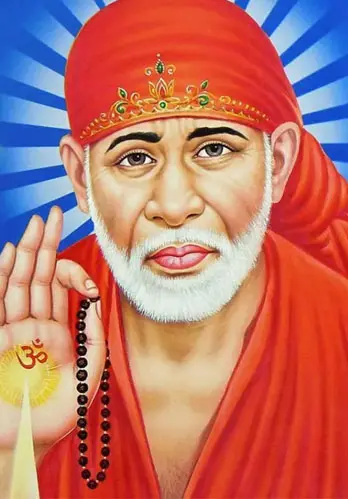 Sai Baba Bhajan Book
-
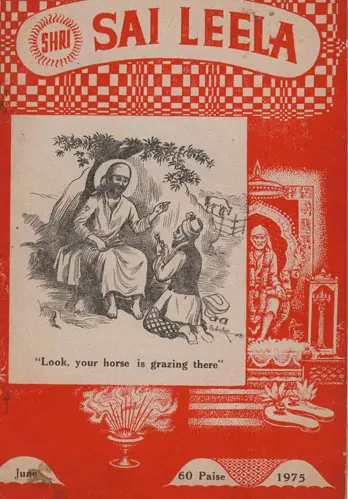 Sai Leela
-
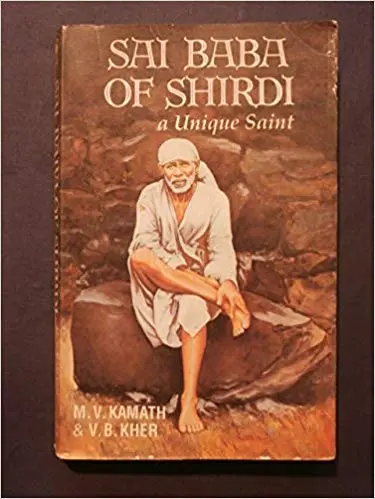 Saibaba Aaarti
-
 Saibaba Aaarti
-
 Saibaba Aaarti
-
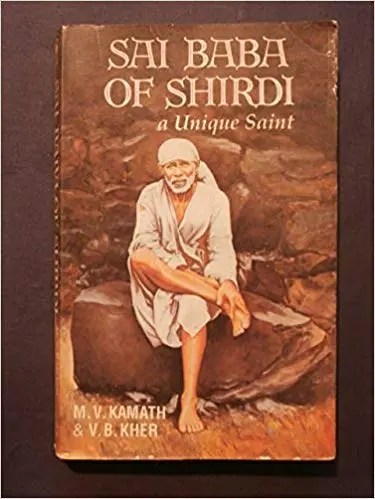 Saibaba Aaarti
-
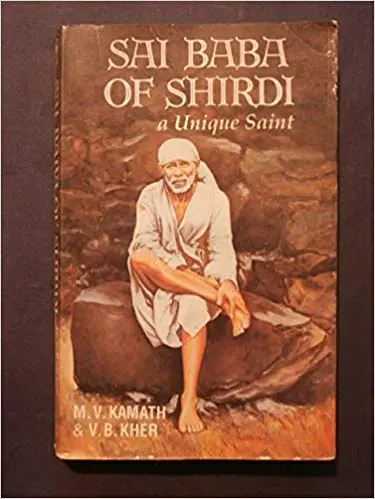 Saibaba Aaarti
-
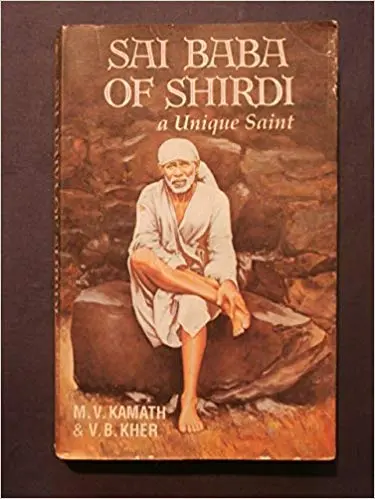 Saibaba Aaarti
-
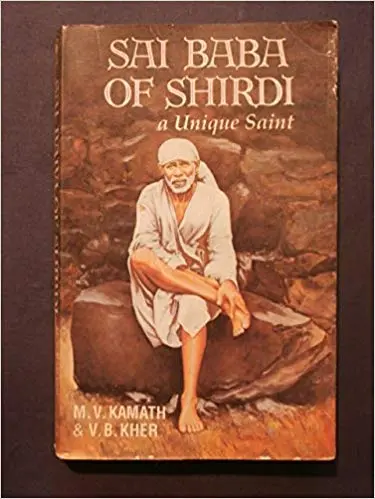 Saibaba Aaarti
-
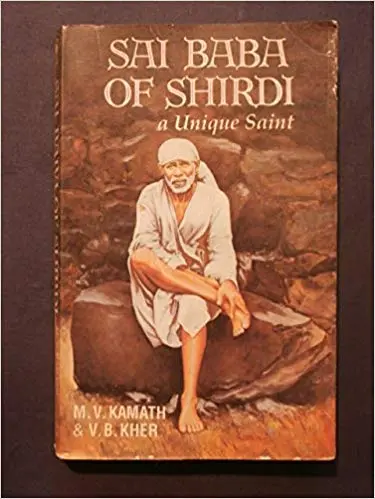 Saibaba Aaarti
-
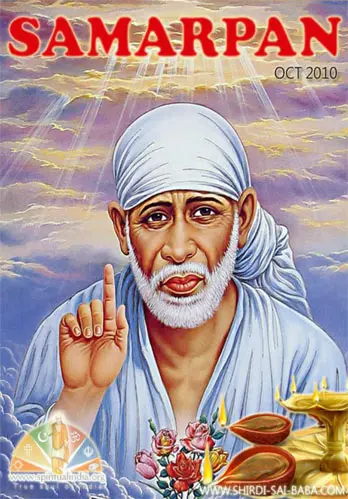 Samaprpan
-
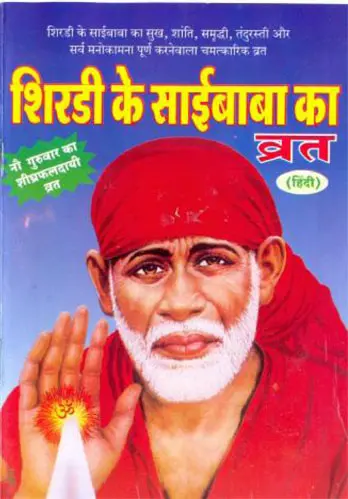 Shirdi Ke Saibaba Brath
-
 Shirdi Sai Baba: Life, Philosophy & Teachings
-
 Shri Manik Prabhu
-
 Shri Sai Satcharitra
-
 Shri Sai Satcharitra
-
 Shri Sai Satcharitra
-
 Shri Sai Satcharitra
-
 Shri Sai Satcharitra
-
 Shri Sai Satcharitra
-
 Shri Sai Satcharitra
-
 Shri Sai Satcharitra
-
 Shri Sai Satcharitra
-
 Shri Sai Satcharitra
-
 Shri Sai Satcharitra
-
 Shri Sai Satcharitra
-
 Shri Sai Satcharitra
-
 Shri Sai Satcharitra
-
 Sree Guru Charithra
-
 Sri Guru Charitra (Nitya Parayana Grandham)
-
 Sri Sai Gurucharitra
- Sri Saikalpa
-
 Sri Sainatha Sthavana Manjari
-
 Sri Sainatha Sthavana Manjari
-
 Sri Sainatha Sthavana Manjari
-
 Sri Sainatha Sthavana Manjari
-
 Sri Sainatha Sthavana Manjari
-
 Sri Sainatha Sthavana Manjari
-
 Sri Swami Samarth Maharaj Of Akkalkot
-
 Sripada Sri Vallabha Sampoorna Charithamrutham
-
 The Diary Of Kakasaheb Dixit
-
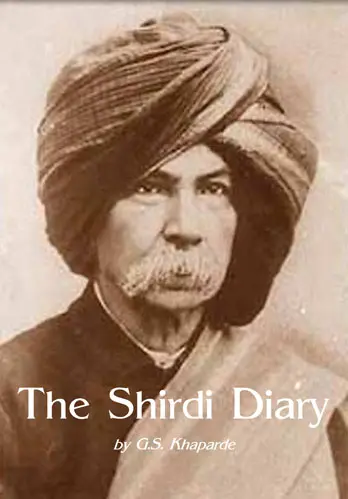 The Shirdi Diary